Written By



To celebrate America's 250th birthday, we at the U.S. Fish and Wildlife Service are highlighting the incredible wildlife that calls this beautiful country home. From American icons to subtle specialists, join us as we highlight seven species each week: one species for each of the 250 days leading up to America's 250th birthday.
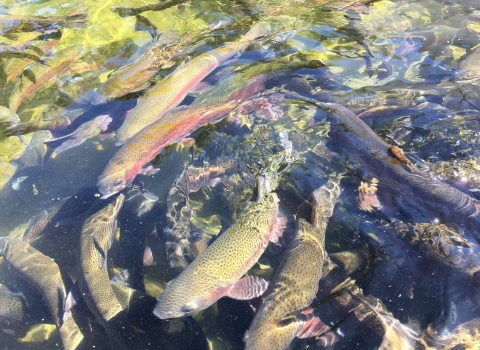
Channel catfish (Ictalurus punctatus)
The channel catfish is one of the most widespread freshwater fish in the U.S., known for its whisker-like barbels and excellent sense of smell. Found in rivers, lakes and reservoirs, these bottom-dwellers become less active in the winter.

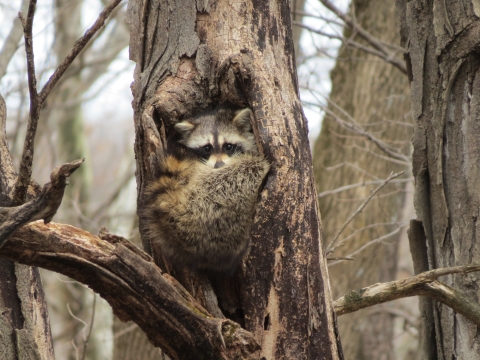
Raccoon (Procyon lotor)
Raccoons spend cold days and nights holed up in dens - often in hollow trees, burrows or other warm spots. While they don't truly hibernate, they may spend long periods of time sleeping to conserve energy, emerging on warmer days to forage.
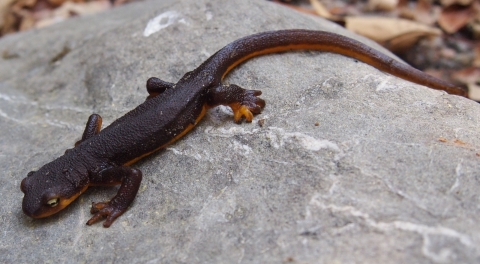
California newt (Taricha torosa)
As its name suggests, the California newt is only found in California. Between December and early May, adult newts are out and about looking for a mate in the pool where they hatched. Adults measure 5 to 8 inches with warty, slate-gray backs and bright orange-yellow sides.
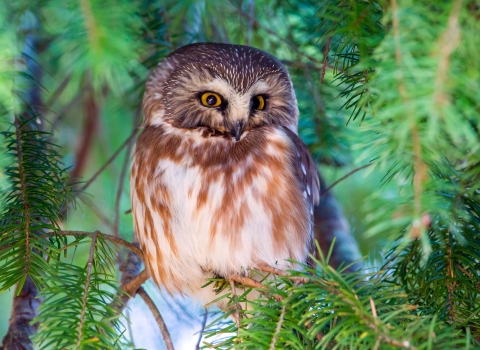
Pine siskin (Spinus pinus)
Just like people, birds shiver to stay warm. Pine siskins weigh less than half an ounce and can maintain a body temperature of 93 degrees Fahrenheit for extended periods - even when the air is far below zero!

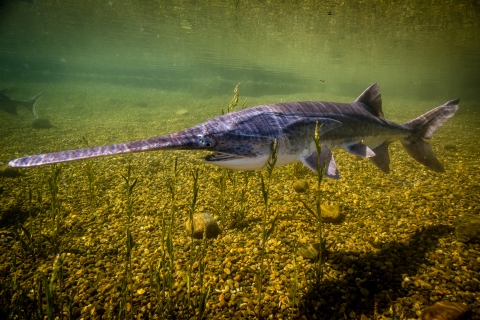
American paddlefish (Polyodon spathula)
The American paddlefish is known for its smooth skin, long, paddle-shaped snout and skeleton made mostly of cartilage. Native to the Mississippi River Basin, this filter-feeding giant uses its snout to detect plankton in murky waters. In the winter, they become less active, building up reserves for spring spawning migrations.
Walrus (Odobenus rosmarus)
The walrus is a massive marine mammal found in the icy waters of the Arctic Ocean. Known for its long tusks and bristly whiskers, walruses can measure nearly 12 feet long and weigh more than 4,000 pounds.

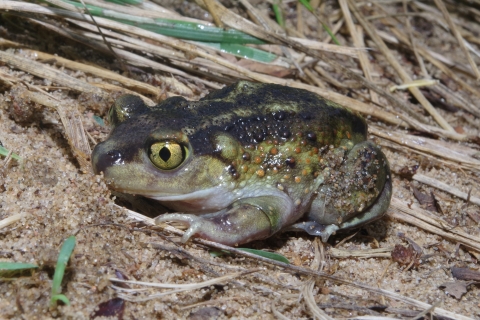
Eastern spadefoot (Scaphiopus holbrookii)
The eastern spadefoot toad is a secretive amphibian found in sandy soils throughout the southeast. They're named after the spade-like projection on their hind feet - perfect for burrowing underground where they spend most of the year hidden.
Written By