Written By


To celebrate America's 250th birthday, we at the U.S. Fish and Wildlife Service are highlighting the incredible wildlife that calls this beautiful country home. From American icons to subtle specialists, join us as we highlight seven species each week: one species for each of the 250 days leading up to America's 250th birthday.
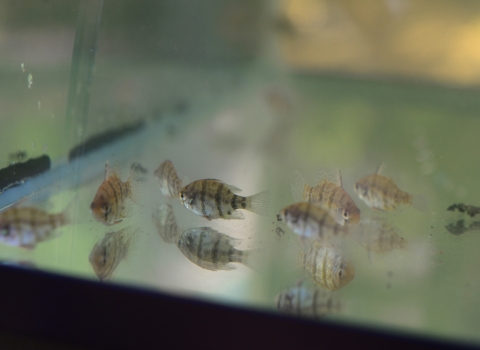
Black crappie (Pomoxis nigromaculatus)
The black crappie is a popular freshwater game fish native to lakes, ponds and slow-moving waters across much of the central and eastern United States. This time of year, they're preparing for breeding season, shifting toward shallower waters.

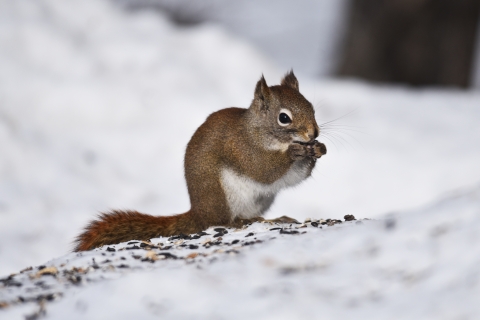
American red squirrel (Tamiasciurus hudsonicus)
The American red squirrel is a vocal coniferous forest dweller found from Alaska, through much of Canada into the west, midwest and northeast. They remain active year-round, feeding from stored stashed of pinecones and seeds which they fiercely defend. When the snow gets deep, they'll even tunnel through it!
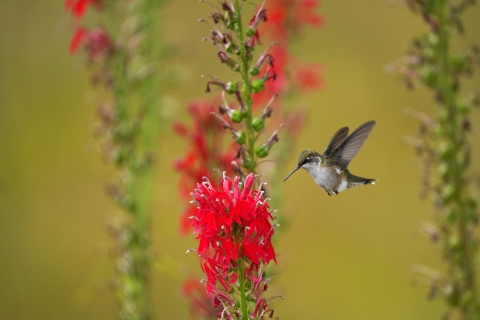
Ruby-throated hummingbird (Archilochus colubris)
Ruby-throated hummingbirds are gearing up for migration! These tiny birds spend winters in Central America and summers across the eastern U.S. and southern Canada. Some travel more than 2,000 miles between breeding and wintering grounds – pretty impressive for 3-to-4-inch wings!
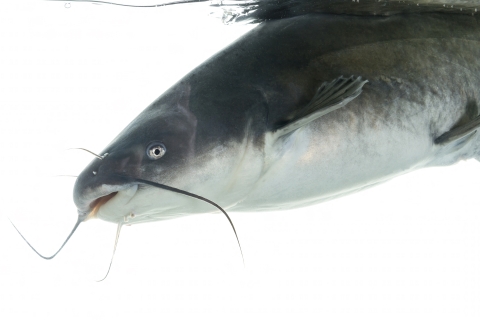
Blue catfish (Ictalurus furcatus)
The blue catfish is the largest catfish in North America, known for its blueish-gray body, deeply forked tail and impressive size - sometimes exceeding 100 pounds! Found in big rivers and reservoirs in the central and southeastern U.S., they feed on fish, crustaceans and mollusks.
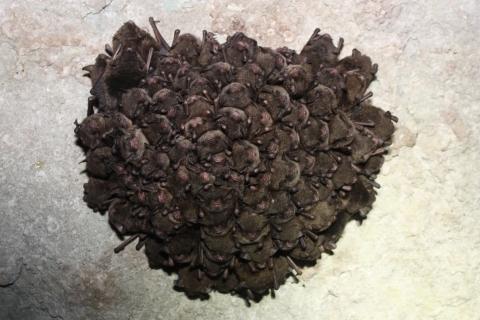
Indiana bat (Myotis sodalis)
The Indiana bat is a small, endangered bat species native to the eastern U.S., known for forming tight clusters during hibernation. Right now, they're in deep hibernation, roosting in cold, humid caves and abandoned mines. They're incredibly sensitive to disturbance, so please stay out of caves to keep them safe.
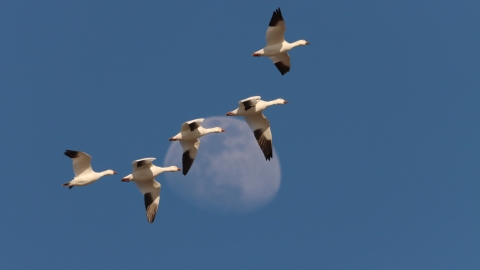
Snow goose (Anser caerulescens)
The snow goose is a striking migratory bird known for forming massive flocks during migration. Summers are spent in the tundra from the high arctic to subarctic. Winters are spent in parts of the lower 48 states and Mexico where these geese feed on grains, grasses and aquatic plants.
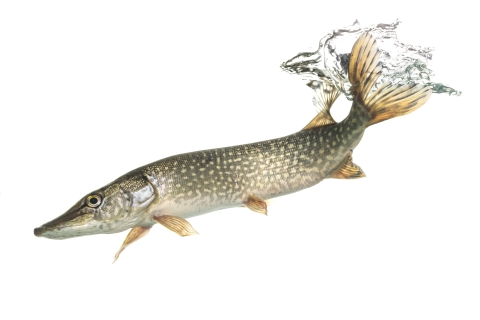
Northern pike (Esox lucius)
The northern pike is a long, torpedo-shaped predator native to lakes and rivers across much of the northern U.S. and Canada. Known for its ambush-hunting style and tooth-filled mouth, this fierce fish feeds on everything from perch to small mammals.
Written By