


Visit Us
At this time, Grass Lake National Wildlife Refuge is currently closed to the public. It is expected to open to the public during the summer of 2026 pending completion of work on right-of-way access improvements.
Location and Contact Information
About Us
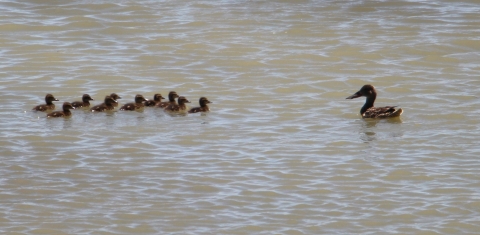
Grass Lake National Wildlife Refuge is one of four unstaffed satellite National Wildlife Refuges (NWRs) in central Montana that lie within the boundaries of the Charles M. Russell Wetland Management District (WMD). Both the Refuge and the WMD are part of the Charles M. Russell NWR Complex, headquartered in Lewistown, Montana.
Grass Lake National Wildlife Refuge was established in 1942 as a “refuge and breeding ground for migratory birds and other wildlife”. The Refuge serves as a staging, nesting, feeding, and brood-rearing area for migrating waterfowl, shorebirds, wading birds, and other migratory birds. In 1997, Grass Lake Refuge was designated an Important Bird Area - a site that is exceptionally important - even essential, for bird conservation.
What We Do
The overall management goal at this Refuge is to promote biological diversity, maintain the natural abundance of native plants and wildlife, and ensure conservation and protection of migratory birds. Science is the foundation upon which conservation decisions are made. We use research, monitoring and the best-available science to inform our work to conserve fish, wildlife, plants, and their habitat.

Projects and Research
Projects and research are used to improve scientific knowledge of natural resources and ecological processes to inform Refuge management through monitoring and applied research.
The ever evolving and complex changes and threats to our natural resources and ecological processes make it necessary to constantly improve our scientific knowledge of the species and habitats we are entrusted to protect. Using a science-based approach of various research methodologies and inventories to continue to fill critical knowledge gaps will help us focus management on actions that have the greatest conservation benefit for the Refuge's wildlife and their habitat needs.