
Deputy Chief, Migratory Birds
Migratory Birds,
Science Applications
Expertise
Avian ecology, Population ecology, Bird habitat conservation
Lakewood,CO
Official websites use .gov
A .gov website belongs to an official government organization in the United States.
Secure .gov websites use HTTPS
A lock ( ) or https:// means you’ve safely connected to the .gov website. Share sensitive information only on official, secure websites.
BHE Rim Rock Wind, LLC (Applicant) is the developer and operator of the existing Rim Rock Wind Project (Project) located in Toole and Glacier Counties, Montana. The Project consists of 126 wind turbine generators and became operational in December 2012. The expected life of the project is at least 30 years. The Applicant submitted an Incidental Eagle Take Permit (IETP) application and Eagle Conservation Plan (ECP) to the U.S. Fish and Wildlife Service (Service) requesting the maximum 30-year permit.
Monitoring conducted at the Project since 2013 has documented one golden eagle mortality. Take, including killing of eagles, is prohibited by the 2016 Bald and Golden Eagle Protection Act (Eagle Act). However, the Service has been delegated the authority to issue IETPs, where the take is determined to be compatible with the preservation of eagles. The Service will issue IETPs for such take only after an Applicant has committed to undertake all practical measures to avoid and minimize such take and mitigate anticipated take to the maximum extent achievable.

The Applicant has developed and provided an ECP that summarizes project design, construction and operational measures taken to avoid and minimize impacts to eagles, and results of pre- and post-construction monitoring efforts.
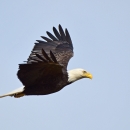
The Service has completed an Environmental Assessment (EA) for the potential issuance of the permit decision under the 2016 Eagle Act regulations. The EA assesses the potential effects of issuing an IETP and a No Action alternative (i.e., deny the permit application and not issue an IETP) on the human and natural environment. The Service’s Collision Risk Model (CRM) predicts that up to 3.64 bald eagles and up to 4.1 golden eagles could be killed incidentally on an annual basis as a result of the operation of the Project. The Service did not have sufficient pre-construction eagle-use data to update exposure for the Collision Risk Model (CRM) related to the Project to estimate annual fatalities; therefore, we used the national priors for the eagle exposure parameter. We have determined that this level of take from the Project’s Eagle Management Unit and the Local Area Population meets the Eagle Act preservation standard.
The Service has an independent statutory responsibility under the National Environmental Policy Act (NEPA) to evaluate its own actions related to the Project, namely the possible issuance of an IETP. A draft EA evaluating the impact of issuing (and not issuing) an IETP for the existing Project was made available for a 30-day comment period. It has been determined that there is no new significant information, and the Service has prepared a Finding of No Significant Impact (FONSI) in accordance with NEPA regulations (40 C.F.R § 1508.13). An IETP will be issued under the 2016 Eagle Act regulations and will authorize non-purposeful take of bald eagles and golden eagles.
The U.S. Fish and Wildlife Service (Service) is releasing the final EA, Finding of No Significant Impact (FONSI), and findings document for the issuance of an IETP for the operation of the Project. The 30-year permit authorizes the potential take of bald and golden eagles associated with the operation of the existing 126 wind turbine generators at the Project and outlines required conservation and compensatory mitigation measures for minimizing and offsetting potential eagle take, pursuant to the 2016 regulations of the Eagle Act.
Relevant documents, linked below, include the final Environmental Assessment, the Finding of No Significant Impact, the Eagle Conservation Plan (ECP), and the Intra-service Section-7 Biological Evaluation Form.