
Fall Photographic Survey of Pacific Brant at Izembek Lagoon, Alaska: 2025 Survey Update

In August 2024, the Pacific Flyway Council (Council) adopted a revised brant population
objective and harvest strategy. Whereas prior harvest management decisions for brant were
based on the 3-year running average of the Winter Brant Survey (WBS), the Council approved
replacing the WBS with the fall photographic aerial survey, referred to as the Fall Brant Survey
(FBS) at Izembek Lagoon, Alaska. Adoption of the FBS followed eight years of developing
aerial photographic methods as an alternative to the WBS (Weiser et al. 2022) and provides
statistically rigorous estimates of population abundance.
Author(s)
Publication date
Type of document
Report
Facility
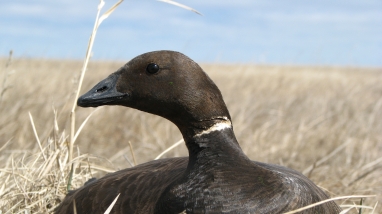
Black and white bird with long neck and yellow bill on the water
Alaska is home to more than 470 species of birds. Most are migratory birds for which the Fish and Wildlife Service is responsible under international treaties and the Migratory Bird Treaty Act. While some of the birds stay in Alaska year-round, most migrate to Canada, Central America, South America...
A sunset over Izembek Lagoon with a cloudy sky reflecting over the water
Alaska's Izembek National Wildlife Refuge lies between the highly productive waters of the Bering Sea and the Gulf of Alaska. The heart of the refuge is Izembek Lagoon, a coastal ecosystem that's home to one of the world's largest eelgrass (Zostera marina) beds. Hundreds of thousands of waterfowl,...
Media Usage Rights/License
Public Domain
Program
A large bird with brown feathers, white head, and yellow beak flies against a pale blue sky
The Migratory Bird Program works with partners to protect, restore and conserve bird populations and their habitats for the benefit of future generations by: ensuring long-term ecological sustainability of all migratory bird populations, increasing socioeconomic benefits derived from birds,...
A bright blue sky obstructed by fluffy white clouds reflected off of a stream shot from inside a kayak
The U.S. Fish and Wildlife Service manages an unparalleled network of public lands and waters called the National Wildlife Refuge System. With more than 570 refuges spanning the country, this system protects iconic species and provides some of the best wildlife viewing opportunities on Earth.
Species
Subject tags
Waterfowl
Population status
Aerial photography
FWS and DOI Region(s)