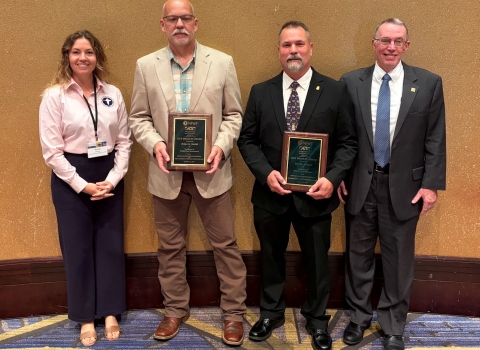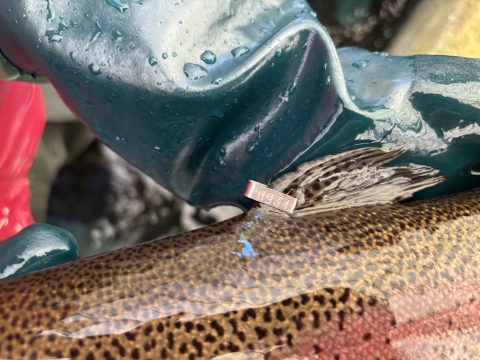
Visitors to Erwin National Fish Hatchery may notice small silver tags on the dorsal fins of several fish at the hatchery. These tags are part of an ongoing study to improve our understanding of the spawning periods tagging methods of different strains of Rainbow Trout at Erwin National Fish Hatchery.
Erwin National Fish Hatchery is home to three different strains of Rainbow Trout: the Erwin-Arlee domestic (EAD), Arlee domestic (ARD), and Fish Lake domestic (FLD). Each of these strains have traits that make them unique, but are primarily separated by the time of year that the fish spawn.
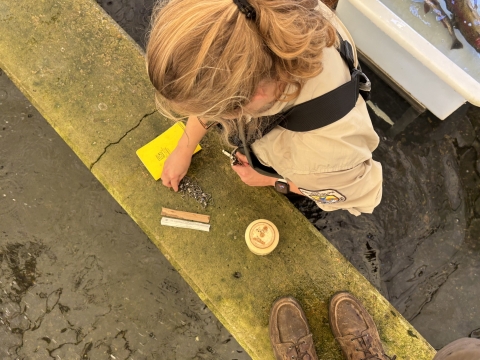
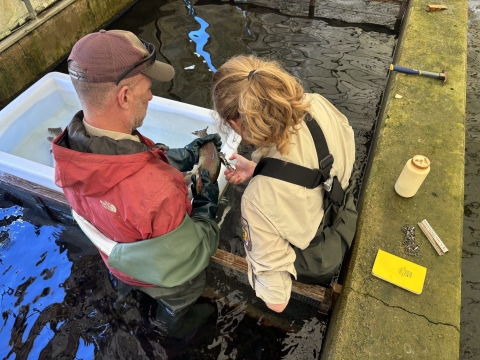
Female Rainbow Trout at Erwin National Fish Hatchery are spawned once at age two, and a subset are spawned again at age three. Two-year old females are retained from the peak weeks of spawning for each strain, and fifty females are tagged each week from that group. Staff record spawn date and tag number for each tagged fish. When the females are spawned at age three they are carefully checked for tags. If a tag is present the tag number and spawning date are recorded. That allows us to compare the spawning dates of fish from different times of their lives.
Preliminary results from the ongoing study show clear variation among strains in their repeated spawning timing. This information helps staff understand how upcoming dates relate to spawning patterns from the previous year. It can be used to predict which weeks are likely to have peak egg production and guide decisions on which weeks to retain two‑year‑old trout to better meet high egg‑request periods in future years.