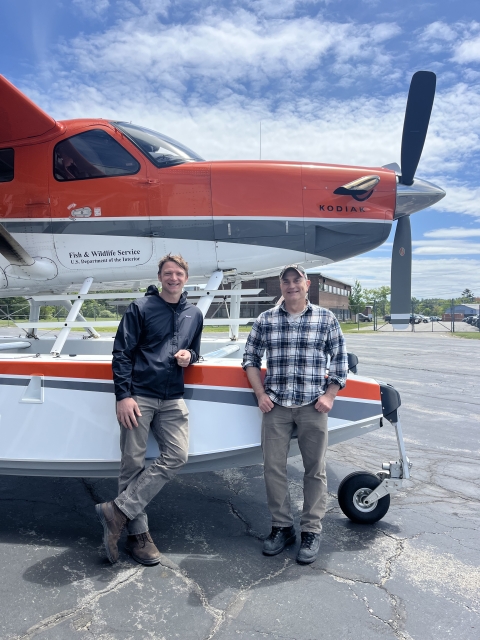
Mark Koneff and Josh Dooley, Division of Migratory Bird Management, USFWS
As I near 30 years of participation in the Waterfowl Breeding Population and Habitat Survey I feel nothing but gratitude for the opportunity to contribute to what is possibly the most significant wildlife monitoring program in the world. I’ve been blessed to see much of North America, including some of the wildest, remotest regions from 150 ft sharing the perspective of the ducks, geese, and swans we survey. The greatest blessing, however, has been the friendships forged with crewmates and other survey participants, analysts, and the people you encounter each year. This year, I enjoyed a second survey season with observer, Josh Dooley, the goose specialist in our Division. Josh is not only an accomplished waterfowl biologist and observer, but also a talented quantitative analyst. What a distinct privilege to work with such a great group of committed professionals and to stand on the shoulders of those several generations of pilot-biologists and waterfowl scientists who established, and stewarded, the survey before us.
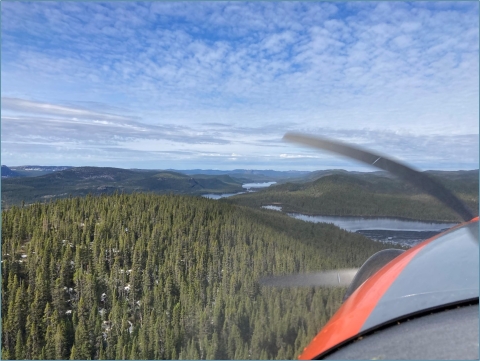
Our survey area this year is again Maine and Atlantic Canada. In addition, we surveyed the Quebec North Shore of the Gulf of St. Lawrence and portions of northern Quebec to cover for another crew whose aircraft was temporarily grounded with a maintenance issue. Maine and the Canadian Maritime Provinces (New Brunswick, Nova Scotia, and Prince Edward Island) entered the winter of 2025-2026 in widespread, long-term drought. Winter in these regions was cold with average to slightly below average snowfall, and drought conditions persisted through late winter. Substantial early spring precipitation greatly improved wetland conditions just prior to the survey. While wetland conditions improved, spring phenology was delayed with persistent cold and windy conditions. May in Maine was relatively dry and by the end of the survey streams were again at low flow and many smaller wetlands were drying. Overall production potential across Maine and the Maritimes was rated fair to good. In Newfoundland, heavy winter snows resulted in improved wetland conditions compared to the abnormally dry conditions of 2025, especially on the western side of the island. Except for higher elevations in western Newfoundland, snowmelt was rapid. Following a rapid thaw, as in the Maritimes, the advance of spring slowed across Newfoundland and cold and windy conditions persisted during the survey period. Except in the higher elevations in western Newfoundland, production potential was rated as good. Similarly, on the Quebec North Shore of the Gulf of St. Lawrence and in Labrador winter was cold with a heavy snowpack, except for western Labrador and portions of eastern Quebec where abnormally dry conditions persist. Spring conditions were again cold and wet, however clear skies and warmer temperatures in late May quickly advanced phenology and ice-out resulting in normal to slightly advanced phenology by the time of the survey in those regions. Conditions and production potential were rated as good to excellent except in western Labrador and eastern Quebec where evidence of persistent drought could be seen in reduced water levels in shallow bogs and fens.
This year’s survey adventure has come to an end. As we make our way back to Maine, I can’t help but reflect on all the years, the landscapes, the wildlife and the special people I’ve crossed paths with along the way. Hopefully, I have a few years of surveying left before retirement. I suspect that, someday, I’ll be happily watching the garden grow at home on a nice day in May and feel the urge to migrate north with the ducks again.