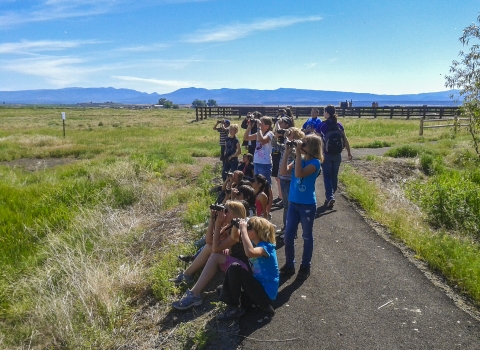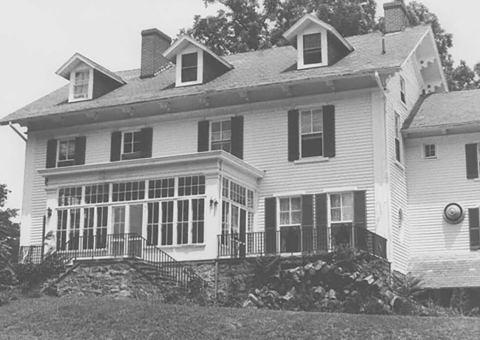
The Girl Scouts’ Camp Conowingo encompasses 600 acres of forests and fields along the Susquehanna River in Conowingo, Cecil County, Maryland. Today, the property serves as a sleepaway camp for the Girl Scouts of Central Maryland. The property is also home to Bell Manor, a historic Colonial Revival house built by New York banker James C. Bell as his retirement residence in the 1860s. Acquired by the Conowingo Land Company in 1902 and later the Susquehanna Power Company, the manor housed company executives and senior managers during construction of Conowingo Dam.
A Forgotten Barrier
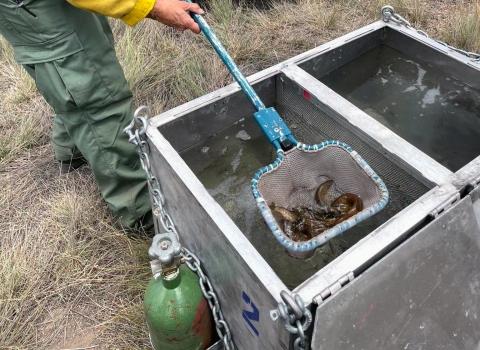
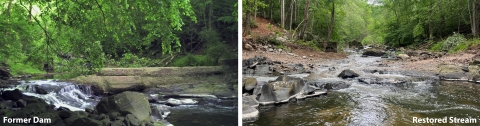
Near Bell Manor was a small historic dam believed to have supplied water to the residence. Over the decades, the dam fell into disrepair. In 2020, U.S. Fish and Wildlife Service (Service) Coastal Program biologists Ben Hutzell and Mark Secrist began working with partners to remove the partially breached dam on Conowingo Creek.
The project brought together expertise from across the Service, including Alex Vidal of the Maryland Fishery Resources Office and Phil Herzig of the Maintenance Action Team, a specialized Service and National Park Service team that carries out high-priority maintenance, construction and restoration projects. Funding came through the Chesapeake WILD grant program, which supports habitat restoration and connectivity throughout the Chesapeake Bay watershed.
Reconnecting a Watershed
Completed in 2026, the dam removal restored natural stream flow and reopened fish passage fish passage
Fish passage is the ability of fish or other aquatic species to move freely throughout their life to find food, reproduce, and complete their natural migration cycles. Millions of barriers to fish passage across the country are fragmenting habitat and leading to species declines. The U.S. Fish and Wildlife Service's National Fish Passage Program is working to reconnect watersheds to benefit both wildlife and people.
Learn more about fish passage , reconnecting high-quality aquatic habitat that had been inaccessible for decades. The restored passage is particularly important for the Chesapeake logperch, a threatened darter native to the lower Susquehanna basin. Although recent surveys did not detect logperch immediately upstream, historical records confirm the species once occurred there. Reopening the corridor provides an opportunity for the species to recolonize the area while improving movement and genetic exchange. The project also benefits American eel and other migratory and resident fish, strengthening the resilience of the watershed.
A Strategic Investment
The dam removal also supports Maryland’s Fish Passage Prioritization Matrix, which helps guide restoration toward projects with the greatest connectivity benefits. The Maryland Department of Natural Resources also provided valuable support, helping ensure the project advances broader aquatic connectivity and habitat restoration goals.
What began as the removal of a small, deteriorating dam has become an important step toward a healthier, more connected watershed. For the Girl Scouts who learn, explore, and build lasting connections with nature at Camp Conowingo, this restoration project will become part of their camp programs and an enduring example of how restoring nature can create a healthier place for people, fish, and wildlife.