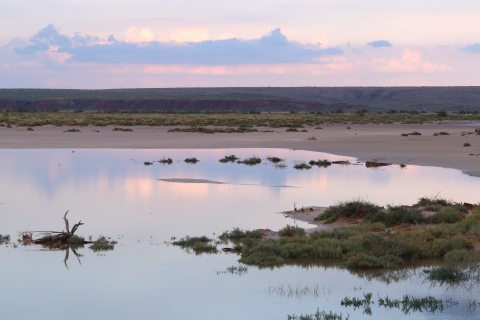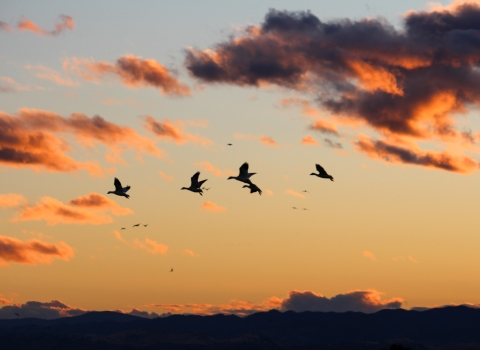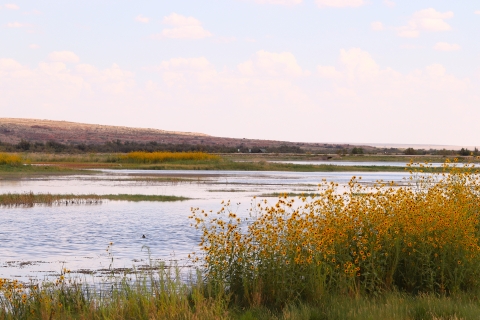
Roswell, NM – Bitter Lake National Wildlife Refuge sits where the shortgrass prairies of the southern plains meet the Chihuahuan Desert. Wide desert grasslands, winding wetlands, and waters shift through shades of aquamarine and green, with occasional stretches of striking red and pink. Pronghorn move across the grasslands, great blue herons soar between waterways, and jackrabbits hide in bushes. But each fall, it is one of the smallest wildlife wonders at the refuge that drives visitation in droves: dragonflies.
Oases of Every Kind
In an otherwise arid landscape, the unique geography and groundwater‑driven hydrology of Bitter Lake National Wildlife Refuge create an oasis for wildlife. In 1980, its wetlands were recognized as a National Natural Landmark National Natural Landmark
The National Natural Landmarks Program preserves sites illustrating the geological and ecological character of the United States. The program aims to enhance the scientific and educational value of the preserved sites, strengthen public appreciation of natural history and foster a greater concern for the conservation of the nation’s natural heritage. The program was established in 1962 by administrative action under the authority of the Historic Sites Act of 1935. The first National Natural Landmarks were designated in 1963. Today, there are more than 600 National Natural Landmarks in 48 states, American Samoa, Guam, Puerto Rico and the U.S. Virgin Islands.
Learn more about National Natural Landmark , and in 2010, Bitter Lake became part of the Roswell Artesian Wetlands Ramsar Site, receiving international recognition for its ecological importance and biological significance. As the president of the Friends group, “Friends of Bitter Lake,” describes it, Bitter Lake is “the gem of the Pecos Valley.”
Biodiversity in the area is driven by an abundance and variety of waterbodies. The Pecos River, a vitally important waterway for numerous species, flows through the refuge. Groundwater springs to the surface in over 70 sinkholes, creating small pockets of aquatic habitat with highly varied chemical profiles. Rainwater fills natural depressions, creating wide and shallow playa lakes like Bitter Lake, the waterbody from which the refuge gets its name. Salt flats, oxbow lakes, creeks, managed wetlands, and other waterbodies are scattered across the refuge, each with their own water levels, temperatures, salinities, and chemistries, creating a remarkable collection of microhabitats. This variety supports an unusual diversity of fauna and flora, including some of the highest odonate (dragonfly and damselfly) species diversity documented anywhere in the United States.
Dragonflies Take Flight
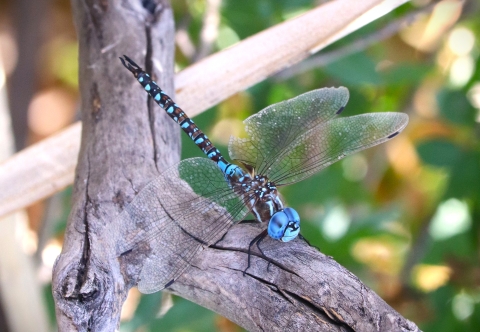
Bitter Lake and the surrounding area has been documented to support more than 100 species of dragonflies and their close relatives, the damselflies. These highly effective aquatic and aerial hunters in the Family Odonata order play important roles in maintaining balance within their ecosystems.
From the time they hatch, odonates are voracious predators. Their larvae live underwater, hunting prey such as mosquito larvae, aquatic worms, and even small fish and tadpoles. They grow larger, molting their exoskeleton repeatedly as they do. Eventually, they stop feeding and prepare for one of the most remarkable transformations in the insect world. They emerge from the water for the first time, pull themselves out of their old exoskeleton, and, as their wings unfold and their musculature develops, take flight as the winged insects that visitors recognize, leaving behind the only form of life they have ever known.
This transformation is mesmerizing. “I never get tired of watching it,” says Karen Gaines, a wildlife biologist with the New Mexico Department of Wildlife. To her, the moment that a dragonfly larva leaves the water and its old life behind is a reminder of moments in our own lives when “everything we have known changes and we enter a new chapter.” That sense of fascination and connection isn’t hers alone. So many people feel a connection to these insects at Bitter Lake that an entire festival has grown up around them, bringing together scientists and community members for 25 years.
25th Annual Dragonfly Festival
The fall Dragonfly Festival traces its roots back to 2001, when refuge staff and local volunteers sought to create an event that would not only highlight the ecological importance of the area, but also engage the broader community. What began as a more informal gathering has evolved into a much‑anticipated annual celebration, bringing together visitors from near and far.
Over the years, volunteers, refuge employees, local families, photographers, educators, and visitors have all become part of the festival’s story. For volunteers, the event can be a chance to give back, share knowledge, meet other people who care about nature, and help visitors discover something new.
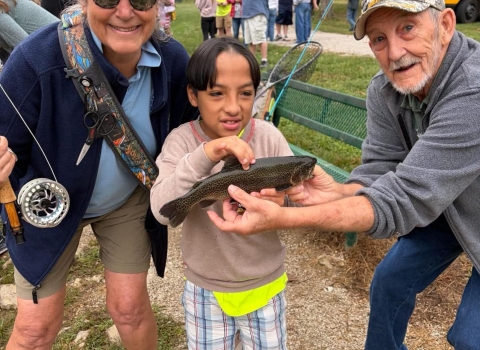
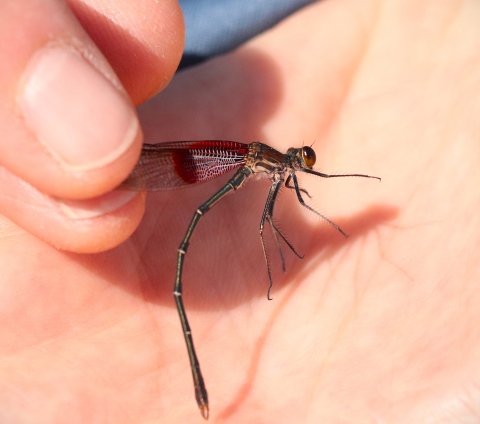
“Getting to watch the children hold and release the dragonflies and the quality of the education that the guides give when they are holding the dragonflies is very cool. There is nothing else like it,” said Patrick Collins, one of the refuge’s birding volunteers.
For 25 years, the festival has provided the opportunity for people to admire the refuge and the life within it. Visitors have the opportunity to explore through guided tours, demonstrations, educational activities, and the chance to see dragonflies and damselflies up close, even getting the opportunity to hold and release them. As Gaines put it, “I think that we are most inspired to protect something after we learn to really appreciate it.” Sometimes, protecting a place begins simply by taking a moment to notice it.
Protecting the Hidden Gem of the Pecos Valley
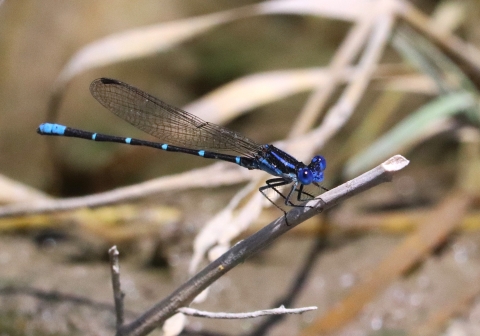
Dragonflies aren’t just captivating insects; they are a bridge between people and the ecosystems around them. “Dragonflies are like the gateway insect for a lot of people,” Gaines said. “Their diverse shapes and striking colors have made them popular in everything from tattoos and stickers to artwork and decorations. But beyond their aesthetic value, dragonflies play important roles within aquatic ecosystems.”
Dragonflies are worth paying close attention to. Despite surviving in roughly the same form for around 300 million years, dragonflies are sensitive to changes in their surroundings. Changes in water availability and wetland health can quickly impact the presence and diversity of dragonflies in an area, making them a powerful indicator of the health of the landscapes they inhabit. As precipitation patterns change, conserving the wetlands that support them becomes increasingly important.
Curiosity about the flash of wings and color darting along the water’s edge can bring about a renewed appreciation of the wetlands and waterways that sustain these insects and many other species. The Dragonfly Festival is all about noticing the little things and shedding light on the tiny species that make Bitter Lake National Wildlife Refuge so unique. Together, their stories are part of what makes this “hidden gem of the Pecos Valley” worth protecting and worth taking a moment to admire.