Garrett Wilkerson, Division of Migratory Bird Management, and Barret Fortier, Southeast Louisiana Refuges Complex, USFWS
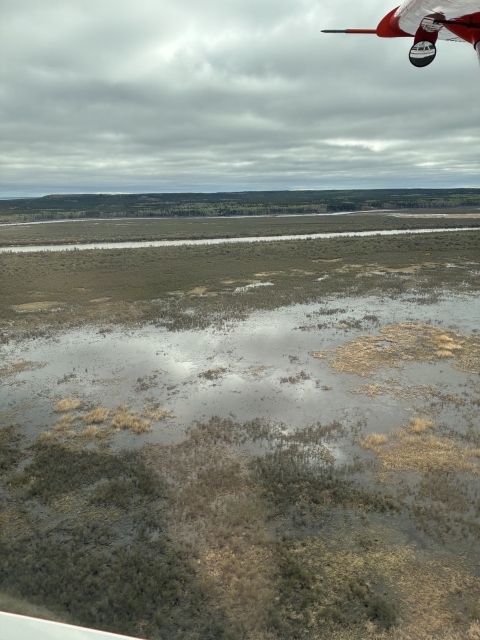
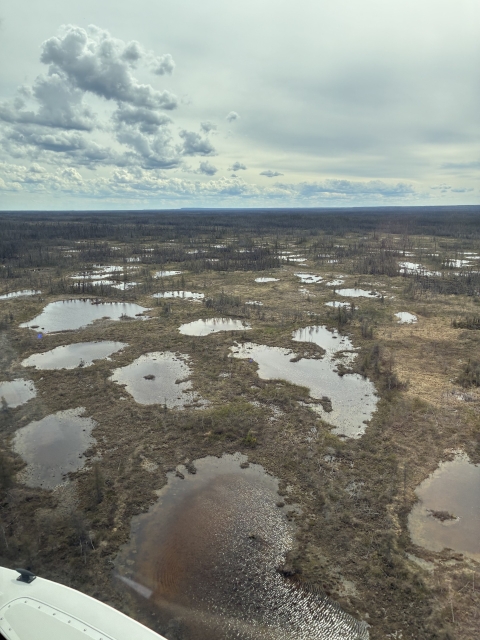
Thanks to abundant snowfall and persistent spring rains, wetland conditions were markedly improved across much of northern Alberta, northeastern British Columbia, and the Northwest Territories in spring 2026. Save for a couple of relatively small geographical areas in northeastern Alberta and the extreme southern portion of the Northwest Territories (near Wood Buffalo National Park), fens, bogs, and other semipermanent wetland basins throughout the survey area were inundated. Seasonal wetlands were also abundant and continued to receive precipitation throughout the survey period. Wetland margins generally appeared favorable for nesting and cover.
Phenology was slightly delayed (2-5 days) across much of the survey area, with the northern portion of the taiga plains and the southern Arctic experiencing a more severe delay of approximately 10-12 days. While wetland conditions across this northern extent appeared good to excellent with respect to water levels and margins, the delay in ice-out and persistent snow storms in the region resulted in little habitat availability until mid-June.
The Peace-Athabasca River Delta near Fort Chipewyan, Alberta, was a bright spot in the survey area, with much better conditions than the previous two years. Wetlands were abundant and surrounded by vast expanses of rejuvenated grasslands. Habitat in this area was rated as “excellent,” and we observed quite the diversity of species taking advantage of the improvement.
In summary, conditions in the crew area were generally far more favorable than in 2024 and 2025. Delayed phenology and heavy snow storms in the northern quarter of the crew area restricted wetland and upland availability until mid-June, though these habitats were in good shape for late nesters or renesters.