


National Elk
Jackson, WY 83001-0510
Plan Your Visit
Visiting in the Winter
Are you visiting the National Elk Refuge in the winter? BOOK a winter sleigh ride!
The Refuge is nationally renowned as a place to observe wintering elk, bighorn sheep, trumpeter swans, and bald eagles. Most visitors to the Refuge during the winter months take a horse-drawn sleigh to see the elk, drive the Refuge Road to observe wildlife, or stop by the visitor center for educational programming and information.
Elk are typically visible on the Refuge from mid-December through early April. In late spring, elk begin migrating off of the Refuge towards their summer ranges. The majority of elk will follow the receding snow line up to higher elevations in Grand Teton National Park and the Bridger Teton National Forest. From October through December, deepening snow push the elk down from their higher summer ranges to seek food and shelter at lower elevations in Jackson Hole.
Visiting in the Summer
The summer brings an influx of visitors to the area. The Refuge is the gateway from town of Jackson, WY to Grand Teton National Park and the Bridger-Teton National Forest. Cycling, walking, and birding along the Multi-use Pathway are popular summer activities. The visitor center provides a great opportunity to get oriented to the area. Many visitors drive the Refuge Road at sunset to observe wildlife, watch the sun crest behind the Tetons, or access camping in the nearby National Forest camping zones.
There is no fee to visit the Refuge. Visitors can purchase an America the Beautiful Pass at the visitor center.
Facilities at National Elk
Open full location mapActivities


Get Involved
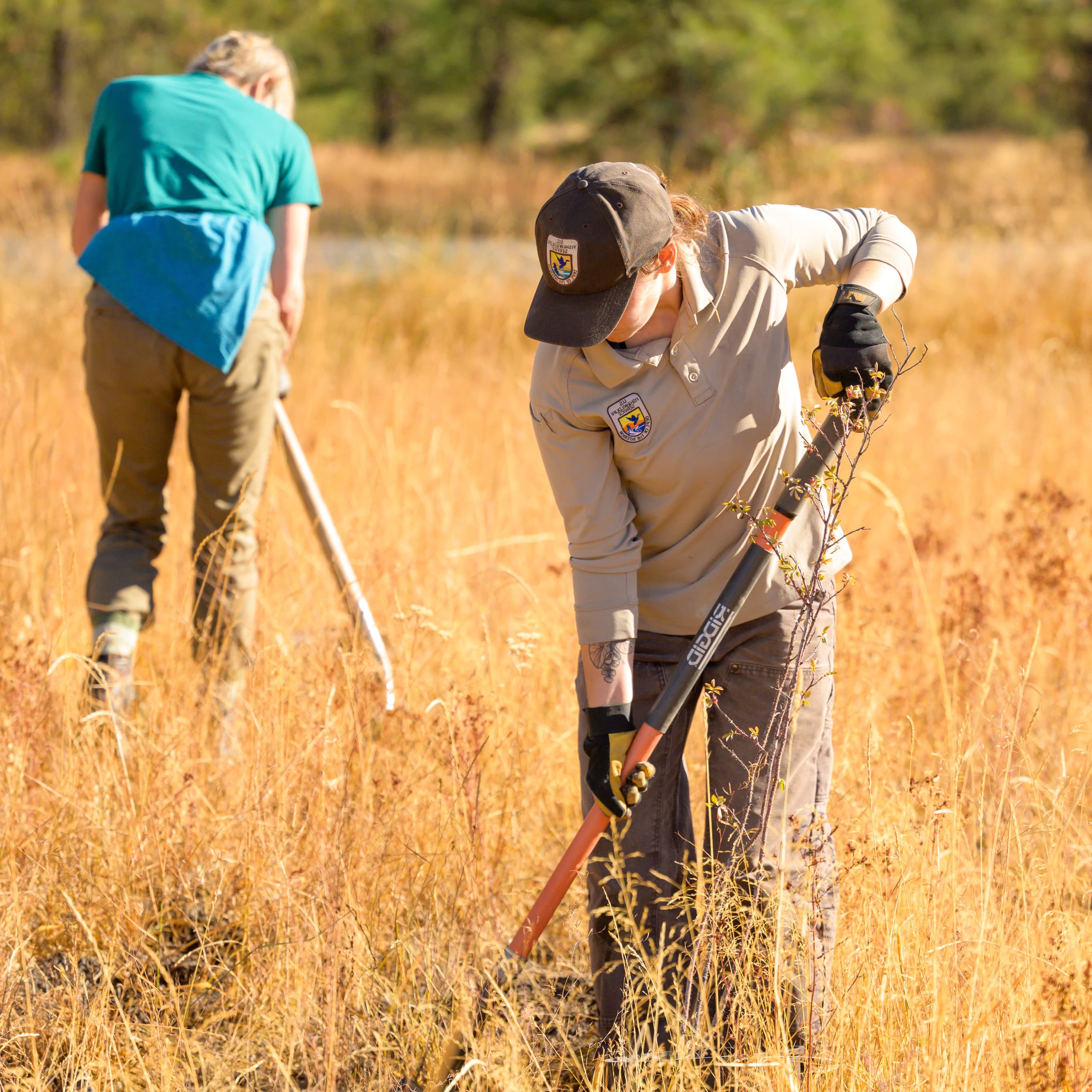
Volunteers contribute over 20,000 hours to the National Elk Refuge each year and support a variety of divisions, including administration, maintenance, and visitor services. The National Elk Refuge has one of the largest volunteer programs within the U.S. Fish & Wildlife Service. Interested applicants should complete this form and email it to annie_sorrell@fws.gov
Working with others to conserve, protect, and enhance fish, wildlife, plants, and their habitats for the continuing benefit of the American people.
Services
Some commercial, recreational, and research activities are allowed on national wildlife refuges only with a special use permit issued by the local office. This permit requirement ensures that all activities are compatible with the refuge’s wildlife conservation goals. Permits may limit the scope, timing, and location of the activity.
Commercial Activities Permit | Research & Monitoring Permit | General Activities Permit
About
The National Elk Refuge protects critically important winter habitat for iconic species like elk, bison, and wolves across 24,700+ acres of grasslands and wetlands. Established in 1912 to prevent elk starvation, its mission has grown to include the conservation of fish, wildlife, and natural resources for future generations. The land is part of the ancestral homelands of numerous Indigenous Tribes who have occupied the Greater Yellowstone Ecosystem for over 11,000 years. Today, it offers wildlife-dependent recreation such as hunting, fishing, and nationally renowned horse-drawn sleigh rides to observe wintering herds.
