Written By



To celebrate America's 250th birthday, we at the U.S. Fish and Wildlife Service are highlighting the incredible wildlife that calls this beautiful country home. From American icons to subtle specialists, join us as we highlight seven species each week: one species for each of the 250 days leading up to America's 250th birthday.
Gray whale (Eschrichtius robustus)
It's prime whale watching season! Gray whales are known for one of the longest migrations of any mammal - traveling up to 12,000 miles round trip. Right now, they're making their way along the Pacific Coast, moving from arctic feeding grounds to warm Baja California lagoons.

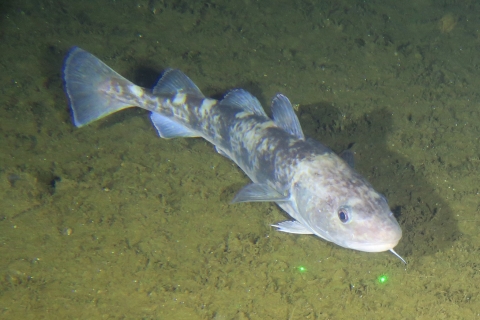
Pacific cod (Gadus macrocephalus)
The Pacific cod is a cold-water fish found in the northern Pacific Ocean, especially around Alaska. This time of year, is spawning season, where they move into shallower coastal waters to reproduce.
Great egret (Ardea alba)
The great egret is a striking wading bird known for its elegant white plumage and long neck. These egrets can be seen year-round along many southern and coastal areas where they forage for fish, frogs and invertebrates in shallow waters.

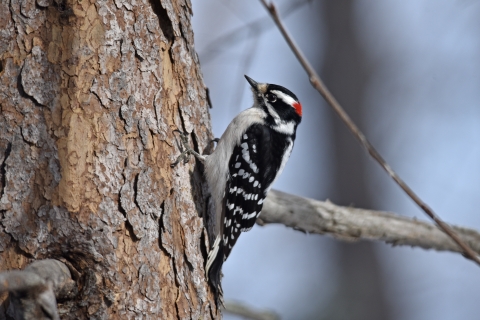
Downy woodpecker (Dryobates pubescens)
The downy woodpecker is the smallest and most wide-spread woodpecker in North America. With its crisp black-and-white plumage, this woodpecker is a familiar site at bird feeders and trees year-round.
Snowshoe hare (Lepus americanus)
The snowshoe hare is a master of seasonal survival, known for its large feet that act like snowshoes and its white winter coat that provides perfect camouflage. Found in northern forests across the U.S. and Canada, these hares are most active at dawn and dusk.

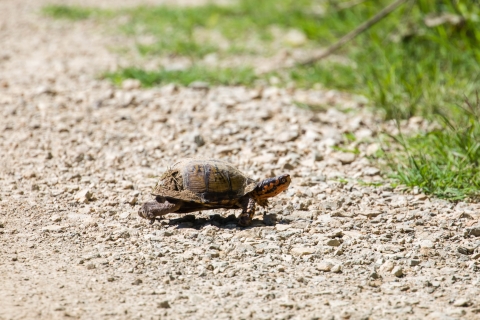
Common box turtle (Terrapene carolina)
Just when you thought a turtle couldn't get any slower, winter strikes. Eastern box turtles slow down their metabolism and spend the coldest months under logs or in loose soil and leaf litter to save energy. They rely on their fat reserves and rest until warmer temperatures arrive.
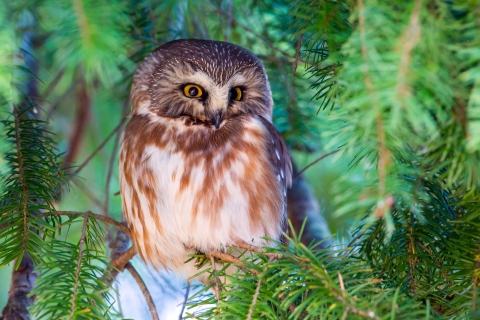
Northern saw-whet owl (Aegolius acadicus)
Northern saw-whet owls have catlike faces with bright yellow eyes. They can be found from Alaska through southern Canada, the northern U.S. and mountainous areas of the west. Measuring 7 to 8 inches tall with a wingspan of up to 19 inches, these owls mostly eat mice, shrews and voles, hunting at night from a perch. Listen for males calling from January through May.
Written By