When we think about snails, we may imagine them crawling through rainy forests, swimming in the oceans or eating our beloved vegetable gardens. However, we probably do not think of them thriving in desert springs or creeping among the saguaro of the great American Southwest. But they do! The diversity of snails in the Southwest is huge, and experts are still learning new things about them.
What the shell?
As invertebrates, snails have soft, slimy bodies with no backbone. They grow hard, spiral-shelled homes on their backs, which protects them from predators and the environment. Being small and elusive, land snails can be hard to find but they are easy to catch as one of the slowest moving animals on the planet. Their method of movement, using their muscular foot to crawl along their self-produced slime, is the most energy-consuming of any animal. Still, don’t underestimate them.
Snails are living fossils, having been around for more than half a billion years, outlasting non-Avian dinosaurs, with their form and function relatively unchanged for millions of years. Snails hide, survive and live on every continent - yes, this includes the sub-Antarctic.
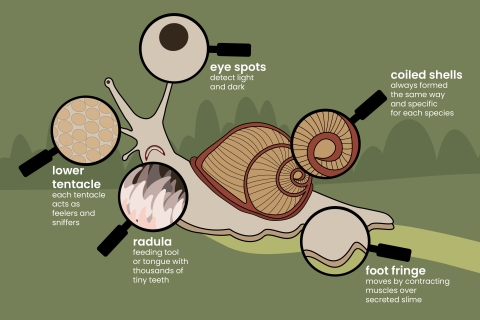
Snails are uniquely adapted to their environments, including those in the Southwest. They can survive the harsh heat and dry conditions by carefully choosing when and where to be active. They come out at night, seek shelter under rocks or live in watering holes. Delve into the diverse snails found in the American Southwest because it’s now time to show off your curves!
Talussnails in the Sonoran Desert in Arizona
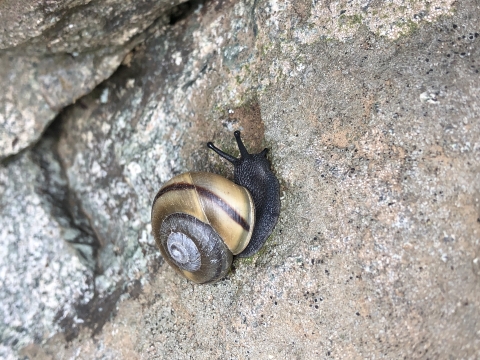
Talussnails are named after the area where they are found: among piles of rocks (talus) at the foot and sides of mountains, where it is cooler and wetter. They are the size of a nickel and have flat, disc-like shells with a single brown band. They are relatively long-lived, with some surviving up to a decade. Most of their lives are spent in a state of estivation, or rest, to avoid arid conditions. They seal themselves tightly to rocks to prevent moisture loss while waiting for the rain to fall. Studies have found that talussnails can withstand losing up to sixty percent of their water weight. For comparison, humans experience significant mental and physical side effects after losing just ten percent of their water weight. Snails can detect water in the air, so the best time to find talussnails is right after monsoon showers.
Springsnails in the springheads of New Mexico
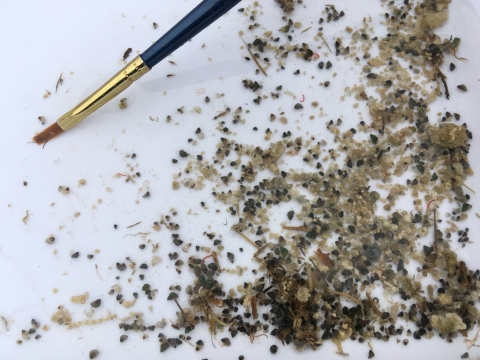
The endangered Roswell and Koster’s springsnails were federally listed in 2005 and are unique to New Mexico’s Bitter Lake. They are usually found in streams near springheads. The two snails are almost identical except for the operculum, the foot disk which closes the snail’s door when it retracts into its shell. The operculum of the Koster’s snail is translucent and the Roswell snail is amber in color. This is the diagnostic feature which distinguishes them from one another. Their diet consists primarily of algae, bacteria and decaying organic material. These small creatures have a short lifespan, living only nine to 15 months, and reproduce several times during this brief opportunity.
Woodland snails in the grassland seas of Oklahoma
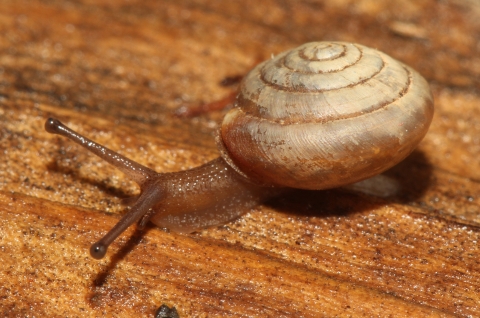
The Wichita Mountains pillsnail is unsurprisingly named for the area where it was first found: the Wichita Mountains Wildlife Refuge in southwestern Oklahoma. These snails are strongly associated with woodlands and have found their niche in the cross timbers habitats of the Wichita Mountains, a woody oasis within the vast prairies of the Southern Great Plains. They can be found under logs and leaf litter, especially in the cooler and moister microclimates on the northern faces of the area’s granite peaks. Like many species in the genus Euchemotrema, they have tiny hair-like structures on their shell. Have you ever seen a fuzzy snail?
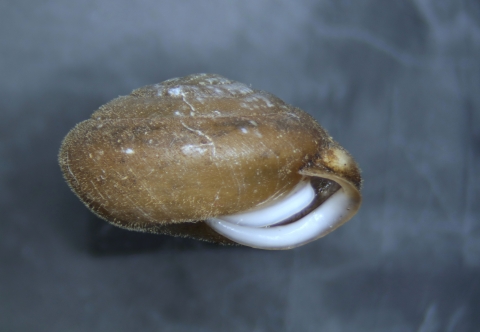
Like much of the area’s wildlife, these snails are adapted to coexist with fire. They occur in higher concentrations on logs that were charred in past low severity fires than on uncharred logs, potentially because of the increased bioavailability of nutrients like calcium, which the snails use to build their shells. Once thought to occur only at the Refuge, the Wichita Mountains Pillsnail has since been found in nine counties in southwestern Oklahoma.
Freshwater snails in the springs of Texas
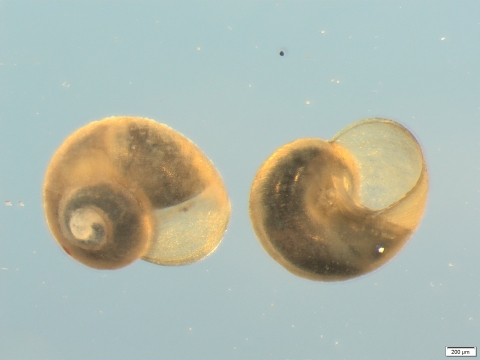
As small as a single grain of sand, the Phantom cavesnail is a tiny, freshwater snail unique to the Pecos River basin in Trans-Pecos Texas. Known populations are confined to surface water outflows of the San Solomon Springs complex. Listed as endangered, the biggest threat to this snail is the loss of habitat due to declining spring flows and drying surface water. The snail lives on firm rock and soft mud surfaces in isolated pools, making these aquatic environments its entire world. This species helps cycle nutrients in the water by eating microscopic algae and waste particles. Its flattened-coil shell bearing delicate spiral striations tapers to a gentle point, and its opening is sealed off with a hard lid called an operculum to protect its soft body within.