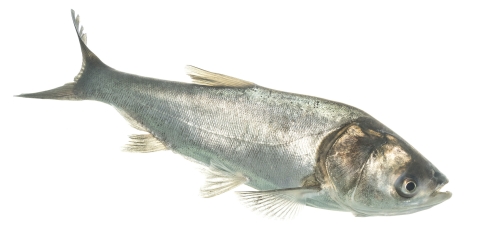
The U.S Fish and Wildlife Service Great Plains Fish and Wildlife Conservation Office (FWCO) recently traveled from Pierre, South Dakota, to north-central Missouri to support the Missouri Department of Conservation in a large-scale invasive carp removal effort on the Grand River. Funded through a federal invasive carp grant, the project is a key component of the Missouri River Invasive Carp Partnership.
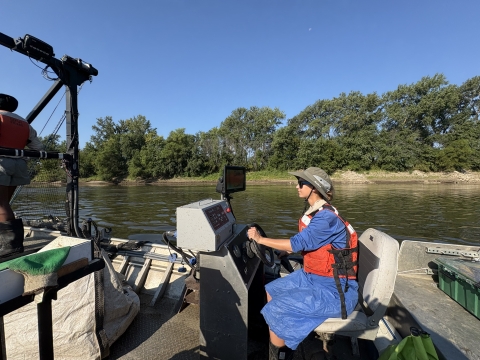
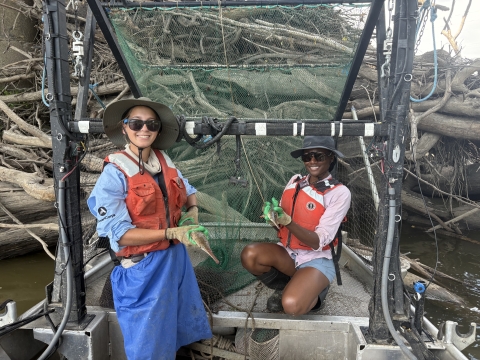
The operation used specialized equipment, including an electrified dozer trawl, to efficiently locate and remove invasive carp. Multiple electrofishing boats worked alongside an electrified paupière net boat to process and utilize the harvested carp in commercial markets.
Over the four-day removal effort, catch rates steadily declined as targeted fish were removed, resulting in a total of 32,000 pounds of invasive carp taken from the Grand River with minimal bycatch of native fish.
Once established, invasive carp can significantly disrupt aquatic ecosystems by consuming large quantities of food and competing with native species. In nutrient-rich waters, they can alter the aquatic food web and reduce resources available to zooplankton, vegetation, mussels and native fisheries.
Their impacts also extend beyond the ecosystem. Some species of invasive carp are known to leap from the water when disturbed by boats, creating safety hazards for anglers and boaters. In areas where carp become abundant, their presence can diminish opportunities for boating and other forms of recreation. The spread of invasive carp can also affect communities that depend on commercial fisheries, outdoor recreation and tourism.
Efforts like the Grand River removal operation are an important part of preventing invasive carp from becoming further established and protecting the health of aquatic ecosystems, native fish populations and the communities that depend on them.
To learn more about the Service’s commitment to invasive carp removal, click here.