A Landmark Conservation Event
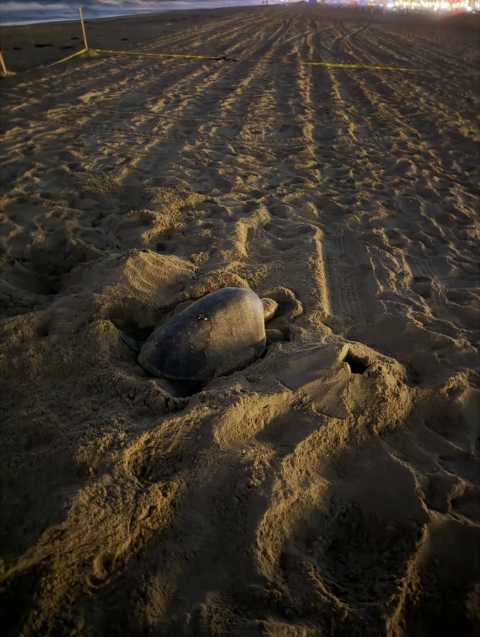
In an unprecedented development, two olive ridley sea turtle nests were discovered in mid-September near Seal Beach National Wildlife Refuge and Huntington Beach. The discovery represents the first-ever confirmed instance of natural sea turtle nesting on the U.S. West Coast. Experts determined that these nests were laid by two different olive ridley turtles, a species that typically nests farther south in Mexico.
The discovery received national attention and prompted a rapid response from an interagency team of wildlife officials, biologists, and community partners.
Responding to Environmental Threats
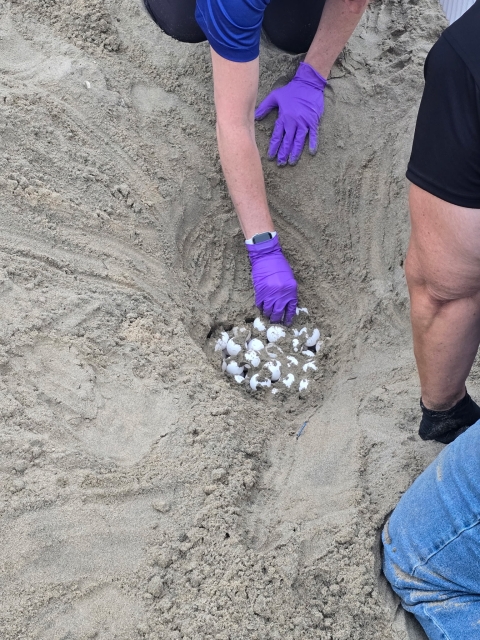
As Hurricane Polo approached, bringing hazardous surf and high tides, the team faced a difficult decision: relocate the eggs to protect them from being washed away or leave them in place. Early on Friday, September 25, biologists carefully collected over 200 eggs, including 100 from Huntington Beach and 104 from Seal Beach, and transferred them to the Aquarium of the Pacific in Long Beach, California. There, the eggs are now incubated in a temperature-controlled environment, monitored closely by experts.
An Unusual Approach for an Exceptional Situation
The U.S. Fish and Wildlife Service generally favors minimally intrusive conservation measures. However, given the exceptional circumstances, the Service coordinated a multi-agency response to the first documented instance of natural sea turtle nesting on the U.S. West Coast. The Service is developing an interim conservation strategy in case sea turtles continue to nest in California.
Collaboration Across Agencies
The U.S. Fish and Wildlife Service, in partnership with NOAA Fisheries, Aquarium of the Pacific, Seal Beach Marine Safety Department, Huntington Beach Fire Department, and California Department of Fish and Wildlife, coordinated this rapid response. The Service leads conservation and recovery efforts for sea turtles on nesting beaches, while NOAA oversees marine conservation. This shared jurisdiction ensures that threatened and endangered sea turtles receive comprehensive protection both on land and at sea.
Looking Ahead: Hatchlings Release Plan
If the eggs are viable, they are expected to hatch in 45–60 days, approximately early November. Partners plan to release the hatchlings into the ocean near the original nest sites. Warmer water temperatures associated with El Niño may provide conditions for a natural release. Updates will be provided as the incubation progresses and the release plan evolves, reflecting the Service’s commitment to transparency and stewardship.
Why This Matters
Olive ridley sea turtles are the smallest of the sea turtle species. They can weigh up to 100 pounds and live for 30 to 50 years. Populations along Mexico’s Pacific coast are listed as endangered under the Endangered Species Act, with bycatch and egg harvesting among the species primary threats.
Sea turtles navigate using a combination of environmental and biological cues. The presence of nesting olive ridleys in California may be partly linked to warmer ocean temperatures and El Niño conditions, underscoring the dynamic nature of wildlife adaptation and the importance of ongoing monitoring.
Community Engagement and Public Guidance
The public is encouraged to abide by local laws and ordinances and to respect protected nesting sites. Report any sea turtle sightings using NOAA’s online form or the West Coast Stranding Hotline at (562) 506-4315. Beachgoers and residents are also advised to reduce light pollution, which can disorient sea turtle hatchlings and deter adult females from coming ashore.
A Unified Response
At a press conference hosted by the Aquarium of the Pacific, Jonathan Snyder, acting field supervisor with the U.S. Fish and Wildlife Service’s Carlsbad Fish and Wildlife Office, emphasized the significance of the event and the value of interagency cooperation. “Within 24 to 48 hours, we had to move really quickly [to avoid potential inundation of the nests]. We were able to bring a team together and the partnership was amazing,” Snyder said.
For More Information
For the latest updates on this developing situation, follow the U.S. Fish and Wildlife Service on Facebook, Instagram, and LinkedIn.