Critical habitat across Wisconsin’s Lake Superior coast benefits from a partnership between the U.S. Fish and Wildlife Service and the Landmark Conservancy. Along Wisconsin’s Lake Superior coast, conserving important natural areas today helps ensure that forests, wetlands, and streams remain healthy for generations to come. Recently, a project funded through the U.S. Fish and Wildlife Service and the Great Lakes Restoration Initiative resulted in conservation actions on more than 1,700 acres of land supporting healthy watersheds and connected habitat.
The U.S. Fish and Wildlife Service Coastal Program worked with the Landmark Conservancy, a nonprofit based out of Menomonie, Wisconsin, and supported their efforts on a multi-year project in the Lake Superior south shore region.
Habitat conservation in the south shore streams region
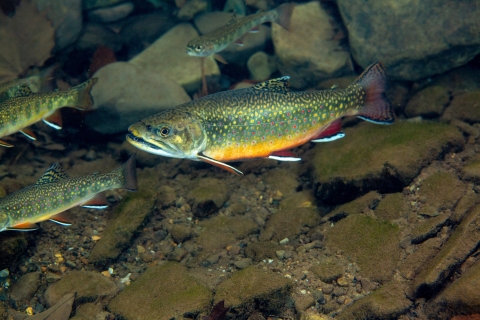
Along the northernmost section of Wisconsin, streams and rivers flow into Lake Superior creating an area rich with forests, wetlands and cold-water tributaries that support brook trout, migratory birds and a variety of other wildlife. This area is known to biologists as the south shore streams region and these connected natural areas play an important role in maintaining the health of Lake Superior and the surrounding Great Lakes ecosystem.
Landmark Conservancy worked with willing landowners to identify conservation opportunities within the watersheds of Whittlesey Creek, Iron River, Marengo River, Pokegama River and White River. Conservation easements were an important tool in this effort for identifying connected habitats, restoring wetlands and addressing invasive species invasive species
An invasive species is any plant or animal that has spread or been introduced into a new area where they are, or could, cause harm to the environment, economy, or human, animal, or plant health. Their unwelcome presence can destroy ecosystems and cost millions of dollars.
Learn more about invasive species . Landmark Conservancy was also able to build relationships with landowners to create awareness for pressing conservation needs and to communicate how conservation efforts contribute to the long-term resilience of the Great Lakes.
The Landmark Conservancy also restored areas within their community forests in northern Wisconsin by planting conifers on forested wetlands, restoring riparian riparian
Definition of riparian habitat or riparian areas.
Learn more about riparian habitat through native plantings, and treating 25 acres for invasive species. These efforts help maintain native plant communities, improve habitat and support the resilience of the surrounding landscape.
A local project with a larger purpose
The completion of this project represents more than acres protected or habitat restored. It represents a long-term investment in the natural resources and communities of Wisconsin’s Lake Superior coast. Our agency and the Landmark Conservancy chose this area and these projects very purposefully as part of the broader goals of the Great Lakes Restoration Initiative's Action Plan IV. The partnership between Landmark Conservancy and the U.S. Fish and Wildlife Service Coastal Program demonstrates how federal financial assistance, local expertise and voluntary conservation can come together to deliver lasting results.
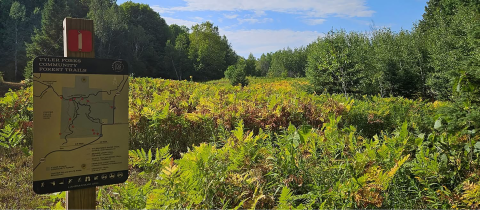
The lands conserved through this effort will continue to provide important habitat, maintain connections across the landscape, and support the health of local watersheds. The relationships developed with landowners and conservation partners also create a foundation for future opportunities. By working together, Landmark Conservancy and its partners have helped ensure that important parts of Lake Superior’s South Shore provide high-quality habitat and recreational opportunities, not just for today’s wildlife and communities, but for the generations that follow.
The Great Lakes Restoration Initiative is a partnership led by the Environmental Protection Agency with more than a dozen federal agencies, including the U.S. Fish and Wildlife Service to address the most significant environmental concerns of the Great Lakes.