As part of the Flags Across America initiative for America’s 250th anniversary, the U.S. Fish and Wildlife Service is sharing stories from the places where our commemorative flags have traveled. From historic hatcheries to vibrant refuges, each stop celebrates conservation as an enduring American value. Join us as we highlight the lands, waters and wildlife that connect our nation’s past, present and future.
Imagine going to an area about the size of South Carolina, 19.3 million acres. Only unlike South Carolina, the area has no roads, established trails or facilities of any kind.
You can find such a place in the northeastern corner of Alaska, Arctic National Wildlife Refuge, a vast landscape of rich cultural traditions and thriving ecological diversity. It is there the flags traveled in June 2026.
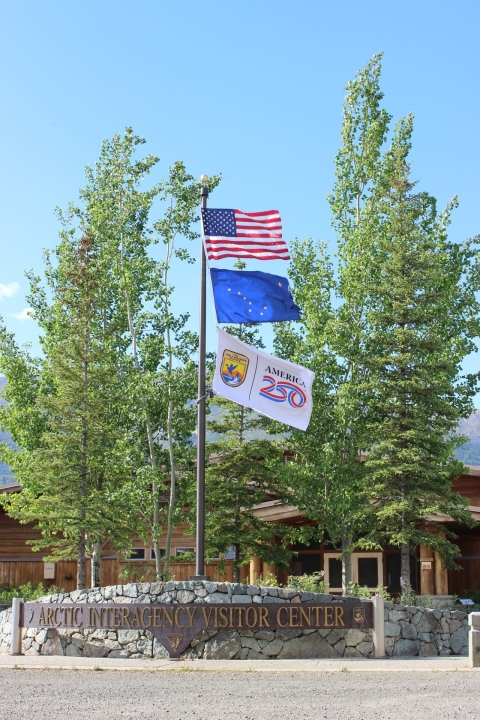
Arctic is the largest refuge in the National Wildlife Refuge System, and it contains the largest designated Wilderness within the System. It also has three Wild and Scenic Rivers Wild and Scenic Rivers
The Wild and Scenic Rivers Act of 1968 established the National Wild and Scenic Rivers System, and authorizes Congress to preserve certain rivers with outstanding natural, cultural and recreational values in a free-flowing condition for the enjoyment of present and future generations. The act is notable for safeguarding the special character of these rivers, while also recognizing the potential for their appropriate use and development. The act encourages river management that crosses political boundaries and promotes public participation in developing goals for river protection.
Learn more about Wild and Scenic Rivers (Sheenjek, Ivishak and Wind). As the homelands of the Iñupiat and Gwich'in peoples, the area’s cultural heritage is also rich and vibrant.
The refuge welcomes visitors from all over the world who come to experience this truly wild place. Once there (most fly in to the refuge by permitted air taxi), you can go anywhere in the refuge – all refuge lands are open to the public with no visitor fees or specific entry points. All you need is a healthy dose of self-reliance. For instance, most bring their own food and gear, and cell phones don’t work but satellite phones do in many areas.
Getting there is a journey in itself. Once you arrive, though, wonder awaits, whether you want to camp, hike, float rivers, hunt, fish or watch wildlife.
Because it’s so vast and wild, you may need a guided trip, plenty of patience, probably both (authorized recreational guides, hunting guides and air operators), but it’s worth it for the opportunity to see a polar bear, the Porcupine Caribou Herd migration, muskox, Dall sheep, wolves, wolverines or some of the over 200 bird species.

The refuge also attracts visitors to hunt, primarily for caribou, Dall sheep and moose. (Follow Alaska state, hunting regulations or if eligible, federal subsistence regulations.)
This untamed arctic landscape tests our bodies, minds and spirit, and through responsible stewardship, this vast wilderness will challenge future generations.
Next up, we follow the flags to the Northern Alaska Fish and Wildlife Field Office, which works with others to deliver conservation over approximately 338 million acres of Alaska. Stay tuned for the next chapter on this historic tour!