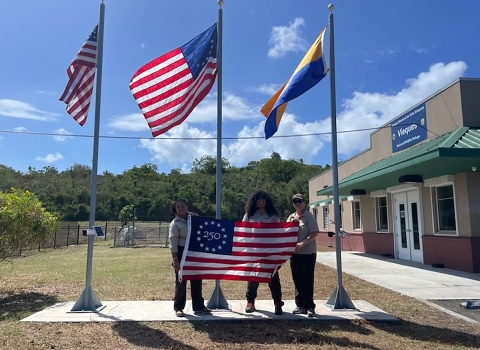
As part of the Flags Across America initiative for America’s 250th anniversary, the U.S. Fish and Wildlife Service is sharing stories from the places where our commemorative flags have traveled. From historic hatcheries to vibrant refuges, each stop celebrates conservation as an enduring American value. Join us as we highlight the lands, waters, and wildlife that connect our nation’s past, present, and future.
In April 2026, the flags reached Neah Bay, Washington, the northwesternmost point of the contiguous United States, meeting the Pacific Ocean with pride and strength. They were welcomed by the Makah Indian Tribe, a community that has called this land home since time immemorial. Rich in ocean heritage, the tribe is guided by deep respect for the resources that sustain them and committed to the long-term health of their homeland.
Makah National Fish Hatchery was established by the U.S. Congress to produce salmon and steelhead for the waters within the boundaries of the Makah Indian Reservation. Today, the hatchery continues to support sustainable fisheries that provide harvest opportunities for both tribal members and the visiting public.
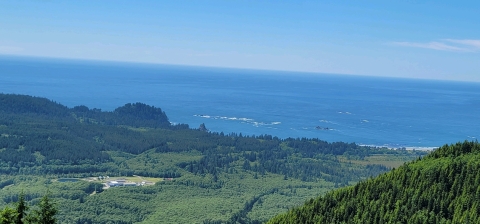
Located on an 80-acre parcel leased from the Makah Tribe, the hatchery sits among hemlock forests, wetlands, and the flowing Tsoo-Yess River. The Pacific Ocean lies only half a mile away; its crashing waves audible from the hatchery grounds. Nearby Olympic National Park brings droves of visitors through the area in summer, many of whom stop to explore the hatchery and the surrounding landscape.
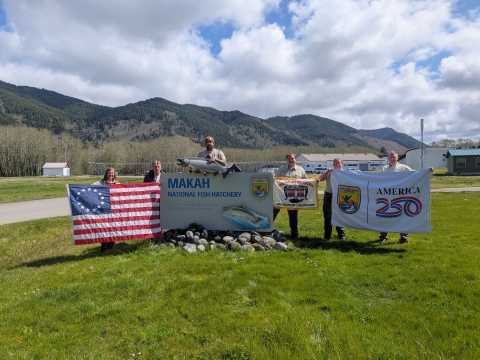
Makah National Fish Hatchery is co-managed with the tribe, reflecting a relationship built on respect, shared responsibility, and generations of dedicated workers. For many, hatchery work has long been a meaningful livelihood— one carried forward by community members, U.S. Fish and Wildlife Service staff who are also parents, grandparents, and tribal members themselves, and interns from the local high school. The people who care for the hatchery, alongside the fish that sustain their way of life, form its enduring foundation.

The Makah Tribe includes roughly 1,500 members living on the reservation in Neah Bay. The community is home to the Lady Reds basketball team, winners of a historic four-consecutive state basketball championships in the 1B girls league, the Red Devils football team, and the proud descendants of the tribe’s original village families.
Visitors to Neah Bay often remark on the community’s generosity, hospitality, and commitment to sharing cultural knowledge. As travelers enter town, they are greeted by two large wood carvings of a man and woman in traditional regalia, standing outside the renowned Makah Museum. Inside, thousands of artifacts recovered from the historic Lake Ozette archaeological site tell the story of a people whose ocean-based traditions remain central to their identity today.

Each year, Makah National Fish Hatchery raises 2.2 million fall Chinook salmon, 300,000 coho salmon, and 180,000 steelhead for release into the Tsoo-Yess River. These fish support sport fisheries, tribal in-river setnet harvests (harvests that rely on a fishing net anchored in a fixed position), and ocean fisheries. The environment surrounding the hatchery is dynamic; low water summers and extremely wet winters, with more than 100 inches of rain, test both infrastructure and staff.
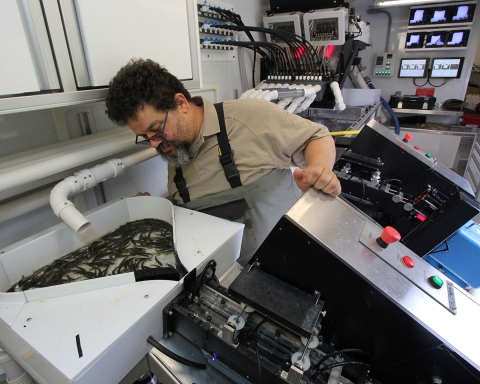
By August, fall Chinook returning to the Tsoo-Yess River number between 5,000 and 10,000 adults. Coho follow in October, with 3,000 to 6,000 adults, and winter steelhead arrive in December, numbering 1,000 to1,500 adults. Chinook and coho adults are passed upstream to bolster natural production. All juvenile fish receive adipose fin clips to signify they are hatchery fish, and some receive coded wire tags to collect important information from returning adults (brood year, hatchery name, genetic stock). Fish used in spawning are provided to the tribe for food and ceremonial use, and remaining carcasses are used for stream enrichment by the Makah Fisheries Department.
The hatchery works together with the Western Washington Fish and Wildlife Conservation Office as part of the Service’s Puget Sound–Olympic Peninsula Complex, which also includes Quilcene and Quinault National Fish Hatcheries. These facilities, and more, are a part of the Service Pacific Region’s Fish and Aquatic Conservation Program.
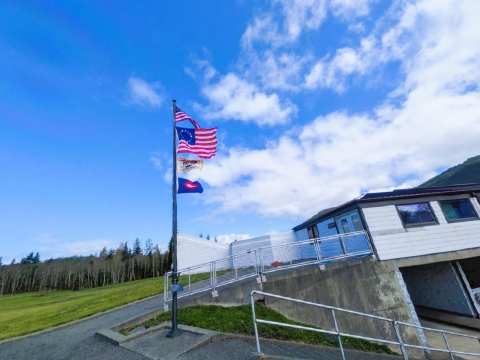
Makah National Fish Hatchery is a source of pride for both the Service and the Makah Tribe. It stands as a powerful example of what can be achieved through shared purpose and cooperation. Flying the Freedom 250 flags at the hatchery in honor of America’s semiquincentennial was a moment of joy and reflection for all. We hope this story inspires readers to visit both the hatchery and the beautiful homelands of the Makah Indian Tribe.
Next up, we follow the flags to Leavenworth National Fish Hatchery, where tribal nations, community partners, and hatchery staff come together to release 1.2 million spring Chinook annually. Stay tuned for the next chapter on this historic tour!