For many invasive species invasive species
An invasive species is any plant or animal that has spread or been introduced into a new area where they are, or could, cause harm to the environment, economy, or human, animal, or plant health. Their unwelcome presence can destroy ecosystems and cost millions of dollars.
Learn more about invasive species , Alaska is considered to be earlyon the invasion curve. This means most efforts are focused on prevention or early detection and rapid response, as opposed to containment and long-term management. Prevention and early detection and rapid response efforts are more cost and time effective. If invasive species populations become established it is more difficult, much more expensive, and sometimes nearly impossible to remove them.
The original
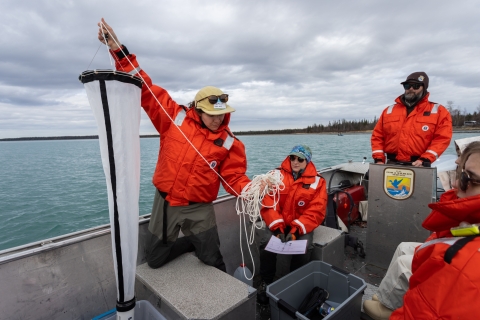
Recognizing the opportunity to invest in prevention and early detection and rapid response, invasive species management practitioners from across Alaska and the lower-48 states gathered for the first collaborative hands-on training for invasive quagga and zebra mussel sampling in Alaska, dubbed “All Hands on Deck for Early Detection”, in July 2024. These small, highly invasive mussels (collectively known as dreissenid mussels) are not known to occur in Alaska; however, they are discovered in new waterbodies across North America each year and there have been several infested watercrafts destined for the state.
“All Hands on Deck for Early Detection” was the first of its kind in Alaska. Cohosted by U.S. Fish and Wildlife Service (USFWS), Alaska Department of Fish and Game(ADF&G), Bureau of Reclamation, University of Alaska Anchorage (UAA) Alaska Center for Conservation Science (ACCS), and Alaska Invasive Species Partnership (AKISP), the hands-on training was a huge success! Building upon the shared passion and momentum, shortly after the training, discussions began for a sequel.
The next installment
The sequel came to fruition in May 2026, as part of the Surveillance of Invasion Hotspots in Southcentral Alaska project. Southcentral Alaska was identified as a geographic ‘hotspot’ for terrestrial, freshwater, and marine invasions given that nonnative species often arrive through ports of entry with high human population density or activity. Funded by USFWS and led by UAA ACCS, the goal of this ‘hotspot’ project is to fill a gap in early detection surveillance in an area increasingly vulnerable to invasive species, using existing decision support tools and standing partnerships. This aligned perfectly with the All Hands Back on Deck for Early Detection training.
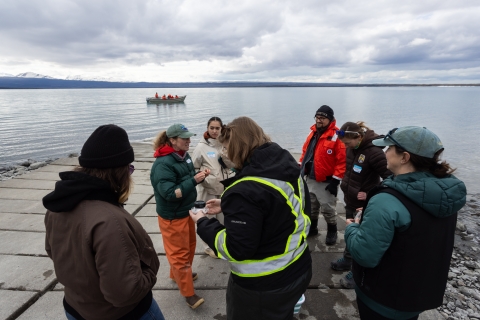
Similar to the original, this second training was co-hosted by AKISP members from USFWS, ADF&G, ACCS, and UAA Kachemak Bay National Estuarine Research Reserve (KBNERR) and featured both classroom learning and field sampling techniques. To expand the geography and access to partners the sequel training was hosted at Kenai National Wildlife Refuge. Participants joined from Anchorage, Homer, and Kodiak Soil and Water Conservation Districts, Kenai and Togiak National Wildlife Refuges, Kenai Watershed Forum, Auburn University School of Fisheries Aquaculture and Aquatic Sciences Molecular Lab, USFWS Alaska Region Conservation Genetics Lab, Cook Inlet Aquaculture Association, SGS Alaska Environmental Laboratory, USFWS Inventory and Monitoring Program, ADF&G, and KBNERR.
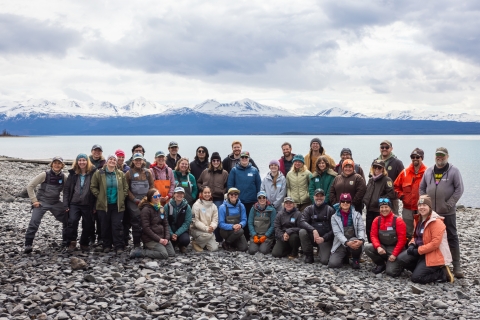
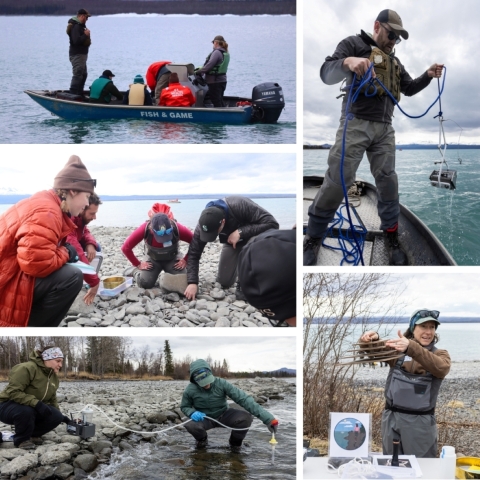
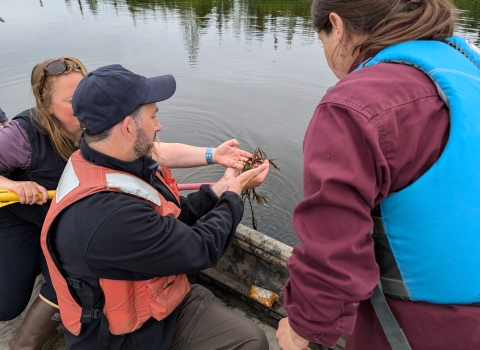
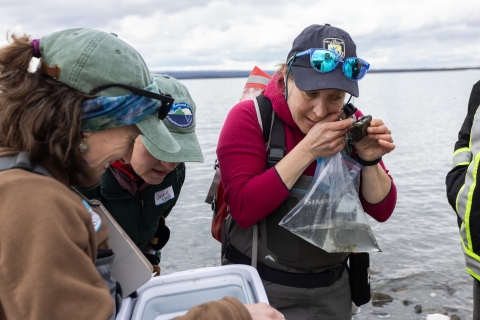
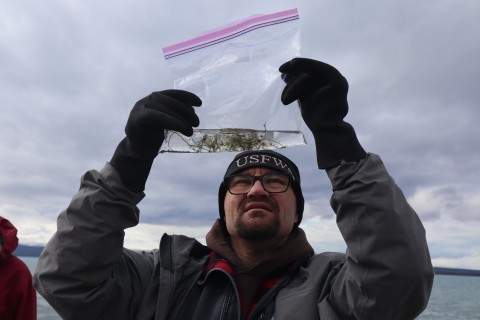
During the field portion of the training, over 35 attendees rotated through stations at Skilak Lake to get their hands on different sampling techniques from both the shore and boats. At a ponar dredge station, lake bottom sediment, plants, rocks, and other debris were collected and inspected. At a plankton throw station, plankton nets were lowered from boats to collect plankton samples. At the shoreline and substrate inspection station, surfaces, such as boat launches and rocks were scraped and inspected. At the plant shakedown station, aquatic vegetation was collected, sorted, and inspected. This year included a new environmental DNA (or eDNA) training station. At the eDNA station, water samples were collected and filtered, different equipment was tested, and contamination protocols were followed.
Keeping the momentum going
The success of All Hands on Deck for Early Detection collaborative trainings cannot be overstated. The establishment of dreissenid mussels in Alaska would be devastating, resulting in significant costs to the ecology – disruption of food webs, habitat degradation and reduced biodiversity – and economy – infrastructure damage, reduction subsistence, sport, and commercial fishing opportunities, and decrease in recreation and tourism. Proactive preparations across the state are vital for potential detection of dreissenid mussels, and other invasive species.
Following the training, all attendees participated in a decontamination station and group discussion.
Participants were asked, “what did you find most enjoyable or useful?”…
“All the hands-on demos were super effective at demonstrating the variety of entrypoints for sampling thoroughness/intensity.” - Workshop participant
“I really liked how the stations were split up so each person got the chance to practice the methods hands-on. I think that's very important for everyone to grasp the knowledge and procedures involved.” - Workshop participant
Continuing to build capacity and leverage existing expertise and resources are essential for dreissenid mussel prevention. Co-hosts of All Hands on Deck for Early Detection (USFWS, ADF&G, ACCS, KBNERR) are completing action items and lessons learned from the training. Along with other partners, they meet regularly as part of the AKISP Dreissenid Committee. There is already discussion about another installment of the training. Stay tuned for 2027...
Everyone can help prevent the spread of aquatic invasive species.
- Clean, drain, dry your gear before moving to a new waterbody.
- Report any suspected invasive species.
Call 1-877-INVASIV (1-877-468-2748)
Use Alaska Department of Fish and Game Online Invasive Species Reporter