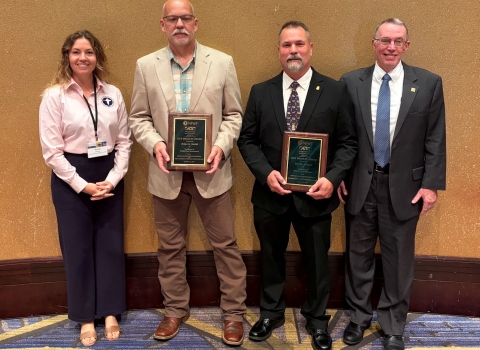
We at the U.S. Fish and Wildlife Service are excited to announce our 2025 Recovery Champions from the Midwest Region. Our 2025 Fish and Wildlife Service National Recovery Champion is the U.S. Department of Agriculture Wildlife Services - Michigan team and our Regional Recovery Champions are Missouri Department of Transportation Environmental Team and Angie Boyer from our Ohio Field Office. Recovery Champions are U.S. Fish and Wildlife Service staff and their partners whose work is advancing the recovery of endangered and threatened species of plants and animals. Each year we recognize one individual or team at the national level and additional staff and partners at the Midwest regional level.
2025 External Partner National Recovery Champion U.S. Department of Agriculture Wildlife Services–Michigan team
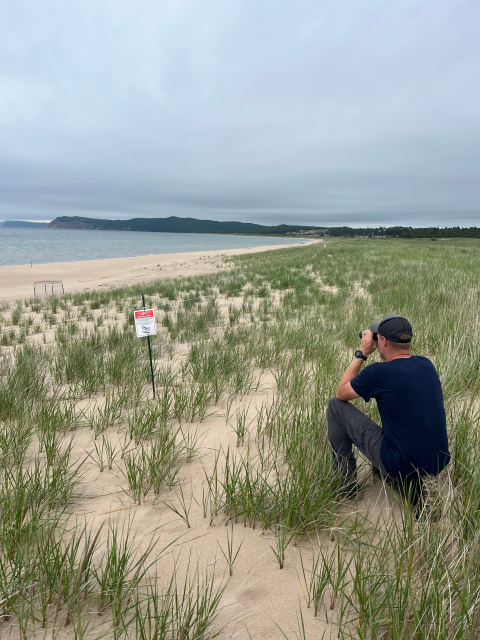
The U.S. Department of Agriculture Wildlife Services – Michigan team’s dedication, innovation and leadership have been pivotal in accelerating recovery efforts for the Great Lakes piping plover, strengthening the effectiveness of gray wolf management and completing key actions needed to support the successful recovery and delisting of the Kirtland’s warbler.
For the endangered Great Lakes piping plover, the Michigan Wildlife Service’s team developed highly effective predator management strategies at plover breeding sites - an essential factor in the remarkable rebound for this species from just 13 pairs in 1984, to 88 pairs in 2025. The team’s active engagement in recovery planning and support for other states has contributed significantly to range-wide progress.
For the endangered gray wolf, working with Michigan Department of Natural Resources, the Michigan Wildlife Service’s team led the way in advancing non-lethal techniques to prevent and address depredations. With a robust population of more than 700 wolves in Michigan's Upper Peninsula, it consistently maintains one of the lowest annual depredation rates in the country. This success reflects the creativity, responsiveness and dedication of the Michigan Wildlife Services team.
Regarding the Kirtland’s warbler, this team played a key role in developing and evaluating new cowbird management approaches that contributed directly to the species exceeding its recovery goals and ultimately being delisted from the list of threatened and endangered species. Collaboration with researchers at the Smithsonian Migratory Bird Center helped demonstrate that cowbird management could be safely paused without jeopardizing recovery, which is an important milestone in long-term conservation planning. New and impactful partnerships for species recovery continue to emerge thanks to Michigan Wildlife Service’s team commitment to collective conservation. We applaud their enduring dedication to endangered species conservation.
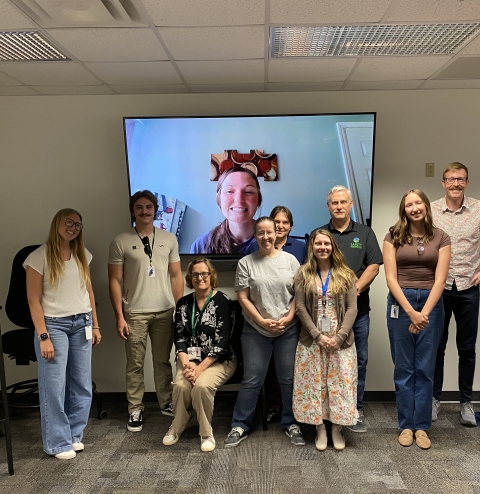
2025 Fish and Wildlife Service Midwest Region Recovery Champion Missouri Department of Transportation Environmental Team and Angie Boyer
The Missouri Department of Transportation Environmental Team is enhancing Missouri’s transportation system while supporting protected species recovery and building conservation partnerships.
Missouri Transportation Environmental Team has integrated conservation into transportation projects through proactive planning and investment. Its participation in national programmatic consultations for bat species demonstrates strong leadership in balancing infrastructure development with ecological stewardship. Since 2018, the department has contributed approximately $1 million to bat recovery. The Improve Interstate 70 Project, spanning 250 miles, further showcases their ability to prioritize conservation amid large-scale improvements through multiple formal consultations and more than $172,000 in mitigation for cave restoration and conservation banks for Indiana bat, northern long-eared bat, tricolored bat and gray bat. Because of these efforts, we were able to propose the gray bat for delisting in our latest 5-year review of the species’ status.
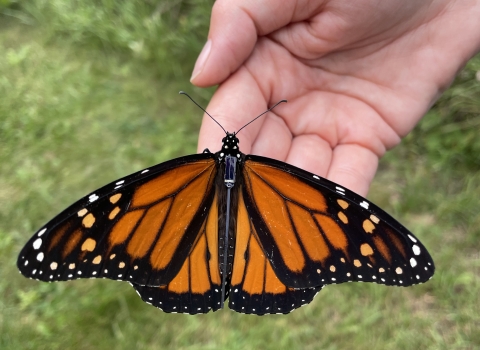
Missouri Transportation Environmental Team conservation contributions have been substantial and sustained. In addition to the bat initiatives, they joined the Monarch Candidate Conservation Agreement with Assurances, designating 30,000 acres of Missouri Department of Transportation property for pollinator habitat. They also provided mussel conservation and habitat protection through mitigation for federally listed freshwater mussels, including the pink mucket, rabbitsfoot, scaleshell, snuffbox and western fanshell. The team’s mitigation efforts have extended beyond Section 7 Section 7
Section 7 Consultation
The Endangered Species Act (ESA) directs all Federal agencies to work to conserve endangered and threatened species and to use their authorities to further the purposes of the Act. Section 7 of the Act, called "Interagency Cooperation," is the mechanism by which Federal agencies ensure the actions they take, including those they fund or authorize, do not jeopardize the existence of any listed species.
Learn more about Section 7 of the Endangered Species Act by addressing stream impacts under the Clean Water Act.
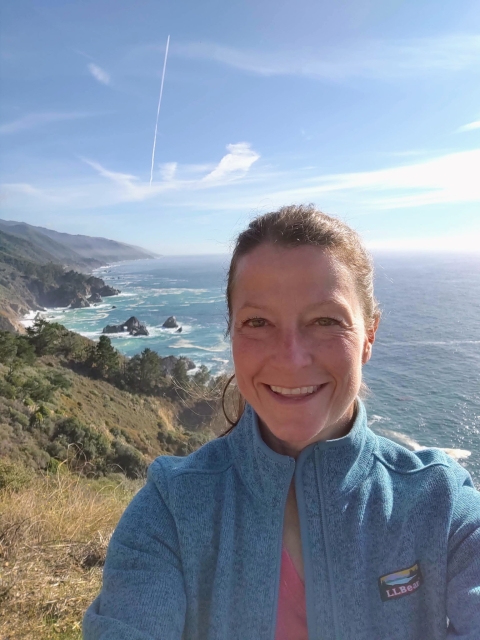
Angie Boyer’s leadership in recovering Ohio’s freshwater mussels demonstrated unwavering commitment to conserving some of the nation’s most imperiled species.
Angie’s work with the purple cat’s paw pearly mussel has been especially impactful. After years of collaboration and extensive search efforts, her persistence contributed to the rediscovery of female individuals in 2012. Over the past seven years, Boyer has transported and carefully placed juvenile mussels at restoration sites, advancing the species’ recovery. Through partnerships with the Kentucky Department of Fish and Wildlife Resources, the Columbus Zoo & Aquarium, White Sulphur Springs National Fish Hatchery and the Ohio River Islands National Wildlife Refuge, you helped develop successful propagation methods. These efforts led to the release of the first captive reared juveniles in 2017, and since then more than 12,200 have been introduced into six river systems, across four states, with documented survival and strong promise for long‑term recolonization.
Even though Boyer has retired, her leadership extended across many other conservation initiatives. She worked with multiple partners, including the Ohio Division of Wildlife, Pennsylvania Fish and Boat Commission, Ohio State University and the Pennsylvania Department of Transportation, to restore mussel populations, relocate thousands of individuals for conservation purposes and support critical projects such as the Six‑Mile Dam removal. Angie’s development of a statewide survey protocol with the Ohio Department of Transportation streamlined surveys and led to new population discoveries. She also guided key conservation documents, including listing rules, species status assessments and recovery plans.
Learn about more other Recovery Champion recipients across the nation.