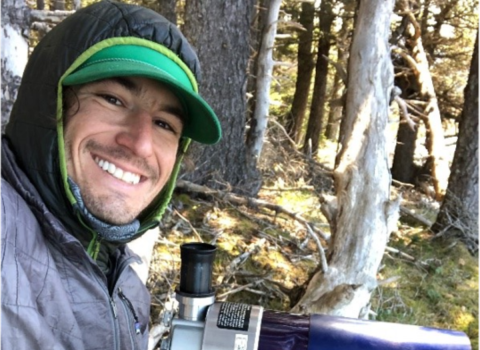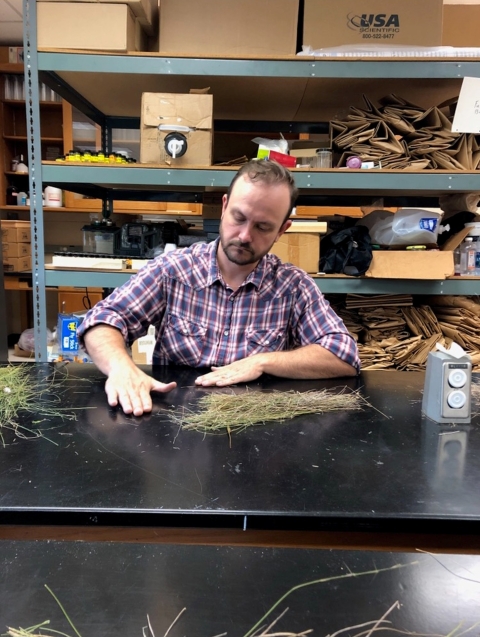
Henry Woolley is our latest FWS scholar! Henry is a biologist out of the Regional Office in Hadley, MA who works on a variety of hunting and fishing packages for the Northeast region. His path to the U.S. Fish and Wildlife Service (FWS) has been shaped by wide-ranging experiences, persistent curiosity, and a deepening commitment to conservation.
Henry graduated from the University of Rochester in 2007 with a B.S. in Environmental Science and spent several years working as a building energy auditor before transitioning into wilderness monitoring in Nevada. During that work, he learned about graduate assistantships and internship opportunities in conservation—insights that ultimately set him on a new professional trajectory.
In 2014, 2015, and 2016, Henry served as an intern with Presquile National Wildlife Refuge and Mississippi Sandhill Crane National Wildlife Refuge (MSCNWR). These roles allowed him to install a native tree nursery for habitat restoration, conduct wildlife surveys, engage in habitat management, participate in prescribed burns, and help deliver environmental education programs. His time at MSCNWR also sparked an interest in the population dynamics of the critically endangered Mississippi sandhill crane (MSCR), ultimately inspiring him to pursue a PhD in Integrative Biology.
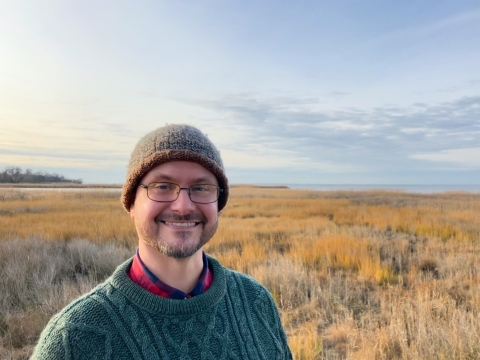
In 2021, Henry earned his PhD from the University of New Orleans. His dissertation titled “Ecological Factors Influencing Population Dynamics of the Mississippi Sandhill Crane, Grus canadensis pulla” reflected close work with MSCNWR staff, particularly Scott Hereford, recently retired MSCNWR Refuge Biologist. The research sought to fill knowledge gaps on the reproductive and population trends of Mississippi sandhill crane on the refuge. Following graduation, Henry did post-graduate MSCR research before entering the Presidential Management Fellowship program and working with the Bureau of Land Management as a GIS specialist. In 2024, he joined the FWS as a term Biologist in the Northeast regional office, continuing to engage in research when opportunities arise. Most recently, he published his post-graduate MSCR research in the newly revitalized Biological Technical Publication Report series.
Mississippi Sandhill Crane National Wildlife Refuge
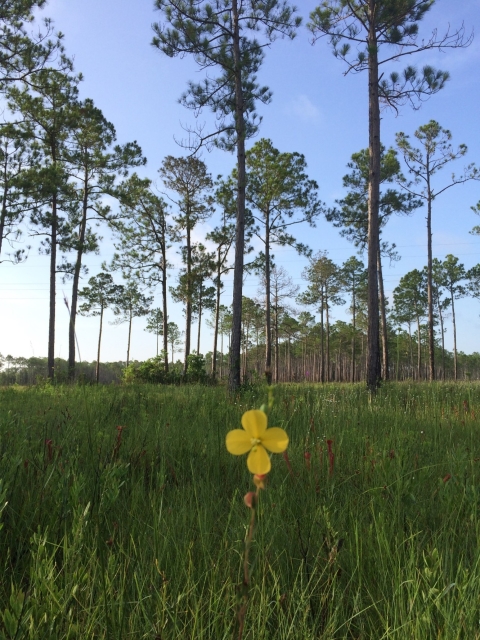
Mississippi Sandhill Crane National Wildlife Refuge (MSCNWR) was established in 1975 under authority of the Endangered Species Act to protect its critically endangered namesake species. Consisting of 7,810 hectares of pine savanna and flatwoods habitat, the refuge protects and restores critical habitat to ensure the survival of Mississippi sandhill crane (MSCR) and other rare flora and fauna that rely on the wet pine savanna ecosystem. As an intern at MSCNWR in 2016, Henry saw firsthand the management of a critically endangered species. For years, the MSCR population restoration program at the refuge had been recording fledging rates of cranes across the refuge, which had sparked the question: Why did some areas of the refuge have higher rates of fledging than others? During Henry’s internship, he connected with researchers from the University of New Orleans who worked closely with the Refuge on MSCR population monitoring and discussed potential mechanisms behind the fledging rates. Those questions and discussions encouraged Henry to purse a PhD in Integrative Biology focused on MSCR ecology. In the report titled "Habitat suitability of historical Mississippi sandhill crane nest sites 1991 – 2022,” Henry and co-author Scott Hereford aimed to determine if a Habitat Suitability Index (HSI) of nesting sites on the MSCNWR can be used to explain historical variation in nesting production across the refuge. After adapting a HSI used for Florida sandhill crane, they found that historical nest site choice could be related to habitat suitability. However, fledging rates as a measure of nest success did not appear to be affected by habitat suitability, suggesting other factors were driving differential fledging rates. Work continues at the refuge to understand MSCR population dynamics and the conservation of the species.
Conservation and Connection
Early in Henry’s career, he worked in wilderness monitoring – where he can recall the first time he saw a sandhill crane.
“It was late in the day of our first day of monitoring and my coworker and I had kind of a rough first day. We'd been chased by wild horses, then scrambled down a steep wall into a canyon and were walking along the canyon back to the camp site when this enormous bird came around a corner flying in our direction. My first thought was "Pterodactyl!" Very memorable experience, somewhat otherworldly on top of a long eventful day of hiking.”
Three years later, he would find himself working directly with the Mississippi sandhill crane—a subspecies of the sandhill crane (Antigone canadensis)—as an intern at MSCNWR.
While studying Mississippi sandhill crane, Henry found that the species and its conservation exemplified what made him passionate about the natural world - connection. Mississippi sandhill crane are intricately connected with wet pine savannah habitat; understanding that connection is imperative to the continued existence of the critically endangered species. Likewise, the conservation of the species has created connections among the many people and partners that have worked towards the recovery of the species. Henry’s journey—from an unexpected, almost otherworldly encounter in the Nevada backcountry to a decade of work centered on the species—illustrates how a single moment of connection in the field can grow into a lifelong commitment to conservation.
Biological Technical Publication Series
Are you inspired to share your research? The Biological Technical Publication Series is a recently revitalized report series to provide FWS employees with a method to make the work they do readily accessible to the public. The series is broad in scope, and the USFWS Conservation Library evaluates submissions on a case-by-case basis with a quick turnaround to publication. Submissions do not undergo peer-review. Library staff provide minor editing as needed prior to publication. If you are interested in submitting your work to the Biological Technical Publication Series, please fill out the submission form found on the Conservation Library SharePoint. You can also contact Chelsea Kross (chelsea_kross@ios.doi.gov) or Megan Bean (megan_e_bean@fws.gov) with any questions.
Brought to you by the USFWS Conservation Library
The USFWS Conservation Library serves the Fish and Wildlife Service community to support research, learning, and science excellence. We are connecting FWS scientists to library resources worldwide via library.fws.gov. The FWS Scholar series highlights Service employees in the field who have contributed to scientific research and the work of conservation. If you are a USFWS employee who has recently published your research, email us at library@fws.gov.