A cacophony of whistling, chirping and singing fills the early morning desert air. The clatter of birds nearly drowns out the rumble of passing cars and buzzing mechanical sounds. In a city with more than half a million people, more than 200 distinct species of birds also call Tucson home. When including all of Pima County, this number soars to 350. Tucson is truly an oasis in the Sonoran Desert.
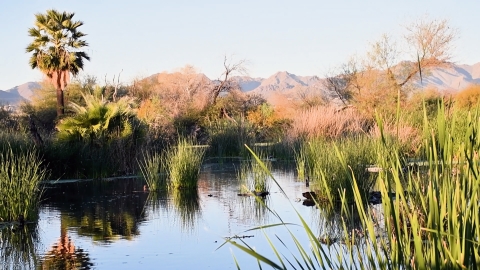
On February 21, 2026, community members, volunteers, and partners gathered to celebrate Tucson’s designation as the 32nd Urban Bird Treaty City. In recognition of the region’s vital wildlife habitats, with about 85 million birds migrating through the region each spring and fall, the treaty ceremony affirmed the importance of collective partnership in keeping birds safe and abundant.
“I am honored to be here in Tucson to celebrate their designation as the 32nd Bird Treaty City in the county,” said Kristin Madden, the U.S. Fish and Wildlife Service’s Acting Southwest Deputy Regional Director. “These efforts have taken several years and a multitude of partners, from the city agencies to non-profits, to community members, all coming together to support a beautiful city where birds and people can thrive.”
The festivities took place at Sweetwater Wetlands Park, a wastewater recharge facility for Tucson and a welcoming city park with a looped wetland boardwalk, gazebo, benches, interpretive signage, and lots of birds. Volunteers led birding walks, offered telescope viewing of a Cooper’s hawk building a nest, and provided bird-themed games and activities. Community members of all ages and backgrounds showed up to commemorate this prestigious dedication.
About the Urban Bird Treaty Program

In becoming an Urban Bird Treaty City, Tucson joined a network of other cities, from Alaska to Alabama, that have received this distinction. The Urban Bird Treaty program is a collaborative effort between the U.S. Fish and Wildlife Service and participating U.S. cities that work collectively to make cities healthier places for birds and people. Having this recognition benefits a city’s human and avian residents in several ways. It can streamline conservation projects, promote a city’s livability and sustainability, help achieve multiple conservation goals simultaneously (such as native plant and pollinator conservation), and increase the chances of receiving grants for conservation projects.
"Tucson's Urban Bird Treaty designation is the culmination of years—in some cases, decades—of relationship-building and collaboration, and a recognition of the importance the biodiversity that makes this region so unique,” said Melissa Fratello, Executive Director for Tucson Bird Alliance. “Tucson's living environment draws thousands of people here every year, but we need to do more for birds than just observe them. As bird populations decline, it's our responsibility to do everything we can, providing food and shelter through restored and protected habitat, and safe passage through a bird-friendly built environment. This treaty symbolizes the commitment of our City government, non-profit peers, and higher education partners to doing just that."
Tucson is for the Birds

Eager crowds gathered during the official signing ceremony, which included speeches from the signatories as well as other partners. Signers of the Urban Bird Treaty included Tucson Mayor Regina Romero, Tucson Bird Alliance Executive Director Melissa Fratello, and U.S. Fish and Wildlife Service Southwest Region Acting Deputy Regional Director Kristin Madden. Many devoted individuals and over half a dozen different partners made the noteworthy honor possible.
“Tucson is honored to be recognized as an Urban Bird Treaty City,” said Mayor Romero. “This reflects years of hard work by many partners through efforts like the Tucson Million Trees initiative. Protecting birds and their habitats strengthens the ecosystems that make our desert home so special. I want to thank Tucson Water, our partners at the Tucson Bird Alliance, and the many community members who worked together to make this possible. We are grateful to the U.S. Fish and Wildlife Service for recognizing Tucson’s commitment to protecting our environment.”
Birding is Not Just About Birds
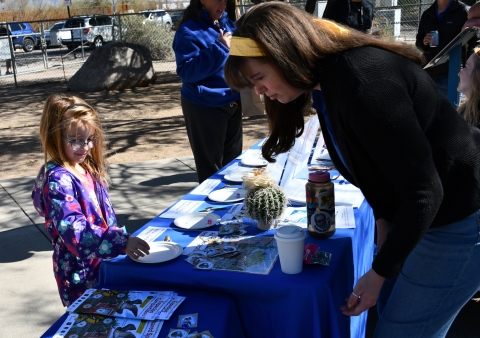
For many who live in urban areas, birds connect us to the natural world and remind us to care for the wildlife that we share the landscape with. Birding is a simple and flexible recreational opportunity that anyone can enjoy. It can be done indoors and outdoors, with little equipment or all the accessories, and alone or with other people.
Birding helps us make and strengthen connections with our community. Throughout the Tucson Urban Bird Treaty event people shared stories about how family members such as a child, parent, or grandparent sparked their interest in birding by sharing their birding hobby. In addition, appreciating birds has been shown to improve our moods and helps get us active, improving our health and quality of life. Opening our hearts and our communities to our flying friends can connect us to nature, each other, and inspire us to keep our cities safe and healthy for all their residents, feathered or not.