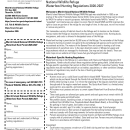
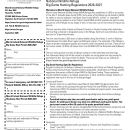
Due to recent heavy flooding rains, and for the safety of our visitors, Black Point Wildlife Drive and Oak and Palm Hammock Trails will be temporarily closed until water recedes. For more information or for updates, please call the Visitor Center at (321) 861-0669.
The refuge is making a temporary adjustment to visitor access in support of NASA’s Max Power Event. These changes will be in effect from November 4 – 8, 2026. Normal access to refuge facilities will resume on Monday November 9, 2026.
CLOSED:
- 2.5 mile Peacocks Pocket Road to all public access including driving, bicycling and pedestrian traffic
- Palm and Oak Hammock Trails (November 7-8 ONLY)
- Center Road (November 7-8 ONLY)
- South end of Biolab Road (November 7-8 ONLY)
- East Gator Creek Road (November 7-8 ONLY)
OPEN:
- Refuge Visitor Center
- Black Point Wildlife Drive
- Biolab Drive will remain open from the north access gate to the Max Hoeck Road intersection, where there is adequate space for visitors to safely turn around. The National Park Service will close the southern access gate. This restriction affects approximately 0.85 miles of the six-mile Biolab Drive. Pedestrian and bicycle access will remain allowed within the restricted segment, minimizing disruption to public use.
- West Gator Creek Road and Catfish Creek Road will remain open. The only affected route will be the exit through East Gator Creek Road.
- The Peacocks Pocket impoundment levee will remain open for pedestrian and bicycle access from the western access point. Access from the east via Peacocks Pocket Road will be closed.
Scrub Ridge Trail and Pine Flatwoods Trail will remain open to the public.
Why the changes? These steps help keep everyone safe and protect resources during the event, and were requested by the Kennedy Space Center. Peacocks Pocket Road is located adjacent to and west of the SLF runway, within the vicinity of the planned aerobatic box for the airshow and aerial demonstrations. This closure is necessary for public safety ensuring no one except emergency personnel have access to this area during flight operations.


Visit Us

National wildlife refuges offer us all a chance to unplug from the stresses of daily life and reconnect with our natural surroundings. Merritt Island National Wildlife Refuge offers a wide diversity of recreational and educational opportunities. From bird watching and nature study, to fishing and seasonal hunting, you are sure to find an activity to satisfy your passion.
Location and Contact Information
About Us

Merritt Island National Wildlife Refuge was established as an overlay of the National Aeronautics and Space Administration’s John F. Kennedy Space Center. According to the agreement with NASA, the lands and waters of the Kennedy Space Center are primarily to serve the space program and secondarily to serve as a wildlife refuge or park.
What We Do
Wildlife conservation is at the heart of the National Wildlife Refuge System. It drives everything on U.S. Fish and Wildlife Service lands and waters managed within the Refuge System, from the purposes for which a national wildlife refuge national wildlife refuge
A national wildlife refuge is typically a contiguous area of land and water managed by the U.S. Fish and Wildlife Service for the conservation and, where appropriate, restoration of fish, wildlife and plant resources and their habitats for the benefit of present and future generations of Americans.
Learn more about national wildlife refuge is established to the recreational activities offered to the resource management tools used.
Our Species

Merritt Island National Wildlife Refuge was established in 1963 for the protection of migratory birds. Consisting of 140,000 acres, the refuge provides a wide variety of habitats: coastal dunes, saltwater marshes, managed impoundments, scrub, pine flatwoods, and hardwood hammocks. These habitats provide habitat for more than 1,500 species of plants and animals and 15 federally listed species.
Our Library
Visit our digital library to view our brochures and publications all in one convenient location.