


Species that are considered low risk present a minimal risk of invasiveness because the climate where they are established is sufficiently different from the United States climate AND there is no evidence of invasiveness globally.
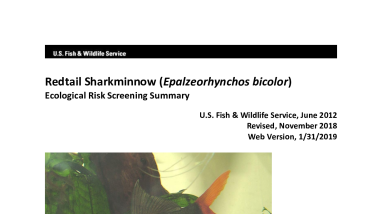
Redtail Sharkminnow (Epalzeorhynchos bicolor) is a species of cyprinid native to the Chao Phraya basin in Thailand. This fish has been extirpated from much of its original native range due to a combination of human inducted factors, including overharvesting for the ornamental industry. E. bicolor is still extremely popular in the ornamental trade and is supplied through extensive captive breeding. E. bicolor is susceptible to some diseases, including infection with Aphanomyces invadans, which is an OIE-reportable disease. The history of invasiveness is low. A few records of introduction were found, but no records of establishment were found. E. bicolor has been in trade for at least 4 decades. In a single month in 1992, 153,242 individuals of E. bicolor were imported to the United States alone. If this number is extrapolated for even a single decade that would result in an estimated trade volume of over 18 million individuals. The climate match was low. There were only two small areas of medium match in the contiguous United States, southern Texas and southern Florida. The certainty of assessment is medium. The overall risk assessment category is low.
Publication date
Type of document
Low Risk
Program


