


Species that are considered uncertain risk need a more in-depth assessment beyond the Risk Summary to better define the species’ risk to U.S. environments.
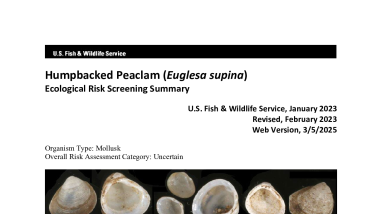
Euglesa supina, the Humpbacked Peaclam, is a mollusk that is native to Eurasia. This mollusk can tolerate multiple systems but prefers rivers. It typically filter-feeds diatoms. E. supina was likely introduced to North America through ballast water used in the shipping industry. It has established nonnative populations around the Great Lakes in Canada and the United States. The History of Invasiveness for Euglesa supina is classified as Data Deficient due to lack of information on impacts of introduction. The climate matching analysis for the contiguous United States indicates establishment concern for this species. Areas of high match occurred in the Great Lakes, Northeast, upper Midwest, and in scattered locations around the Rocky Mountain region. Areas of low to medium match were found in Florida, Gulf Coast, and in parts of California, Oregon, and Washington. The Certainty of Assessment for this ERSS is classified as Low mainly due to the lack of information regarding impacts of introduction. The Overall Risk Assessment Category for E. supina in the contiguous United States is Uncertain.
Publication date
Type of document
Uncertain Risk
Media Usage Rights/License
Public Domain
Program


