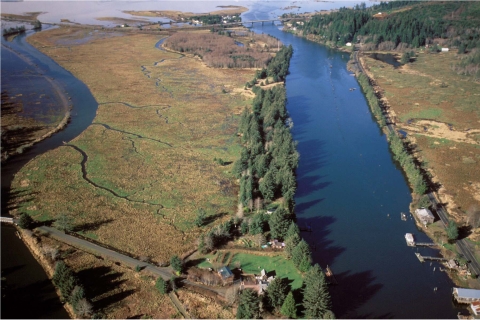
Travelers driving along U.S. Highway 101 south of Lincoln City, Oregon, this summer may notice excavators and crews working just beyond the roadway. Their work is part of a multi‑year effort to restore tidal wetlands in the Drift Creek Unit of Siletz Bay National Wildlife Refuge — an effort designed to reduce flooding, improve water quality and restore habitat for plants, wildlife, and fish including federally-listed salmon, and support healthy coastal ecosystems.
The lower Drift Creek floodplain was once a mosaic of tidal marsh, scrub-shrub habitat, spruce swamps, and branching, slow-moving channels weaving toward the bay; but more than a century of diking and land conversion dramatically altered the system. Over time, that intricate system flattened. Channels filled with silt, dikes blocked the tide, and large portions of historic wetlands became pastures.
This restoration project is reconnecting historic floodplain surfaces, restoring natural tidal processes, and improving habitat complexity — beneficial for long-term ecosystem health and critical for salmon recovery.

What to Expect This Summer
Through the end of August, excavators, trucks, and restoration crews will be visible from the highway as they restore 37 acres of wetlands:
- Filling old linear drainage ditches;
- Digging new tidal channels to mimic historic pathways;
- Placing large wood to create shelter for young fish and long-term habitat structure;
- Regrading low areas to connect floodplain surfaces; and,
- Preparing the ground for fall planting and seeding of native wetland species.
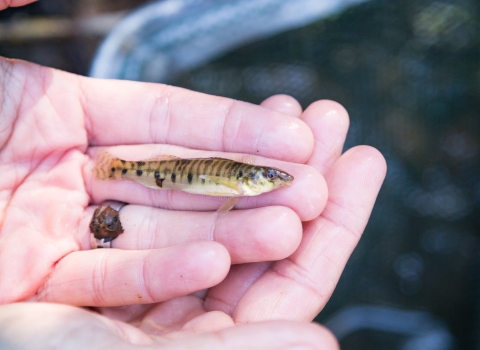
These changes will reduce flooding by spreading water across the restored floodplain, filter sediment and nutrients from upstream flow and improve water quality and restore the terrain that functioning wetlands need. For young coho and Chinook salmon, steelhead, cutthroat trout, and the small marine fish that use the estuary as shelter, these features mean safer passage and richer foraging grounds. Over time, these processes reestablish the natural choreography of an estuary — one that moves nutrients, wildlife, and water through its channels in a delicate but powerful cycle.
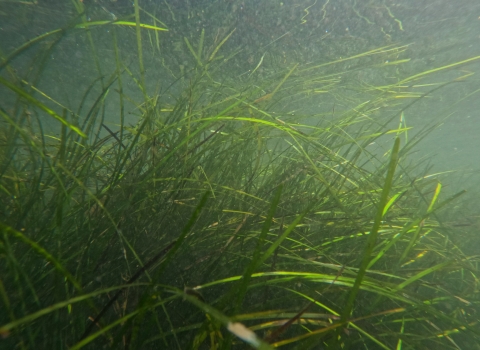
By fall, most heavy machinery will have left the site. Winter rains will find new channels, tides will reach farther inland, and crews will plant native vegetation that will, over time, become the bones of the marsh — sedges, rushes, salt-tolerant plants, and coastal spruce.

People Shape Places
Many organizations are coming together to work on the restoration. Project partners include the MidCoast Watersheds Council, U.S. Fish and Wildlife Service’s Oregon Coast National Wildlife Refuge Complex, Oregon Department of Fish and Wildlife, Bureau of Land Management, Wild Salmon Center, Lincoln Soil and Water Conservation District, Wolf Water Resources, and the Confederated Tribes of Siletz Indians.
Phase I of the project was completed in 2023 and restored 41 acres of former tidal wetlands east of Drift Creek Road. Crews lowered old dikes, dug over a mile of new tidal channels, placed large wood structures, created habitat mounds, and removed aging infrastructure. Since that time, native marsh and scrub-shrub vegetation has steadily returned, and rare spruce swamp habitat has begun to regenerate.
By this time next summer, travelers along U.S. Highway 101 will see a functioning tidal wetland that plants, wildlife, fish, and people will be able to enjoy for generations.