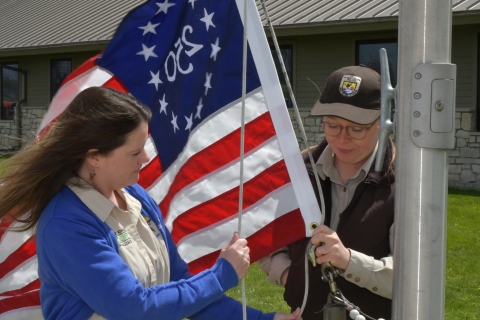
As part of the Flags Across America initiative for America’s 250th anniversary, the U.S. Fish and Wildlife Service is sharing stories from the places where our commemorative flags have traveled. From historic hatcheries to vibrant refuges, each stop celebrates conservation as an enduring American value. Join us as we highlight the lands, waters, and wildlife that connect our nation’s past, present, and future.
It can be hard to imagine that a beautiful wild place could exist so near the concrete, steel, and groomed gardens of a vast metropolitan area like Detroit, Michigan, and its suburbs. But Detroit River International Wildlife Refuge does exist, offering wonder and the glory of nature to all visitors.
As May 2026 began, the flags stopped there, visiting North America's only international wildlife refuge, just 20 miles south of Detroit and 50 miles north of Toledo, Ohio.
Not quite 25 years old, Detroit River International Wildlife Refuge got its start Dec. 21, 2001, thanks to the efforts of U.S. and Canadian politicians, conservation leaders, and local communities. The Detroit River forms the international border between the United States and Canada, and parts of the refuge sit directly across from Windsor, Ontario.
This international group of advocates was determined to build a sustainable future for the Detroit River and western Lake Erie ecosystems, and they worked together with the recognition that wildlife doesn’t understand political boundaries.
They succeeded in developing a jewel.
On average, more than 300,000 diving ducks, like canvasbacks and lesser scaup, stop over at the refuge each year to rest and feed on beds of wild celery in the lower Detroit River.
Other birds also flock to the refuge. In fact, it is so popular with birds, the refuge is able to welcome waterfowl hunters. Other types of hunting are also available.
Another treat is the 700-foot pier, which offers outstanding fishing and peerless views of the Detroit River.
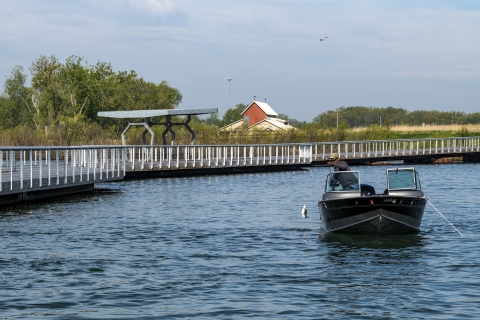
And those are just two of the fun activities at the refuge.
Birding is another. Beyond waterfowl, you’re likely to see birds of prey. The lower Detroit River is considered one of the best places in North America to watch hawks during the fall raptor migration. Bald eagles are also present on the river.
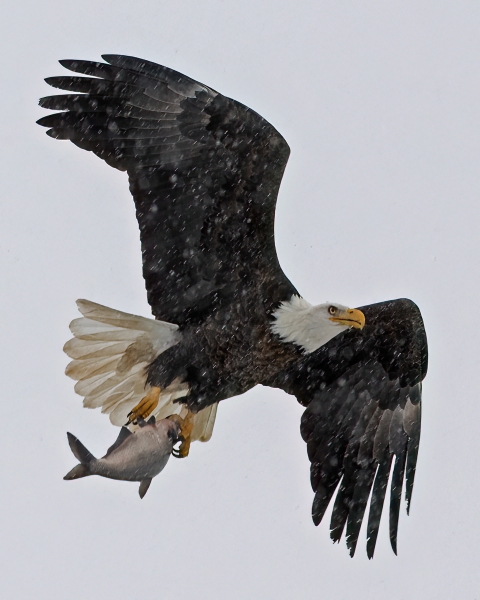
Visitors will find more than 6,200 acres of habitat at the refuge, but it isn’t one contiguous plot of land. Made up of more than 30 separate parcels, known as refuge units, the refuge acquired each through purchase, donation or cooperative agreement.
One unit, the Humbug Marsh unit, contains a Wetland of International Importance as designated by the Ramsar Convention on Wetlands.
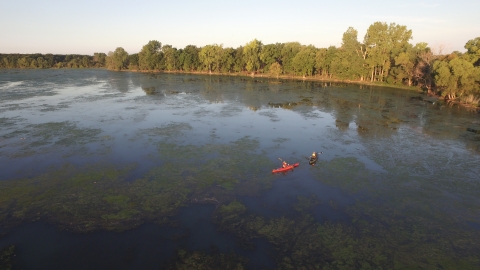
Humbug Marsh, on the lower end of the Detroit River in the cities of Trenton and Gibraltar, represents the last mile of undeveloped shoreline along the U.S. mainland of the Detroit River and contains important habitat for many rare fish and wildlife species.
Humbug Marsh and the entire Detroit River International Wildlife Refuge show nature’s amazing ability to not just exist in urban areas but to thrive.
Next up, we follow the flags to Vieques National Wildlife Refuge, considered one of the most ecologically diverse wildlife refuges in the Caribbean. Stay tuned for the next chapter on this historic tour!