It takes a team to recover a species. Across portions of northern Indiana, southern Michigan and northwestern Ohio, shallow wetlands and connected forests have historically supported populations of copperbelly water snakes. Today, habitat loss, degradation and fragmentation have restricted the species to a few small, isolated locations. We at the U.S. Fish and Wildlife Service are strengthening regional partnerships to recover and conserve this species and its habitat, with a portion of these efforts made possible through funding from the Great Lakes Restoration Initiative.
Populations of the copperbelly water snake (Nerodia erythrogaster neglecta) declined sharply during the mid and late 1900s, leading the U.S. Fish and Wildlife Service to list the northern distinct population segment as threatened in 1997. This Great Lakes population represents the species at the northern extent of its range.
Saving a distinct snake with a distinct approach
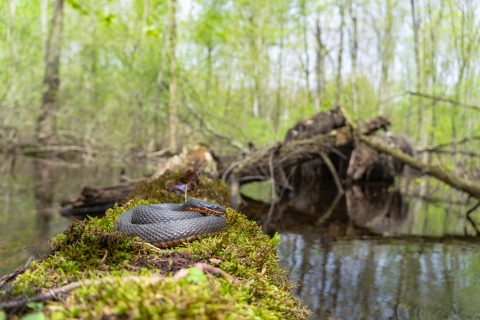
“The copperbelly water snake population in this area is the last of its kind in the northern United States,” said Megan Seymour, U.S. Fish and Wildlife Service biologist. “Their decline is an indication that there may not be enough connected, high-quality habitat to support them, and likely other wildlife, over the long term.”
For the last six years, U.S. Fish and Wildlife Service biologists with the Ecological Services program have conducted springtime field surveys within the northern range of this species. Copperbelly water snakes are secretive and difficult to detect, and despite sustained survey effort in the most well-studied population strongholds, biologists documented only 22 wild individuals from 2020 through 2026. This count reflects the limits of survey coverage, not a full census of the species.
In 2020, we partnered with the Toledo Zoo to establish a captive breeding program to help the population reproduce and eventually be reintroduced to the wild. At that time, 19 of the 22 documented snakes were brought into the program, health-checked, tested for snake fungal disease and incorporated into the breeding population. So far, two adult females have successfully produced live young, and several others may be pregnant.
In captivity, approximately 71% of newborn snakes survive, allowing more young snakes to reach a size where they have a better chance of surviving after release.
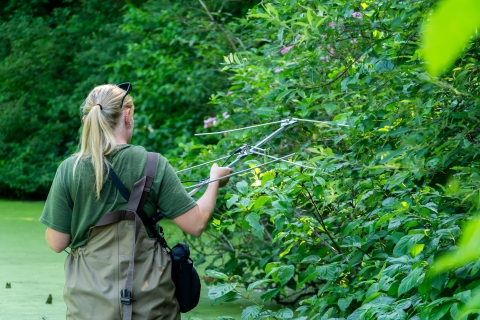
As these snakes grow into their second summer, healthy captive-bred juveniles are implanted with a radio transmitter and released into suitable habitat near where their parents were captured. To date, 17 juvenile copperbelly water snakes have been successfully released into the wild, and another 10 are expected to be ready for release in 2027.
After release, Toledo Zoo technicians use handheld antennas to relocate the snakes and track their survival. They also note how individuals move and use the habitat, which helps inform future releases and habitat conservation.
Recovery requires connected habitat
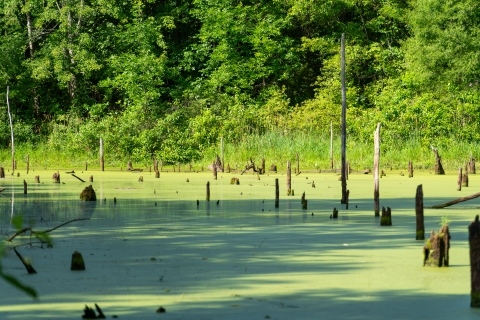
Captive breeding alone cannot recover the species. These snakes depend on shallow wetlands, which are often seasonal, connected by mature forests where they feed primarily on frogs, toads and tadpoles. They may travel hundreds of meters between habitats.
Since 2018, through the Partners for Fish and Wildlife program, we have completed 17 habitat restoration projects within the northern range of this species in Michigan. In 2025, we also funded restoration of 16.4 acres of forest and wetland habitat that supports the copperbelly water snake at Lake La Su An Wildlife Area in Ohio. These recent projects build on a longer history of habitat conservation work with partners across the range of this species. By conserving connected wetlands and forests for the copperbelly water snake, we are providing habitat for amphibians and other native wildlife across the Great Lakes region.
Did you see a copperbelly water snake?
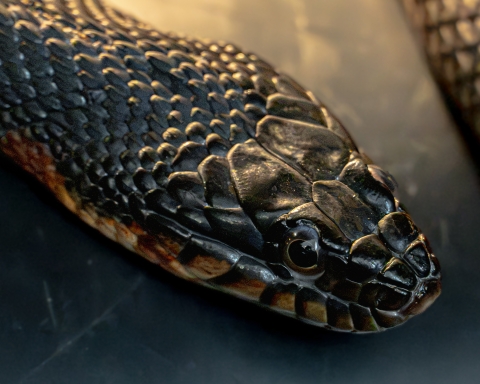
Despite the name, the copperbelly should not be confused with the venomous eastern copperhead. Copperbelly water snakes, sporting a distinctive rust-colored underside, are nonvenomous and pose no threat to people. The northern water snake, a common look-alike, typically has visible bands or blotches across its back and a lighter-colored chin, unlike the copperbelly water snake's dark back and orange-red underside. Copperbelly water snakes are federally protected and should not be handled, injured or killed.
If you document a possible copperbelly water snake, reach out to the copperbelly water snake team. If possible, include a profile photo showing the orange chin or belly, the location and the date and time of the sighting.
Landowners in northern Indiana, southern Michigan or northwestern Ohio interested in restoring wetland or forest habitat that could benefit the copperbelly watersnake can also reach out to either email to learn more.