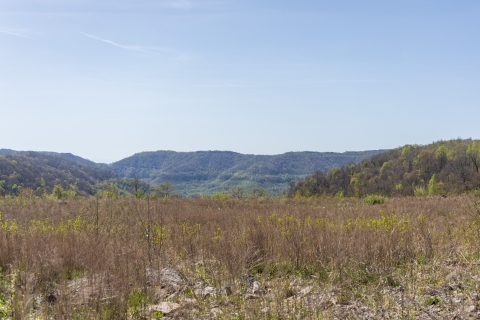
Growing up in Pineville, Kentucky, Kyle Sams spent many hours afield chasing squirrel, deer, turkey, and other game with friends and family. One of his favorite spots to hunt was the mountains southwest of Pineville. At the time, the mountain mix of hardwood and reclaimed strip mine, was held in temporary public hunting agreements.
“That property provided me and my family with many meals and fun times,” Sams recalled. “Whether it be hiking, hunting, or fishing, we made many great memories.”
Sams has since moved from his hometown, and one of the things he misses most is hunting this property. “The mountains offer something the rest of the state cannot -- stunning mountain views that coincide with a diverse population of wildlife and endless outdoor adventures,” he said.
The Problem: Temporary Access and Uncertain Future
A temporary agreement between the Kentucky Department of Fish and Wildlife Resources (KDFWR) and the landowner allowed Sams to hunt the mountains south of Pineville. As most hunters know, one of the biggest challenges you face is finding somewhere you can hunt. Agreements like this are invaluable in providing access.
But these agreements are not permanent.
Landowners who enter agreements with the department have a 30-day opt-out clause and can end public access at any time. Not knowing if a property will remain open from year to year is frustrating for hunters, challenging for the state to manage for wildlife, and limiting in the amount of habitat improvement options. Long-term conservation success relies on partnerships, people, and permanent funding.
The Solution: Partners and the Wildlife Restoration Program
That’s when great partners and grant funds from the U.S. Fish and Wildlife Service’s Wildlife Restoration Program made a difference, swooping in to acquire a historic 54,560-acre easement and naming the land Cumberland Forest Wildlife Management Area (WMA).
Authorized by the Wildlife Restoration Act of 1937, the program uses revenue from taxes on firearms, ammunition, and archery equipment to state wildlife agencies to pay for conservation projects. The Service administers the program and covers 75 % of project costs, with the states responsible for the remaining 25%. Eligible projects include habitat and species management, research, facility construction, hunter education, and land acquisition.
Coming up with a 25% match can be a challenge, but KDFWR’s partners were more than willing to help.
Recognizing the value of the property, The Nature Conservancy and the Rocky Mountain Elk Foundation were eager to make this land permanently available to the public. They not only contributed funding toward the match but also helped the department lobby the Kentucky legislature for support.
Unlike many state wildlife agencies, the Kentucky Department of Fish and Wildlife Resources does not receive funding from the state’s general fund. And, as most people know, lobbying the legislature for money can be daunting.
Because the land that became Cumberland Forest WMA had been open to the public for many years and several local legislators enjoyed the outdoor opportunities provided on this property, ensuring permanent public access was an easy sell.
“When we’re utilizing Wildlife Restoration dollars, we try to prioritize land acquisitions and deals that will create public access,” said Ben Robinson, KDFWR’s Director of Wildlife. “One of the biggest challenges when managing an elk herd is that you can have all the elk in the world, but if you don’t have access for your hunters to get to them, then what have you really accomplished?”
Cumberland Forest helped solve that access issue.
What Permanent Protection Makes Possible
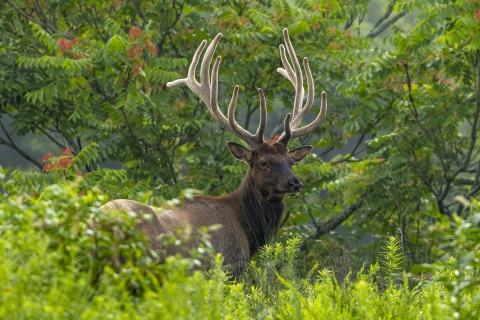
In Kentucky, elk can only be hunted in designated areas. Cumberland Forest WMA sits in the heart of the state’s eastern elk zone. With 95% of Kentucky’s land privately owned, having 54,000 acres available to elk hunters is remarkable.
This property also allows the department to manage habitat on a large, continuous landscape.
“There is a big push to improve habitat for elk,” said Robinson, “Fifteen to twenty years ago, there was a lot more coal mining going on, so you had a lot more open land and a lot more suitable habitat for elk.”
As mining has slowed in the area, the large open spaces elk prefer have become fewer. This property gives the agency room to create habitat desirable to elk. But, as Robinson notes, the department never manages habitat for a single species. Their efforts benefit many wildlife populations.
“While we’re doing things with elk as the flagship species, there are many others that are benefiting – quail, turkeys, songbirds, etc.,” noted Robinson. “This approach will not only help bolster the available hunting opportunities but will allow for great wildlife observation opportunities as well.”
A Legacy for Families and Future Generations
“Whenever I go back for Thanksgiving or something, my dad, my son, and I will go up there and go squirrel hunting or rabbit hunting or whatever just to get outside and enjoy the outdoors together,” said Sams. “Knowing it’s always going to be there is pretty awesome.”
Thanks to the dedication of partners, conservation-minded leadership, and support from Wildlife Restoration funds, Cumberland Forest WMA will continue to be a backdrop for new adventures and cherished memories. Knowing these lands will remain open for future generations means families like the Samses can keep coming back, passing down their love for the outdoors and the spirit of Kentucky’s wild heritage.