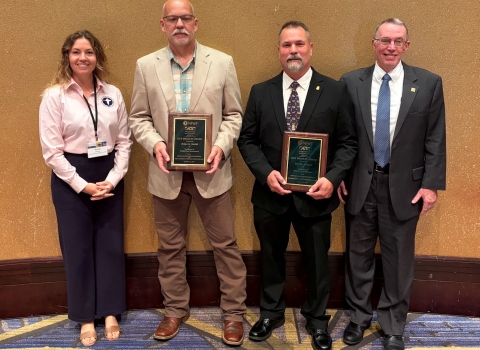
For nearly 25 years, the University of Kansas (KU) Field Station Experimental Ponds Team has played a vital role in conserving the endangered Topeka shiner and safeguarding a genetically unique population of the species. In recognition of their longstanding commitment to the Willow Creek population and their contributions to Topeka shiner recovery, the KU Field Station Experimental Ponds Team was selected as a 2025 Recovery Champion by the U.S. Fish and Wildlife Service.
In 2002, the KU Field Station partnered with the U.S. Fish and Wildlife Service to rescue the Willow Creek population of Topeka shiner after predatory sportfish were introduced into the stream. This population was geographically isolated and genetically unique, considered the last remaining population of Topeka shiner on the Western High Plains of Kansas.
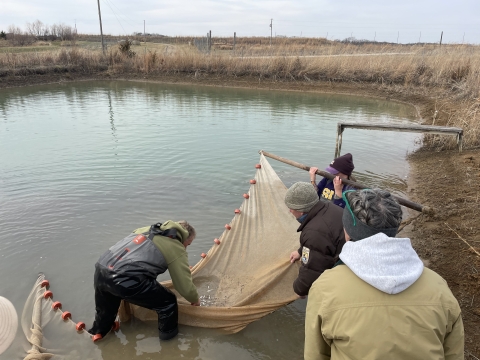
Today, the Willow Creek population is considered extirpated in the wild and exists only in captivity at the KU Field Station. Through the dedication and expertise of the KU Experimental Ponds Team, the fish have successfully reproduced over many generations in the station’s experimental ponds, allowing the population’s unique genetics to be preserved.
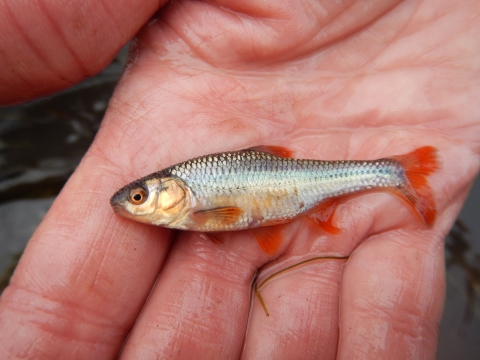
Maintaining this population has also helped expand knowledge of Topeka shiner genetics and captive rearing methods in Kansas. This knowledge could prove valuable as conservation partners work toward reintroducing Topeka shiners into portions of their historical range.
“I am proud to congratulate the KU Experimental Ponds Team on being named Recovery Champions,” said Matt Hogan, regional director of the U.S. Fish and Wildlife Service’s Mountain-Prairie Region. “Their work is a powerful example of how sustained commitment and dedication can make a lasting difference in conservation.”
The work of the KU Experimental Ponds Team demonstrates how long-term partnerships, dedicated stewardship and innovative conservation can help safeguard genetic diversity and keep the possibility of future recovery alive for an endangered species.