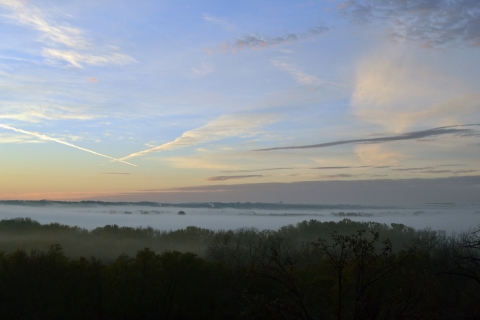
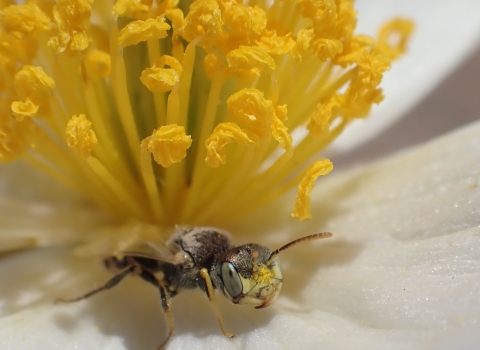
Minnesota Valley National Wildlife Refuge, one of the National Wildlife Refuge System's best kept secrets, is celebrating its 50th birthday! We at the U.S. Fish and Wildlife Service are focused on providing quality access to public lands and waters, and we wanted to highlight this milestone. Take a minute to learn more about this special place where coyotes, bald eagles and trout live next door to more than 3 million people.
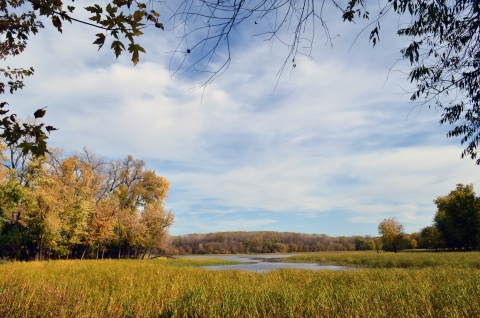
With the people of Minneapolis-St. Paul, Minnesota no more than 10 minutes away from green space, this urban oasis meets the mission of connecting people and place. Part of a corridor of land and water that stretches nearly 70 miles along the Minnesota River, from Bloomington to Henderson, Minnesota Valley National Wildlife Refuge is comprised of more than 14,000 acres of forested floodplain, tallgrass prairie and wetlands and provides a unique opportunity to enjoy wildlife-related recreation in the shadows of skyscrapers.
Throughout the 20th century, citizens tried to protect and preserve the Minnesota River Valley as public open space. Beginning in the 1930s, with Theodore Wirth and Governor Floyd B. Olson, and running through the 1970s, it took a renewed citizen effort to establish this urban refuge. On October 8, 1976, all that hard work finally paid off with the establishment of the refuge. Today, the refuge is still fueled by local community support, with dedicated volunteers working alongside passionate refuge staff to develop innovative ideas that keep the refuge relevant.
Refuge geology - Form follows flow
The Glacial River Warren that formed the Minnesota River Valley played a significant role in creating ideal habitat for both humans and wildlife, visible in our abundant water resources including ponds, lakes, streams, rivers and expansive floodplains throughout the metro area. The water brought human settlement to the area and continues to provide critical wildlife habitat today.
The Minnesota River is completely within the boundaries of the state of Minnesota and provides the connection of the eastern and western borders via water. The broad U-shaped valley was formed by glacial outwash floods, leaving behind fertile ground and was inhabited early on for farming, transportation along the river, and abundant wildlife. The confluence with the Mississippi River has always been a significant and strategic place that link people across multiple watersheds. Today, it continues to meet the needs of humans and wildlife, providing refuge, resources, commerce and community.
Plan your visit!
A flagship urban national wildlife refuge national wildlife refuge
A national wildlife refuge is typically a contiguous area of land and water managed by the U.S. Fish and Wildlife Service for the conservation and, where appropriate, restoration of fish, wildlife and plant resources and their habitats for the benefit of present and future generations of Americans.
Learn more about national wildlife refuge , people come to Minnesota Valley National Wildlife Refuge to hike, to practice photography, participate in educational programs or simply to escape the rush of city life. What’s especially unique about this urban oasis is that you can also hunt and fish here. Given the size and diversity of the refuge, people have plenty of space to enjoy the great outdoors in their own way.
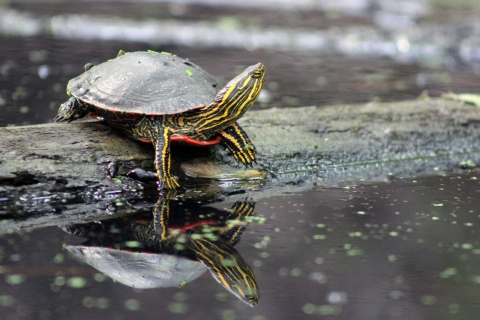
When you visit the refuge, there’s a good chance that you’ll catch a glimpse of migratory songbirds and more than 14 species of ducks. Resident wildlife like great blue herons, great egrets, bald eagles, turkeys and deer are also common wildlife sightings. You are also likely to see frogs, toads and snakes during your visit.
An uncommon and very fun sighting at the refuge is the prairie skink. This sandy soil burrower is the only lizard found at the refuge. Look for them in restored prairie and oak savanna basking on top of rocks or logs and actively foraging for crickets, grasshoppers and spiders. Other rare wildlife sightings include tundra and trumpeter swans, white pelicans, river otters, osprey, brook trout and the occasional raven.
Learn more about Minnesota Valley National Wildlife Refuge.