Dan Spencer, Information and Education Specialist
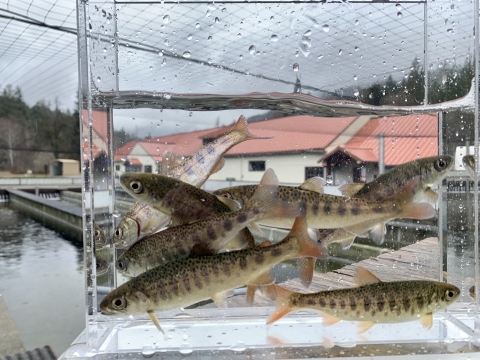
Some years are a tough act to follow. However, the crew at the Quilcene National Fish Hatchery are up for the challenge. 2025 was highlighted by a phenomenal coho salmon return. This included 32,416 three-year-old adults and 5,400 two-year-old “jack” males. This return was the largest on record and just shy of tripling the prior ten-year annual return average. Yet there wasn’t much time to celebrate, as this epic salmon return was followed up by some less than ideal conditions in the first half of 2026. Warmer than average water temperatures brought a host of challenges, including increased growth and metabolism, decreased dissolved oxygen, and increased pathogens and fish disease.
Though it may seem counterintuitive, increased growth can be problematic. Our outdoor fish tanks, called
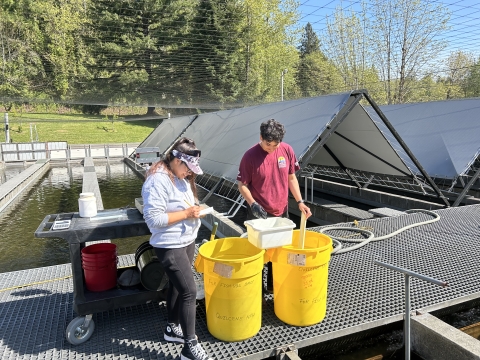
“raceways”, have limits to how many fish they can support. The number of fish also depends on their average weight. These raceways can handle a total poundage of fish, so if the fish grow too big too early, we cannot handle as many on-site. This is most challenging prior to releasing our 2024 coho in April. The overlap of these fish with our 2025 brood year coho fry (freshwater juveniles) can push the limits of our available raceways and water supply.
Moreover, when metabolism increases, our fish eat more food. The more food consumed, the more fish waste and uneaten food can accumulate in their raceways. This can lead to increased bacterial and fungal growth, which can lead to increased oxygen consumption and fish infections. The warmer the water, the less dissolved oxygen it can hold, and just like unrefrigerated food, the faster the bacteria and fugus will grow. This can create a dangerous feedback loop that can spiral out of control if not managed with the best available science and staffing.

Our hatchery staff, in coordination with our Pacific Region Fish Health Program’s veterinary medical officers, mitigated these challenges by carefully managing their feeding regimen and increasing raceway cleanings as well as fish health and water quality monitoring. And the result? This extra attention and effort paid off as we avoided the need for medicated feed and water treatments through the spring. We released approximately 650,700 coho smolt (ocean-ready juveniles) from 2024 on April 16th and our 2025 coho fry are looking healthy.
Fish Marking and Tagging Success!
In one month, the Service successfully marked 630,420 coho fry from the Quilcene National Fish Hatchery 2025 brood year—including 82,118 tagged with coded-wire tags—to support federally mandated fisheries management and evaluation efforts.
Another accomplishment was a successful marking and tagging effort for the 2025 brood year coho fry. These efforts are federally mandated and are critical components of fisheries management and our hatchery evaluation. Marking fish by removing their non-essential adipose fin allows anglers and commercial harvesters to know whether the fish they catch is of hatchery origin. Fishing regulations typically limit harvesting to hatchery origin fish to protect the wild population.
Approximately 13% of the 2025 brood year coho were also tagged with a coded-wire tag. This tag is about the size of the letter “i” on a penny. These tags have a numeric code inscribed on them, which is unique to the facility and brood year. They are also magnetized so they can easily be detected using a scanning system.Comparing how many fish we tag to how many of them return to the facility as adults is one of many ways we can evaluate our hatchery program. This May, we marked a total of 630,420 fry.Of those marked, 82,118 also received a coded-wire tag. Hats off to our marking crew and hatchery staff getting this critical work done!
Preserving History: Archiving Scientific Records and Antiques
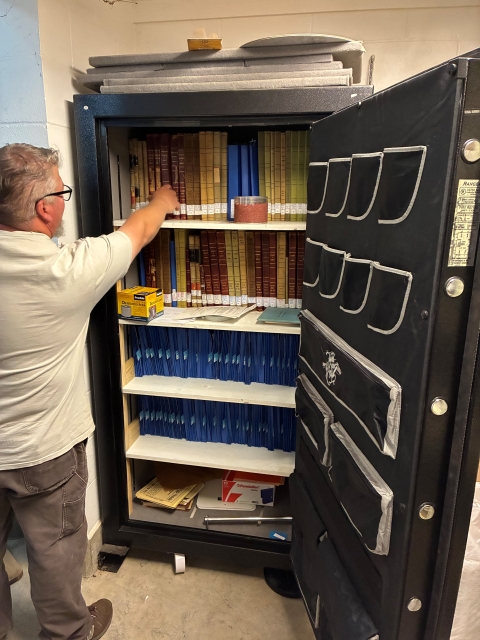
A unique highlight this year was the successful archiving of an impressive volume of historical literature and fisheries science antiques. The Quilcene National Fish Hatchery has accumulated records and scientific equipment since the facility opened in 1911, including valuable fish production, transfer, and plant (stocking) records.These records and other historical literature were carefully packed into 18 large boxes and were picked up by staff from the National Fish and Aquatic Conservation Archives to be archived and preserved. In addition to the intrinsic value of preserving historical literature and antiques, the archiving process will streamline our future efforts to respond to inquiries, which have been challenging and time consuming in the past.
We Appreciate our Community and Visitors
This seasonal update wouldn’t be complete without our gratitude to our visitors and surrounding communities.Walk-in visitors have been enjoying the guided and self-guided tours. The latter has been greatly improved with the recent addition of five new interpretive panels explaining the history, species, structures, and fish production process. While most tours are walk-in, we also accommodate requests for scheduled tours. One memorable tour was the visit from over 30 members of the North Kitsap branch of the Puget Sound Anglers. We received great feedback from this group, with several expressing interest in volunteering for future spawning days.
First Blessing of the Fleet
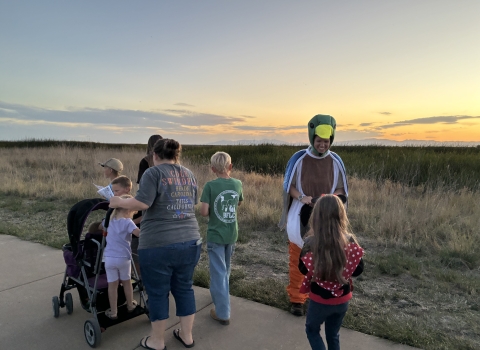
We were also happy to support the 2026 inaugural Quilcene Blessing of the Fleet that took place on April 25th. This free volunteer-led community event included a boat parade, music, vendors, conservation agencies, and non-profits to complement the blessing ceremony. The Quilcene National Fish Hatchery supported this event by providing an information booth about the hatchery as well as aquatic invasive species invasive species
An invasive species is any plant or animal that has spread or been introduced into a new area where they are, or could, cause harm to the environment, economy, or human, animal, or plant health. Their unwelcome presence can destroy ecosystems and cost millions of dollars.
Learn more about invasive species prevention. We also provided an invasive species themed archery activity, which was popular with youth and adults alike.
As the summer progresses, we are looking forward to the adult return of our 2023 brood year starting in July.We are expecting strong return numbers and will be gearing up for future spawning events, visitors, and coordinated efforts with our co-managers, partners, and volunteers.