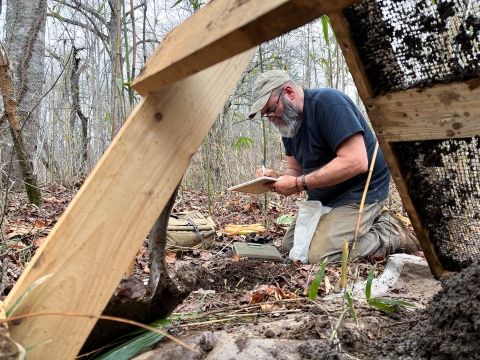
Wildlife biologist Morgan Harris’s eyes were trained on the soil he was sifting before him – constantly scanning for out-of-the-ordinary shapes indicative of a piece of chipped stone or sliver of pottery. Archeologist Dan Polito used the opportunity to share some knowledge of the trade - that the old aluminum can pop tops, the ones designed to pull completely off, count as a historical artifact due to their age - greater than 50 years - a curious threshold when you have people older than 50 working an archeological dig.

Harris and Polito had come together earlier this year, working an archeological dig beside a stream in southern Macon County, North Carolina, as part of a collaborative effort among Service offices to fulfill the agency’s obligations under the National Historic Preservation Act in the run up to a stream restoration project.
There are a handful of laws compelling the federal government to identify the implications of projects it funds, for example the Endangered Species Act compels the government to identify its impacts to threatened or endangered species. The National Historic Preservation Act compels the government to examine its impacts to our nation’s cultural resources.

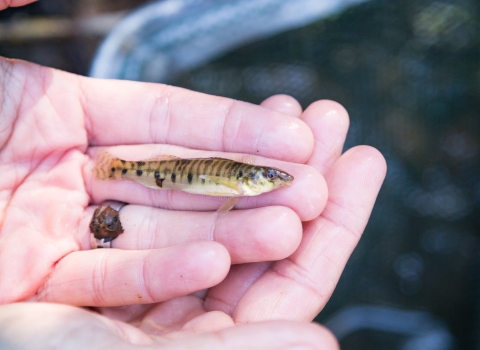
The stream beside the dig is a tributary to the Little Tennessee River, which flows across Macon County. The Cherokee’s Nikwasi mound sits 500 feet from the river, on East Main Street, in the county seat of Franklin. Signs at a county ball field next to Cartoogechaye Creek – another tributary stream - point visitors to a burial site on park grounds. It’s a watershed rich with Cherokee culture and history and is also home to the endangered Appalachian elktoe mussel, threatened spotfin chub, and the eastern hellbender, North America’s largest salamander and an animal currently under consideration for Endangered Species Act protection.

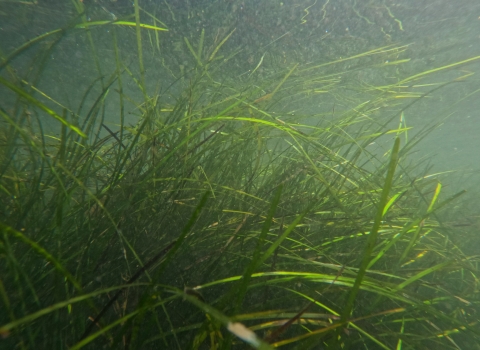
The U.S. Fish and Wildlife Service’s Partners for Fish and Wildlife Program provides financial and technical assistance to private landowners who want improve wildlife habitat on their land. In Western North Carolina, this has frequently taken the form of stream restoration – returning an eroding or channelized stream to a more natural state, typically decreasing stream bank erosion and improving habitat for aquatic life. An opportunity arose for the Service to implement a stream restoration project on a tributary stream to the Little Tennessee River - a project that would entail moving a lot of earth in a watershed known for intense historical activity.
Based on preliminary review of the project, North Carolina’s State Historic Preservation Office recommended deeper archeological investigation of the site, known in the archeological world as a phase I survey. While most of Polito’s work is focused on restoration projects stemming from the Deepwater Horizon oil spill, he was able to step in and help staff of the Service’s Asheville Field Office investigate this site. The survey gave Dan a chance to ply his trade in the Western North Carolina mountains, bringing him back to his archeological roots as an undergraduate at Appalachian State University. While Polito filled the role of archeologist, Service wildlife biologists, including Harris, who stepped in from the Service’s Georgia Field Office to help, had the chance to try their hand at archeology, serving as Polito’s technicians.

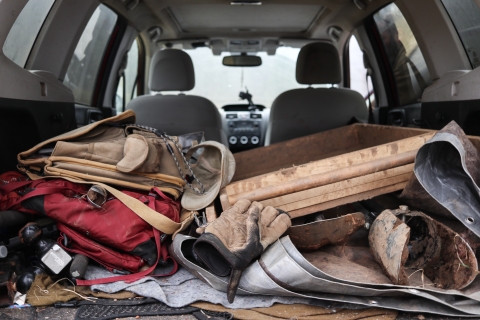
The work was straight-forward…dig 20 holes, 30 cm wide, and up to a meter deep, with allowances for stopping short if you hit water or rock. All the excavated soil went through ¼ inch wire mesh to tease out anything of historical significance – easy when the soil is dry and sandy, a bit more challenging when the soil is moist clay. The likeliest candidates for artifacts were pottery sherds or stone chippings. Polito gave instruction on what these would look like in the sieve and biologists put possible contenders before his trained eyes.

With all holes dug and lots of soil sifted, no artifacts of human presence were found, not even beer can pop tops. Biologists whose jobs typically entail conserving our nation’s most imperiled plants and animals had a chance to literally get their hands dirty with archeology. Polito’s site report was added to the North Carolina historic preservation office’s records, expanding the body of knowledge about the area’s history. And the stream restoration moved forward.