As part of the Flags Across America initiative for America’s 250th anniversary, the U.S. Fish and Wildlife Service is sharing stories from the places where our commemorative flags have traveled. From historic hatcheries to vibrant refuges, each stop celebrates conservation as an enduring American value. Join us as we highlight the lands, waters, and wildlife that connect our nation’s past, present, and future.
The flags weren’t the only things flying at Bosque del Apache National Wildlife Refuge in New Mexico when they visited in December 2025. The refuge is well known for the tens of thousands of cranes, geese, and ducks who winter there, and visitors flock to see thrilling sunrise takeoffs and sunset fly-ins.

Providing a critical stopover site for migrating birds was why President Franklin D. Roosevelt established the refuge in 1939.
And no matter when you visit, you’ll see lots of birds, different types every season. Bosque del Apache offers visitors plenty of other wildlife, too, like mule deer, coyotes, jackrabbits, lizards, snakes, and wildflowers.
“Bosque del Apache is a refuge for all seasons. Each day holds its own discoveries and opportunities. That’s what continues to make Bosque del Apache special – for first-time visitors and those who visit more frequently,” says Amanda Walker, park ranger at Bosque del Apache.
But the refuge is famous for its birds. It’s considered an Important Bird Area by the National Audubon Society. You'll see the greatest numbers of birds at the refuge from early November to late January.
Each winter, thousands of snow geese, Ross’s geese, and sandhill cranes spend the night in water to protect themselves from predators. Near dawn, the geese take off en masse.
And it’s not just the numbers. Sandhill cranes “dance.”

If you’re lucky, you might see some at Bosque del Apache bowing, jumping, swinging their heads, and spreading their wings. Dancing is an important part of their courtship process.
Of all the birds that use the refuge, sandhill cranes may be the most famous. With their long legs, red crown, and impressive call, these large birds are familiar sights on the refuge. You can also see them across much of the country. North American sandhill cranes are collectively the most abundant of the world's crane species.

They’ve been around a while, too: more than 2 million years. A former migratory game bird biologist in our Southwest Region referred to sandhill cranes as “modern-day pterodactyls.”
They aren’t the only ancient creature on the refuge either. In 2008, a fossil was discovered from an oreodont, an extinct group of hoofed ungulates that lived millions of years ago. The National Park Service describes oreodonts as probably looking “like a mix between a camel, sheep, and pig.”
But even if you aren’t into cranes (or oreodonts), Bosque del Apache has plenty to entertain you. Among the many activities offered, you can try fishing, hiking, hunting, and more.
Unique to Bosque del Apache and 62 other national wildlife refuges are wilderness areas. At Bosque del Apache, over 30,000 acres have been designated wilderness.
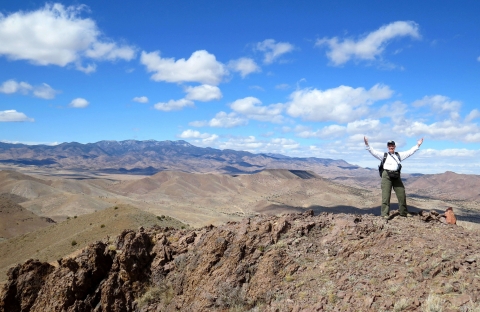
Wilderness offers an opportunity to explore areas “untrammeled by man, where man himself is a visitor who does not remain.”
You can do many of the same activities on the wilderness at Bosque del Apache, just without the use of motor vehicles, motorized equipment, or mechanical transport, such as bicycles or game carts.

For sure, you can still see the wonderful birds!

Next up, we follow the flags to Midway Atoll National Wildlife Refuge and Battle of Midway National Memorial, where Wisdom, a Laysan albatross and the world’s oldest known bird living in the wild, nests. Stay tuned for the next chapter on this historic tour!