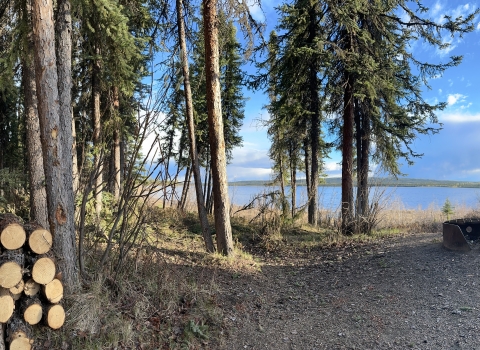
On the eastern edge of Aransas National Wildlife Refuge (NWR), Dagger Point faces a relentless challenge: wave energy sweeping across San Antonio Bay, amplified by storm surges and hurricanes. According to Felipe Prieto, a Wildlife Refuge Specialist at Aransas, this dynamic force has, over decades, carved away the shoreline, toppling trees and scouring away the marshes that once buffered the coast. Hurricane Harvey alone claimed nearly 40 feet of shoreline in 2017.
Without intervention, this erosion threatens not only thousands of acres of habitat but also critical infrastructure like visitor trails, viewing platforms, and access roads, along with the ecological integrity of one of Texas’ most treasured coastal landscapes.
The Dagger Point Coastal and Marine Protection and Restoration Project
To address this urgent need, Aransas NWR, in partnership with the Coastal Bend Bays & Estuaries Program and other conservation leaders, launched the Dagger Point Coastal and Marine Protection and Restoration Project. This effort represents years of planning, engineering, and collaboration to safeguard the refuge’s boundary and stabilize its vulnerable shoreline.
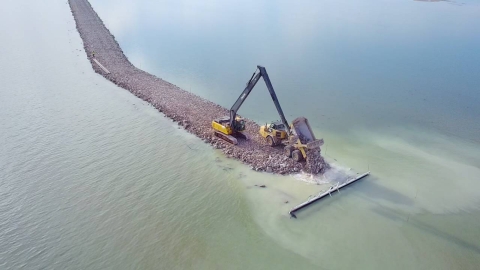
The solution is a segmented rock breakwater system, strategically placed offshore to absorb wave energy before it reaches the bluff. These structures are built to withstand tropical storms and are designed to reduce erosion, protect infrastructure, and create conditions for marsh and seagrass recovery. Construction began in October 2025 and is expected to take about nine months, with no disruption to public access.
Why Coastal Resilience Matters
This project is a cornerstone of coastal resilience, ensuring that natural and human systems can withstand and adapt to environmental change. By stabilizing the shoreline, the project delivers multiple benefits:
- Protecting critical infrastructure at Aransas NWR, including trails, roads, and visitor facilities that are at imminent risk if erosion continues at its current rate. This infrastructure is needed for public access, recreation, and refuge operations.
- Protecting critical oil and gas infrastructure along the Texas coast.
- Preserving the coastal marsh and estuary system vital for fisheries production, wildlife conservation, and storm buffering for coastal communities.
- Supporting habitat recovery, creating conditions for smooth cordgrass and seagrass to return.
- Reducing erosion risk, safeguarding thousands of acres of refuge lands.

Partnerships Driving Success
Seed funding came from Hurricane Harvey recovery funds, with additional support from the U.S. Fish and Wildlife Service, Coastal Bend Bays and Estuaries Program, Texas General Land Office, Matagorda Bay Mitigation Trust, and Coastal Conservation Association. This project is one of several that make up a tapestry of resilience projects and Nature-based Solutions along the Texas Coast, which Prieto spearheads for the Service. They are only possible through the time, expertise, and funding contributed by multiple partners. With this case study, Prieto reminds us that strong relationships and years of collaboration can turn complex coastal resilience challenges into achievable projects.
Looking Ahead
When complete, the Dagger Point Coastal and Marine Protection and Restoration Project will stand as a model for adaptation and coastal protection, demonstrating how engineered solutions can safeguard ecosystems and infrastructure while working in harmony with natural processes.