The U.S. Fish and Wildlife Service released its decision of a management for the Cabeza Prieta National Wildlife Refuge in Arizona. This decision sets the management direction of the 860,000 acre Sonoran Desert Refuge for the next 15 years.
Benjamin N. Tuggle, Ph.D., the Services Southwest Regional Director, signed a Record of Decision making Alternative 4, analyzed in the Final Environmental Impact Statement, the refuges official management plan. "This alternative represents the best balance of recovering the endangered Sonoran pronghorn, maintaining healthy wildlife populations, protecting wilderness, and addressing the many comments we received on the draft EIS of any alternative analyzed," said Tuggle.
Cabeza Prieta contains 803,418 acres of federally designated wilderness, the largest refuge wilderness outside of Alaska.
The refuge will put the preferred management plan into action now that the Record of Decision has been published. This plan is the result of long and extensive effort of a planning team composed of refuge and other Service personnel as well as staff of the Arizona Game and Fish Department. The planning team considered resource data and comments generated by the public. Since 2000 the Service has held open houses, formal hearings and accepted comments during issue identification, formulation of alternatives and review of the Draft EIS. More than 6,500 individuals and organizations provided comments on the Draft EIS.
"Comments throughout the planning process reflected a wide variety of views and interests," said Refuge Manager Roger DiRosa. "The great number of comments received reflects that people really care about Cabeza Prieta National Wildlife Refuge. We also appreciate the very high level of cooperation and support the Arizona Game and Fish Department has provided to the development of this plan."
Two issues occasioned the most comments: the use of vehicles to maintain and re-supply wildlife waters for desert bighorn sheep in wilderness, and the high level of illegal cross border traffic (both undocumented aliens entering the United States and drug smugglers) crossing the refuge.
Cross border traffic was treated as an issue beyond the scope of the refuge management plan, as the traffic, and the federal law enforcement response, would not be affected by any management alternative the refuge could adopt. The CCP does include measures to ensure optimum cooperation between the refuge and the federal Department of Homeland Security to protect refuge resources to the greatest degree consistent with necessary law enforcement response.
On the issue of maintaining and supplying developed wildlife waters in wilderness, the preferred alternative provides a level of active management that, in the best professional judgment of refuge biologists, will support sustainable refuge populations of desert bighorn sheep while minimizing the use of motorized vehicles in wilderness. Other management alternatives analyzed in the EIS include a range of options on maintenance of wildlife waters for desert bighorn sheep ranging from removal of all such waters in wilderness to developing additional waters. The preferred alternative maintains those waters currently in use, pending additional studies to verify the effectiveness of developed waters for conservation of desert bighorn sheep.
Some management programs proposed in the Draft EIS were modified and incorporated into the final EIS in response to public and agency comments. Changes to Alternative 4, the Preferred Alternative, from the Draft to the Final EIS include:
- The Final EIS includes provisions to abandon maintenance of developed waters, and restore them to their natural condition, should research (on and off refuge) demonstrate that developed waters are not necessary to the conservation of desert bighorn sheep. Both the Draft and Final EIS included provisions to consider providing additional developed waters, should research results demonstrate their necessity to desert bighorn sheep conservation.
- In the Final EIS, backcountry campers (those who hike into the refuge wilderness and camp in remote locations away from designated campsites) are allowed to make campfires using dead and down wood. Such fires were prohibited in the Draft EIS, but upon analysis it was determined that levels of backcountry use are so low and the use so dispersed that use of dead and down firewood would not pose important environmental impacts. Campers along the non-wilderness access routes are required to haul in fuel for campfires or use stoves.
- In response to comments, a party size limit of four vehicles for visitors using the non-wilderness refuge access roads was imposed in the Final EIS. Larger parties are required to obtain a refuge Special Use Permit. This restriction will reduce disturbance of wildlife and recreational users by large parties of vehicles.
- In the Final EIS it was clarified that vehicles operating on refuge roads are restricted, by federal regulation, to travel on the established roadway. Language regarding use of the center 100 feet of the 200-foot non-wilderness travel corridors for pull-out and parking had been misunderstood as allowing travel throughout the center 100 feet of the corridor by several commentors to the Draft EIS.
The Final EIS and the Record of Decision can be viewed on the Internet at http://www.fws.gov/southwest/refuges/Plan/completedplans.html. To receive an electronic or paper copy of the either document, contact the Southwest Regional Office of the U.S. Fish and Wildlife Service, National Wildlife Refuge System, Planning Division at (505) 248-6823, email Joanne_Pena@fws.gov or contact the refuge at (520) 387-6483.
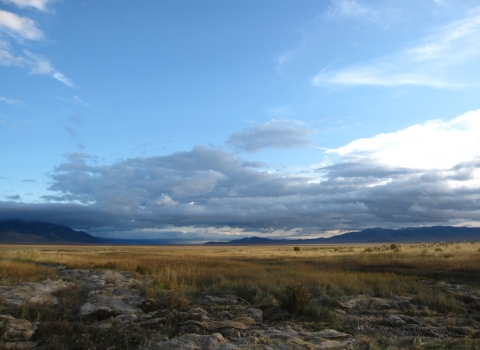
Cabeza Prieta National Wildlife Refuge was established in 1939 by executive order for the conservation of wildlife and forage resources, specifically desert bighorn sheep. The 1990 Arizona Desert Wilderness Act added stewardship of 803,418 acres of designated wilderness as purpose of the refuge. The refuge is also central to the United States range of the Endangered Sonoran pronghorn. Cabeza Prieta is located in the heart of the Sonoran Desert and conserves a wide variety of unique desert landscapes, habitats and biological communities.