Location
States
California, OregonEcosystem
Forest, MontaneIntroduction
The Klamath-Siskiyou Bioregion (KSB) covers 11 million acres of northwestern California and southwestern Oregon. The region’s varied climates, topographies, and geological conditions give rise to North America’s most diverse forests, with high levels of endemism and biological diversity in plant and animal species (Skinner et al., 2006, Alexander et al., 2017). The KSB has a wide variety of ecosystem types that evolved under different disturbance regimes ranging from oak ecosystems that experience frequent low-severity wildfires to alpine ecosystems that experience infrequent high-intensity wildfires (Halofsky et al., 2011). This range in fire type and severity creates a mosaic pattern of vegetation types across the landscape supporting the diversity for which the region is known (Halofsky et al., 2011).
Indigenous communities, including but not limited to the Karuk, Yurok, and Hoopa Valley Tribes, have stewarded the region’s landscape for time immemorial, conducting frequent, low-severity burns in oak ecosystems that preserve important ecosystem characteristics (Long et al., 2021). Indigenous fire stewardship was outlawed in the early 20th century, removing its crucial role in the environment and community (Mucioki et al., 2021). Additionally, climate change has exacerbated the effects of a century of unsustainable logging practices and fire suppression in the KSB, resulting in forests that have departed from their natural range, fire regimes, and structure. These new forests have larger fuel loads, more uniform stand structure, higher tree densities, less variation in vegetation types and fewer natural fire breaks (Jules et al., 2022). This makes the region more susceptible to large-scale, high-severity wildfire.
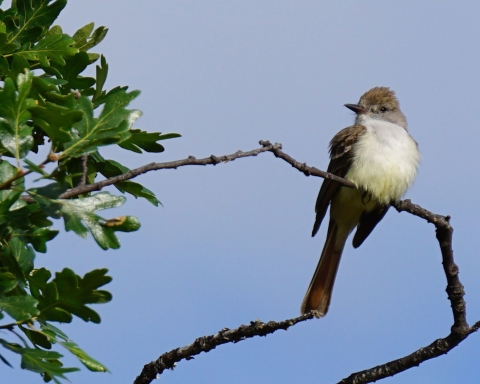
The loss of diverse habitat in the KSB, from fire and other disturbances, is reflected in declines of forest bird populations in the region. (NABCI, 2022). Birds are therefore an important environmental indicator for managers, policymakers, and Indigenous communities who can use changes in bird communities to understand landscape changes in biodiversity, ecosystem health, and climate resilience (NABCI, 2022).
The Klamath Bird Observatory (KBO), originating from the landbird conservation organization Partners in Flight, was formed to help bird populations respond to habitat loss, climate change, and other threats. KBO maintains a large database of bird population data, partners with other organizations to design and execute conservation plans, and creates decision-support tools for managers based on bird data. KBO collaborates with Indigenous communities to align research and conservation plans with Indigenous Traditional Ecological Knowledge and goals, creating mutually beneficial outcomes.
Key Issues Addressed
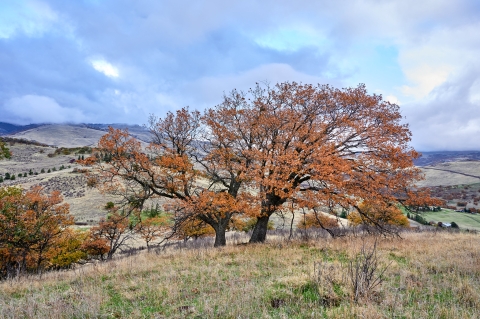
Oak ecosystems are a crucial but endangered part of the KSB. They contain an immense biodiversity and a large concentration of cultural resources. Although oak ecosystems are fire resilient and adapted to low-severity wildfire, increasing size and severity of fire has reduced the extent of oak woodlands in Oregon and California by 95 and 33 percent respectively (Klamath Bird Observatory, 2024)
Western forest bird populations reliant on oak ecosystems have been decreasing for the past 30 years (NABCI, 2022, Veloz et al., 2013) signaling a worrying decline in the health and resilience of oak ecosystems. The most severe threats to oaks are the long-term effects of fire exclusion on the landscape and climate change (Altman et al., 2017). Fire suppression efforts have resulted in conifer tree encroachment and unnaturally severe wildfires which have been further exacerbated by climate change (Altman et al., 2017).
Indigenous burning practices are crucial for oak ecosystems in the KSB but have not been used extensively since Indigenous fire stewardship was outlawed in the early 20th century, disrupting resource management systems that have been in use for millenia (Long et al., 2021, Mucioki et al., 2021). The absence of Indigenous fire stewardship removed the crucial role of low-to-moderate severity wildfires in the KSB, endangering Indigenous cultural resources and ecosystem health by increasing fuel loads. Increased fuel loads increase the risk of high-severity wildfires, which can permanently alter oak ecosystems crucial to KSB birds and general biodiversity. Members of the Indigenous Tribes in the region risk incarceration to continue to manage their ancestral lands through gathering and management in the region (Mucioki et al., 2021). Although distinct from cultural burning, agency land managers can use fuel treatments like thinning and prescribed burns to replicate the historic fire regime maintained through cultural burning practices. However, the long-term relationship between these fuel treatments and bird populations is complex and not well understood.
Climate change also increases the risk of high-severity wildfires through hotter, drier summers. Researchers estimate that anthropogenic climate change directly contributed to nearly half of the total area burned in forest fires in the western United States from 1984-2015 (Mucioki et al., 2021). Additionally, due to the unique geography of the KSB, climate change is altering fire regimes and ecosystems in unpredictable ways (Stralberg et al., 2009). This creates a unique challenge for land managers deciding whether to Resist, Accept, or Direct the effects of climate change to accomplish their goals (RAD framework, Schuurman et al., 2020).
Project Goals
- Restore and protect valuable oak ecosystems for the bird species that use them as habitat.
- Collaborate with Indigenous partners to align conservation planning with Indigenous Traditional Ecological management knowledge. Accomplish this by investigating how culturally significant species can guide prescribed burning and thinning practices to protect cultural resources and foster ecosystem health and resilience.
- Use indicators based on data from bird monitoring to inform forest management for preservation of ecosystem diversity, and vulnerable bird species.
- Develop climate-smart management planning tools that map future shifts of ecosystems and bird habitat to help managers identify appropriate adaptive management strategies to address climate change (Schuurman et al., 2020).
Project Highlights
- Strategic Action Plan Identifies Threats and Solutions to Critical Oak Ecosystems: The Klamath Siskiyou Oak Network (KSON), a collaboration between KBO and other conservation organizations, agencies, and Indigenous Tribes, has authored a Strategic Action Plan (SAP) to outline their approach to restoring and protecting oak ecosystems. The SAP identified agriculture, fire exclusion, and conifer encroachment as the largest threats to oak ecosystems. To address these threats, KSON identified direct approaches like protection and restoration and has enabled strategies such as conducting research, expanding partnerships, and developing management tools. The SAP also details how KSON plans to monitor ecosystem health and the success of restoration projects.
- Collaborating with Indigenous Partners: The Karuk Tribe and other Indigenous communities in the KSB use indicators from culturally significant birds to guide the timing of burns so they do not interfere with the breeding and molting seasons. KBO supported the Karuk Tribe by collaboratively documenting the Tribe’s burn methods. For example, stopping burns when species return start to work on their nests (Long et al., 2023). These species specific queues may be more responsive to changes in molting and breeding timing brought on by climate change than broad time-of-year restrictions that limit burning in the early spring that many land managers must consider to avoid impacts to protected species. Therefore, by aligning prescribed burns with Tribal knowledge about queues from culturally significant bird species, as well as data about species specific timings for breeding and molting, managers may improve timing of fire to result in better outcomes for bird populations and long-term ecosystem health under a changing and uncertain climate (Long et al., 2023).
- Small, Mosaic-Style Fuel Reduction Protects Vulnerable Bird Species: KBO investigated how the Bureau of Land Management’s shrub reduction and prescribed burns affect vulnerable bird species. The BLM targeted small, disconnected areas and preserved some shrub vegetation throughout the treated area. KBO found no decling in bird abundance and some increases in abundance as a result of the fuel treatments (Alexander et al., 2007). The results suggest these small, mosaic-style fuel projects can protect bird habitats while encouraging low- to moderate-severity wildfires compatible with critical oak ecosystems.
- Creating Climate-Smart Decision Support Tools: KBO, in partnership with the Point Blue Conservation Science and Avian Knowledge Network, has developed tools that use bird monitoring data and climate projections to map the shift in bird populations. Additionally, the Pacific Northwest Watershed Summary of Avian Climate Change Vulnerability provides summaries of bird vulnerability to climate change at the watershed scale, also detailing current and future population density projections for 26 bird species. Climate change in the KSB is projected to create a patchwork of new bird communities. Accepting long-term shifts in bird community composition can help preserve the KSB’s ecosystem and species diversity (Stralberg et al., 2009). In the short term, managers can shift their thinning, prescribed burns, and fire restoration practices to Direct ecosystems toward new conditions that will best support these new bird communities (Resist-Accept-Direct framework, Schuurman et al., 2020).
Lessons Learned
KBO found that using indicator communities of birds is a cost-effective way of collecting data to inform decision-making. KBO’s decision-support tools and research products draw from long-term bird monitoring data collected over 30 years to provide managers with the necessary tools to create informed management plans, execute them effectively, and evaluate outcomes. It is hard for managers to find long-term post-project monitoring data to help inform management decisions. Most monitoring projects are five years at the longest, but species responses, both negative and positive, may take over ten years after a disturbance happens to measure (Hao et al., 2022). Funding long-term monitoring projects is hard to secure and monitoring therefore is generally done over short timescales that don't capture meaningful ecosystem changes. However, KBO has learned that bird community data can be used to monitor ecosystem health and biodiversity and evaluate climate resilience over a longer period at a lower cost compared to other monitoring methods.
While bird conservation has been a priority for decades, large-scale population declines continue partially because research goals don’t always prioritize policy-relevant questions and publication results are not often shared in accessible formats. Therefore, KBO and its partners make efforts to focus research on specific areas to inform policy without bias. Public policy is the main avenue to benefit bird populations at large. To accomplish this, researchers and organizations like KBO are marketing science to the media and public to increase awareness about how actions taken for bird conservation can benefit everyone by reducing the risk of large-scale, high-severity wildfires and improving watershed function. By centering bird conservation within a human-wellbeing context, policymakers and other stakeholders can more clearly see its value.
KBO focuses on producing science for decision-making and conservation measures generally rather than advocating for or against specific policies. This allows them to influence management actions proactively with strong scientific evidence instead of responding to and trying to change previously established policies. This is the approach KBO took to support conservation of bird species in oak ecosystems. By evaluating the effects of actions taken to meet the Partners in Flight Conservation Plan for oak ecosystems and developing decision the OakBirdPop decision support tool and land management guide, KBO seeks to support land managers in using science to determine the effects of various management actions on bird populations and fire risk in a changing climate.
Next Steps
- Conduct range-wide, full life cycle research on 11 priority oak and prairie-associated species or subspecies to determine the factors limiting their populations and identify appropriate conservation actions to halt and reverse the declines of each of these imperiled birds
- Continue work on implementation and enabling strategies identified in the KSON Strategic Conservation Action Plan
- Work with other oak partnerships to coordinate and scale conservation across the Pacific Northwest’s oak and prairie landscapes as detailed in the Prairie, Oaks, and People Investment Strategy
Funding Partners
- Klamath Bird Observatory is funded by numerous federal, state, and local government agencies through research grants, agreements, contracts, foundations, and private donations. The scope of work summarized in this brief spans two decades and numerous funding sources, many of which continue to support ongoing work toward the conservation of oak and prairie habitats and the conservation of birds dependent on those habitats.
Sources Referenced
- OakBirdPop Decision Support Tool and Guide for Land Managers
- Klamath Siskiyou Oak Network Strategic Action Plan
- Alexander et al. (2007). “Using conservation plans and bird monitoring to evaluate ecological effects of management: an example with fuels reduction activities in southwest Oregon.” Forest Ecology and Management 238(1-3): 375-383.
- Alexander et al. (2017). “Using regional bird density distribution models to evaluate protected area networks and inform conservation planning.” Ecosphere, 8(5), e01799.
- Altman et al. (2017). “Prairie Oaks and People, a conservation business plan to revitalize the prairie-oak habitats of the Pacific Northwest.” American Bird Conservancy.
- Halofsky et al. (2011). “Mixed-severity fire regimes: lessons and hypotheses from the Klamath-Siskiyou Ecoregion.” Ecosphere 2(4): 1-19.
- Hao et al. (2022). “Long-term effects of fire severity and climatic factors on post-forest-fire vegetation recovery.” Forests, 13(6), 883.
- Jules et al. (2022). “The effects of half a century of warming and fire exclusion on montane forests of the Klamath Mountains, California, USA.” Ecological Monographs 92(4): e1543.
- Klamath Bird Observatory (2014). “Overcoming Social and Scientific Challenges to Inform Management in the Cascade-Siskiyou National Monument.” Klamath Bird Observatory.
- Klamath Bird Observatory (2024). “Why Oaks?” Klamath Bird Observatory.
- Long et al. (2021). “The importance of Indigenous cultural burning in forested regions of the Pacific West, USA.” Forest Ecology and Management 500: 119597.
- Long et al. (2023). “Using culturally significant birds to guide the timing of prescribed fires in the Klamath Siskiyou Bioregion.” Ecosphere 14(6): e4541.
- Mucioki et al. (2021). “Conceptualizing Indigenous cultural ecosystem services (ICES) and benefits under changing climate conditions in the Klamath river basin and their implications for and management and governance.” Journal of Ethnobiology 41(3): 313-330.
- North American Bird Conservation Initiative (NABCI) (2022). “State of the Birds Report: United States of America.”
- Rosenberg et al. (2019). “Decline of the North American avifauna.” Science 366(6461): 120-124.
- Schuurman et al. (2020). “Resist-accept-direct (RAD)-A framework for the 21st-century natural resource manager.” USGS Report: 20.
- Skinner et al. (2006). “Klamath Mountains bioregion.” University of California Press, Berkeley: 170-194.
- Stralberg et al. (2009). “Re-shuffling of species with climate disruption: a no-analog future for California birds?” PloS one 4(9): e6825.
- Veloz et al., (n.d.). “Projected effects of climate change on the distribution and abundance of North Pacific birds and their habitats.” North Pacific Landscape Conservation Cooperative.
Contacts
- John Alexander, Klamath Bird Observatory, jda@klamathbird.org
- Jaime Stephens, Klamath Bird Observatory, jlh@klamathbird.org
- Elva Manquera, Klamath Bird Observatory, ejm@klamathbird.org
CART Lead Author
- Jacob Taylor, Case Study Author, University of Arizona
Suggested Citation
Taylor, J.E. (2025). “Using Indicators from Bird Populations to Protect Oak Ecosystems.” CART. Retrieved from https://www.fws.gov/project/bird-population-indicators-protect-oak-ecosystems