


MICRA: Working together across the Mississippi’s broad reach
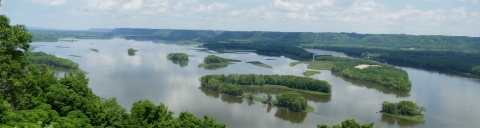
As the wellspring for America’s heartland, the Mississippi River reaches into 31 states, the largest watershed in our nation. The mighty Mississippi and its tributaries helped define this nation and spur its growth—from leading Lewis and Clark to sustaining fertile farmlands to routing our trade. This vast network of rivers profoundly influences our way of life and livelihood, historically and to this day.
Beneath the surface, the Mississippi watershed still teems with fisheries ranging from prehistoric paddlefish to iconic catfish, while the skies above spiral with millions of waterfowl on their journeys along the Mississippi flyway, where river-fed wetlands serve as beacons for resting and feeding. These were among the bountiful natural resources that supported fishing and hunting for American pioneers and remain a vital part of what inspires modern-day conservation—keeping these traditions alive and making so many other exceptional outdoor experiences possible.
Today, continuing our commitment to conservation means working together to manage natural resources amid increasingly complex environmental challenges—with water at the heart of them all. Members of the Mississippi Interstate Cooperative Resource Association, known as MICRA, are united in recognizing the special values of the Mississippi River watershed and work together to conserve our fisheries and other watery wonders.

The U.S. Fish and Wildlife Service’s role in MICRA
The U.S. Fish and Wildlife Service is proud to join with 28 states and two other federal agencies making up MICRA’s membership.
- Through MICRA and as an overall part of our agency’s mission, we share our expertise and resources with states and tribes for fisheries and aquatic species conservation, habitat restoration and invasive species invasive species
An invasive species is any plant or animal that has spread or been introduced into a new area where they are, or could, cause harm to the environment, economy, or human, animal, or plant health. Their unwelcome presence can destroy ecosystems and cost millions of dollars.
Learn more about invasive species management - We serve on MICRA’s executive board, lead inter-agency coordination across the six Mississippi River sub-basins organized under MICRA and co-chair MICRA’s invasive carp advisory committee
- Because of our leading role in related partnerships, we help integrate MICRA’s efforts with others, such as the Aquatic Nuisance Species Task Force and the Invasive Carp Regional Coordinating Committee, to maximize our collective impact
- We oversee an annual collaborative process to plan and fund invasive carp priority projects across the Mississippi River basin.

The Mississippi River watershed
- Covers more than 40% of the continental U.S.
- Includes 1.5 million miles of waterways
- Hosts more than 90 fish species that move through shared waters
- Gives tens of millions of anglers, boaters and other outdoor enthusiasts countless opportunities for good days on the water
- Contributes to the economic well-being of communities reliant on trade, aquatic commercial industries, tourism and outdoor recreation that supports local businesses.
A shared commitment to aquatic conservation
State members of MICRA came together in 1991 to facilitate coordination among partners involved in aquatic conservation. Not only are so many Mississippi waters shared among states, but fisheries and other aquatic species often migrate to different areas during their life cycle, irrespective of geographic boundaries. The MICRA partnership gives natural resource management agencies a formal way of working together more effectively.
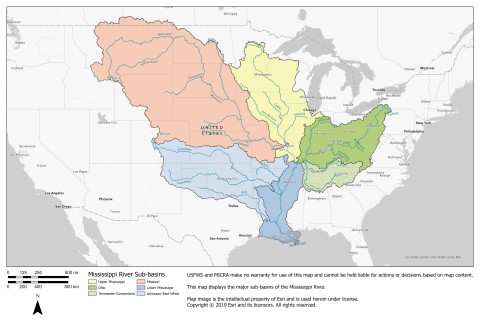
Today, MICRA’s coordination among 28 states and three federal agencies is facilitated through sub-basin partnerships covering these areas:
- Lower Mississippi River sub-basin, Lower Mississippi River Conservation Committee
- Arkansas, Red and White Rivers sub-basin
- Ohio River sub-basin
- Tennessee and Cumberland Rivers sub-basin
- Missouri River sub-basin, Missouri River Natural Resources Committee | MRNRC
- Upper Mississippi River sub-basin, Upper Mississippi River Conservation Committee - UMRCC

MICRA Members
State agencies
- Alabama Department of Conservation & Natural Resources
- Arkansas Game and Fish Commission
- Colorado Parks and Wildlife
- Georgia Department of Natural Resources
- Illinois Department of Natural Resources
- Indiana Department of Natural Resources
- Iowa Department of Natural Resources
- Kansas Department of Wildlife & Parks
- Kentucky Department of Fish & Wildlife Resources
- Louisiana Department of Wildlife & Fisheries
- Minnesota Department of Natural Resources
- Mississippi Department of Wildlife, Fisheries, and Parks
- Missouri Department of Conservation
- Montana Department of Fish, Wildlife & Parks
- Nebraska Game & Parks Commission
- New York Dept. of Environmental Conservation
- North Carolina Wildlife Resources Commission
- North Dakota State Game & Fish Department
- Ohio Department of Natural Resources
- Oklahoma Department of Wildlife Conservation
- Pennsylvania Fish and Boat Commission
- South Dakota Game, Fish & Parks Department
- Tennessee Wildlife Resources Agency
- Texas Parks & Wildlife Department
- Virginia Department of Game & Inland Fisheries
- West Virginia Department of Natural Resources
- Wisconsin Department of Natural Resources
- Wyoming Game & Fish Department
Federal agencies
- Tennessee Valley Authority
- U.S. Fish & Wildlife Service
- U.S. Geological Survey
Resources & Links
General
Mississippi Interstate Cooperative Resource Association website
Invasive carp information
Managing the spread of invasive carp webpage: Managing invasive carp | U.S. Fish & Wildlife Service
Downloadable booklet: The prolific challenge of invasive carp | U.S. Fish & Wildlife Service
Consolidated data on invasive carp removal in the Mississippi River basin: Invasive Carp Harvest Dashboard
Black Carp Bounty Program webpage: Black Carp Bounty Program | Invasive Carp Regional Coordinating Committee
Downloadable Black Carp Bounty Program fact sheet: Keep, Cool, Call: What to do if you capture a black carp | Invasive Carp Regional Coordinating Committee
Invasive Carp Regional Coordinating Committee website
Plans and reports
Management and Control Plan for Bighead, Black, Grass, and Silver Carps in the United States
In 2007, the U.S. Fish and Wildlife Service led a multi-agency effort to develop a national invasive carp plan. This was the first time partners came together to formalize a broad, coordinated effort and overarching guidance for managing invasive carp.
Management and Control Plan for Bighead, Black, Grass, and Silver Carps in the United States
Water Resources and Development Act Reports to Congress
The Water Resources and Development Act Report to Congress provides a summary of actions, strategies, expenditures and progress in addressing the threat of invasive carp in the Mississippi River basin. In 2014, the law authorized the U.S. Fish and Wildlife Service to lead a multiagency effort to address the spread of invasive carp in certain portions of the Mississippi River basin in coordination with the U.S. Army Corps of Engineers, the National Park Service and the U.S. Geological Survey. The scope was later broadened to encompass the entire Mississippi River basin.
2019-2020 Biennial Water Resources and Development Act Report to Congress
2018 Annual Water Resources and Development Act Report to Congress
2017 Annual Water Resources and Development Act Report to Congress
2016 Annual Water Resources and Development Act Report to Congress
2015 Annual Water Resources and Development Act Report to Congress
2015 Annual Water Resources and Development Act Report to Congress Appendix 1
2015 Annual Water Resources and Development Act Report to Congress Appendix 2
2014 Annual Water Resources and Development Act Report to Congress
Projects
Related Stories


Partner Category

Partnership Services

Through our partnerships we are able to expand our capabilities through the inclusion of services in areas such as:
- Grant opportunities
- Sponsorship of grants
- Cooperative Agreements
To find out more about how our partner provides services view our partner services below.
