


Species that are considered high risk have a well-documented history of invasiveness in at least one location globally, and a high or medium climate match to the contiguous United States.
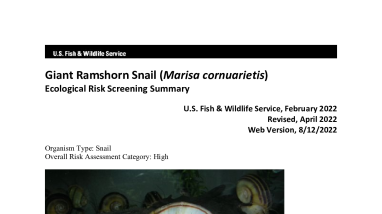
The Giant Ramshorn Snail (Marisa cornuarietis) is a freshwater snail that is native to northern South America and several of the southern islands of the Caribbean. It is used in the aquarium trade throughout the world as well as within the United States. The USDA and a few States regulated the trade of M. cornuarietis. The history of invasiveness is High. It has been introduced in Egypt, Puerto Rico, South Africa, Sudan, Tanzania, Cuba, Israel, Europe, and the United States. Information on impacts of introduction were found. The overall climate match for the contiguous United States was 0.547, High. The certainty of assessment is High. All sources proposed that M. cornuarietis could have an impact in areas that it is introduced and does have an impact on native species where it is currently established. The overall risk assessment category is High.
Publication date
Type of document
High Risk
Program


