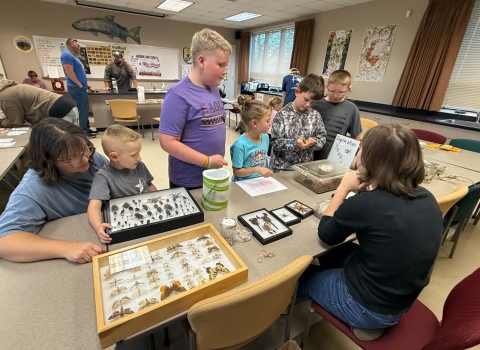
By Matthew Harrison, SkillBridge Intern for the U.S. Fish and Wildlife Service's Fish and Aquatic Conservation Program, Western Washington Fish and Wildlife Conservation Office
For 24 years, my sense of duty was defined by the uniform. As a member of the Washington Army National Guard, service meant operational readiness, tactical focus, and protecting our local communities during times of crisis and hardship. As I approached retirement after more than two decades of military life, I faced the question that so many long-serving service members encounter: How do I translate a lifetime of public service into a meaningful civilian second act?
Through the Department of War SkillBridge program, I found my answer with the U.S. Fish and Wildlife Service’s Western Washington Fish and Wildlife Conservation Office, part of the Fish and Aquatic Conservation Program, in Lacey, Washington. Transitioning directly into natural resource conservation in my hometown proved to be more than just a career shift; it became a profound journey of reconnecting with the land, the waters, and the Pacific Northwest community I had spent a lifetime defending.
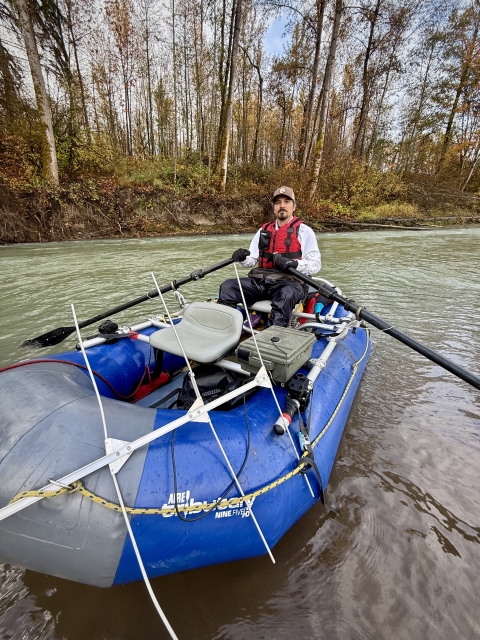
My work centered on studying and conserving the vital watersheds, aquatic species, and nearshore habitats that define our region. This included evaluating native salmonid stocks, monitoring population health, and supporting collaborative co-management efforts alongside tribal partners to safeguard culturally and ecologically vital salmon runs across Western Washington.
My field duties took me directly onto the water, including radio tracking Chinook salmon while floating a 30-mile stretch of the Nisqually River in a small two-person raft. Rowed entirely by hand, the journey required constant focus and teamwork to navigate currents and rapids. Equipped with radio telemetry receiver and antenna, we scanned the river to detect radio-tagged Chinook salmon to gather critical data on their distribution and habitat selection. Along the way, we shared the river corridor with an incredible array of Pacific Northwest wildlife: bald eagles soaring overhead, river otters, beavers, deer along the banks, and returning salmon holding in the pools below.
My service also extended back onto familiar military ground at Joint Base Lewis-McChord (JBLM). Returning to JBLM not in tactical gear, but as a conservation technician, was a unique honor. Working on invasive species invasive species
An invasive species is any plant or animal that has spread or been introduced into a new area where they are, or could, cause harm to the environment, economy, or human, animal, or plant health. Their unwelcome presence can destroy ecosystems and cost millions of dollars.
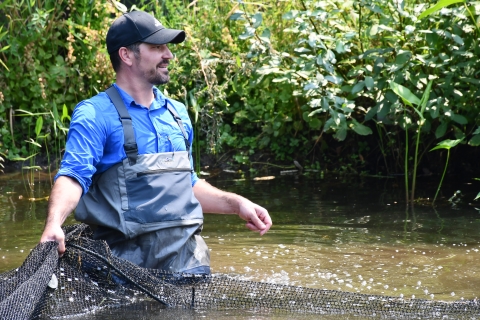
Learn more about invasive species management within military training lands, I helped tackle aggressive non-native aquatic and riparian riparian
Definition of riparian habitat or riparian areas.
Learn more about riparian vegetation that chokes critical waterways like Muck Creek. Managing these species directly improves habitat quality for native fish and listed wildlife while simultaneously helping maintain functional, sustainable training areas for service members who follow in my footsteps.
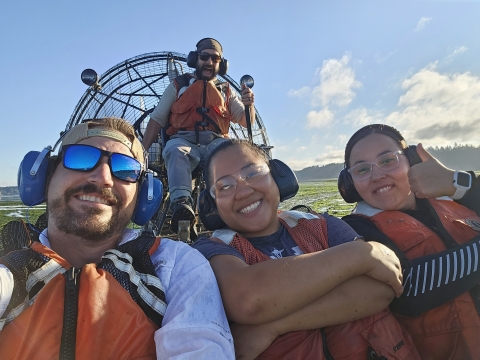
This internship experience provided opportunities to support and learn from other Service facilities. At the Billy Frank Jr. Nisqually National Wildlife Refuge, I stepped into the front lines of marine conservation by conducting intensive trapping efforts for European green crab. Recognized as one of the world’s most destructive invasive species, green crabs pose a severe threat to native shellfish, fragile eelgrass beds, and the delicate estuarine ecosystems that juvenile salmon rely on. Checking traps in the tidal mudflats required early mornings, physical stamina, and meticulous attention to detail—qualities honed over decades in uniform. Knowing that removing these invaders directly protected native biodiversity and local coastal economies gave every day in the field a clear, operational purpose.
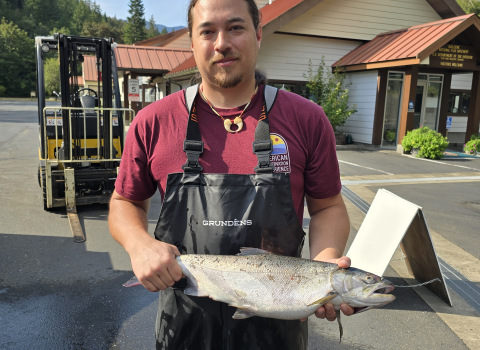
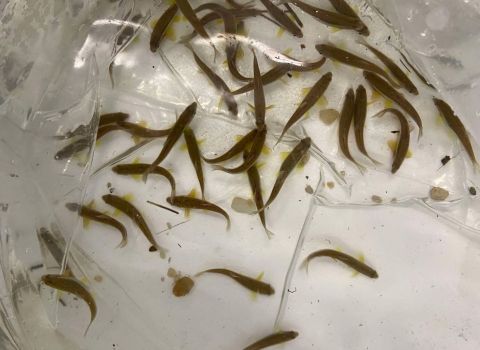
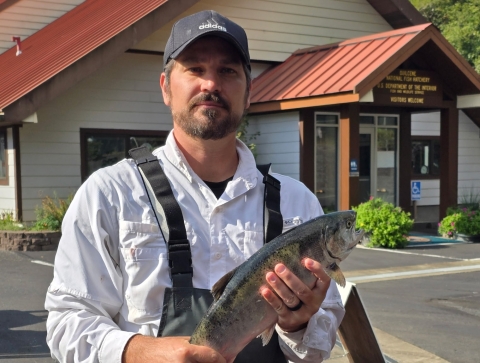
Perhaps the most deeply personal aspect of my internship was sampling salmon at our local National Fish Hatcheries, the very same facilities I had visited as a child with wide-eyed wonder. Returning to those raceways (fish rearing and adult holding ponds) decades later brought my life full circle. I assisted with juvenile fish rearing and hatchery evaluation efforts, which included collecting species, sex, and length data from tagged adult salmon. Assisting in the stewardship of the region’s iconic salmon populations allowed me to directly contribute to the cultural, ecological, and economic heart of Western Washington.
Following our hatchery adult salmon sampling, my responsibilities extended into the laboratory to extract coded-wire tags that were inserted into these fish as juveniles prior to their release from the hatchery. This meticulous work involved isolating the tiny tag, removing it from the snout tissue, and using a digital microscope to read and record the code that indicates their hatchery of origin and brood year. This detailed processing ensured that valuable fisheries data collected from these National Fish Hatchery salmon were accurately collected to evaluate this salmon supplementation program and inform management decisions.
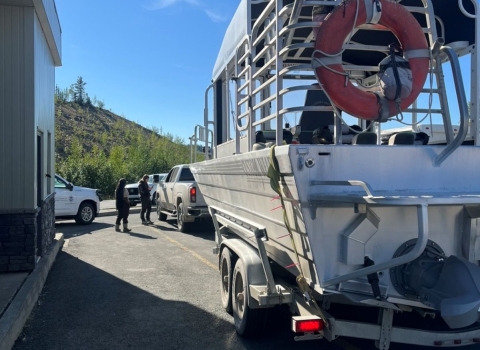
Beyond fisheries management and field research, one of the most impactful experiences of my internship was spending a day job shadowing a Federal Wildlife Officer on patrol. Riding along and observing public lands law enforcement in action reignited a familiar sense of duty. Seeing how these officers balance public engagement, habitat protection, and the enforcement of federal conservation laws showed me a natural bridge between my 24 years in uniform and my passion for natural resources. Protecting our wildlife, defending public lands, and serving as a guardian for these delicate ecosystems is a mission I felt deeply connected to—and it highlighted a clear, inspiring path for what I hope to pursue as my long-term career post-military retirement.
Serving with the U.S. Fish and Wildlife Service showed me that protecting our nation’s land, water, and wildlife is a direct continuation of my oath to serve. The mission may have shifted from defense readiness to ecological resilience, but the core values remained unchanged: dedication, stewardship, and teamwork. Leaving the Washington Army National Guard after 24 years, I step into this next chapter equipped with practical fisheries conservation skills, strong professional network connections, and a renewed sense of purpose dedicated to my home waters.