Story of Service: Addison Emerson
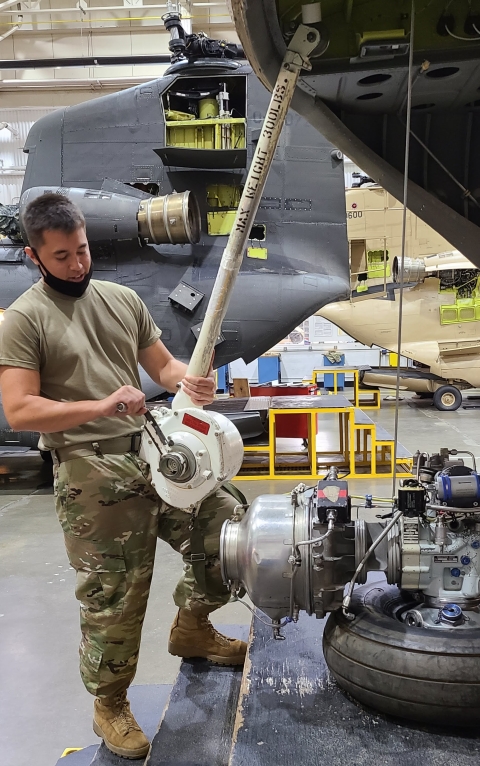
When people ask how I became interested in conservation, they're often surprised to learn it wasn't a straight path. Before beginning my career in natural resources, I served four years active duty in the United States Marine Corps from 2013 to 2017, followed by six years in the U.S. Army Reserve from 2017 to 2023 at Joint Base Lewis-McChord (JBLM) as a helicopter mechanic, concluding my military service with working on Chinook helicopters on JBLM. Working on military aircraft taught me discipline, accountability, and that success often depends on the smallest details. A missed bolt, an overlooked inspection, or a minor mechanical issue could have serious consequences. That mindset of precision followed me after my military service and has become one of the greatest strengths I bring into biological fieldwork.
After leaving active duty, I returned home and resumed commercial fishing as a Skokomish Tribal member. It was during those years on the water that I witnessed something I hadn't fully appreciated before - the steady decline of salmon populations throughout western Washington. Year after year, the returns became more concerning. Watching that decline firsthand motivated me to better understand why we had the ability to commercially fish for salmon, since protecting salmon was so critical.
That search led me into the history of tribal treaty rights. Like many people, I initially knew about the 1974 Boldt Decision, which reaffirmed tribal treaty fishing rights and established that treaty tribes were entitled to up to 50 percent of the harvestable salmon. As I continued researching, I found earlier court proceedings and hearings from the 1950s that described something even more meaningful. Historical evidence demonstrated that the wealth of my people had always come from salmon. Because our economy had historically been built around salmon, our treaty-protected fisheries were recognized not only as a cultural tradition but also as an economic necessity. Understanding that history changed the way I viewed conservation. Healthy salmon populations are not only important for ecosystems, but they are also essential for preserving a way of life that has supported my people for generations.
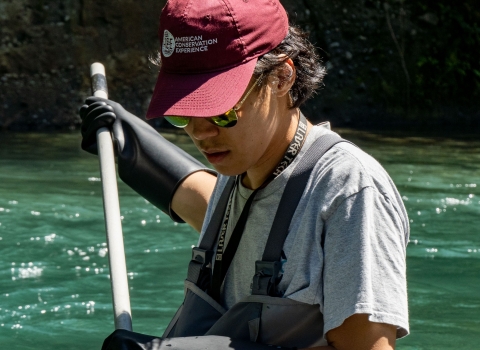
That realization inspired me to pursue a degree in environmental science, where my dedication to the environment has driven me academically and strengthened my desire to learn more about the natural world. That dedication has also earned me recognition on the President’s List and membership in the Alpha Sigma Lambda Honor Society. My education eventually led me to seek real world experience, serving as an AmeriCorps member with the U.S. Fish and Wildlife Service's Western Washington Fish and Wildlife Conservation Office. Throughout my service, I have had the opportunity to work alongside tribal, federal, state, military, and local partners on projects that protect fish, wildlife, and their habitats throughout Western Washington.
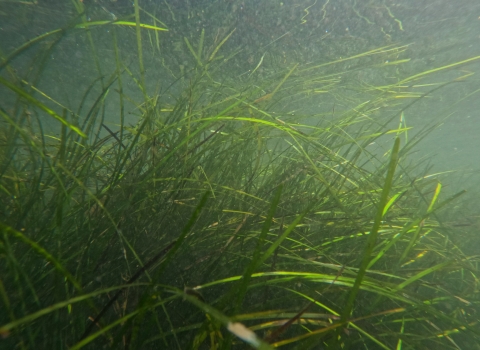
A significant portion of my AmeriCorps service took me back to JBLM. This time I was supporting species such as Chinook salmon instead of maintaining Chinook helicopters. I worked on projects involving fish and wildlife monitoring, wetland restoration, and ecosystem management. These wetlands provide critical habitat for fish, amphibians, birds, mammals, and countless other species, making them some of the most ecologically important landscapes in western Washington.
Habitat restoration was another major focus of my work on JBLM. I helped remove several invasive plant species, including yellow flag iris from wetlands, reed canary grass from salmon spawning habitat, and butterfly bush along the Nisqually River in partnership with the Nisqually Tribe. Although each of these species impacts ecosystems differently, they all outcompete native vegetation that fish and wildlife depend on. By restoring native plant communities, these projects improve wetland function, provide healthier habitat for salmon, support native pollinators and wildlife, enhance streambank stability, and promote greater biodiversity throughout these ecosystems.
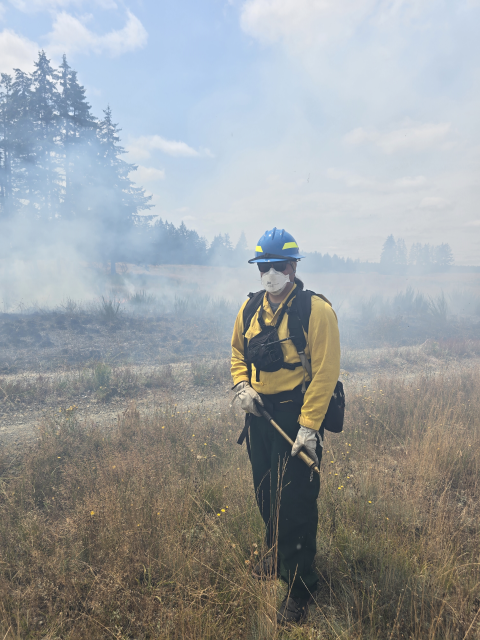
I was also grateful for the opportunity to participate in prescribed fire operations on JBLM. Fire has long been an important ecological tool throughout the Pacific Northwest, reducing hazardous fuel loads, maintaining prairie ecosystems, and improving wildlife habitat. This experience held special significance for me because my tribe historically used controlled burning to cultivate beargrass for traditional weaving materials while maintaining healthy prairie and oak savanna ecosystems, unique landscapes that still exist in pockets throughout western Washington. Seeing modern prescribed fire practices alongside Indigenous land stewardship reinforced that many traditional ecological practices remain valuable conservation tools today.
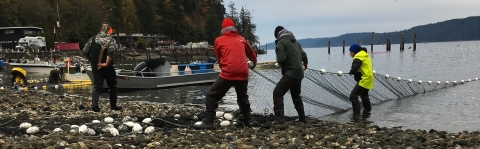
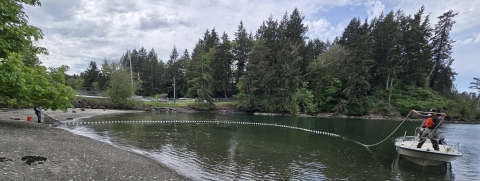
I also had the opportunity to support partners such as the Puyallup Tribe and the U.S. Navy.This includes assisting with the Puyallup Tribe’s test fisheries, which was used to assess salmon populations and help determine fishing regulations, including harvest limits. These surveys demonstrated how biological data directly supports sustainable harvest management while protecting treaty-reserved fishing opportunities. The Navy work included conducting habitat assessments and population surveys.
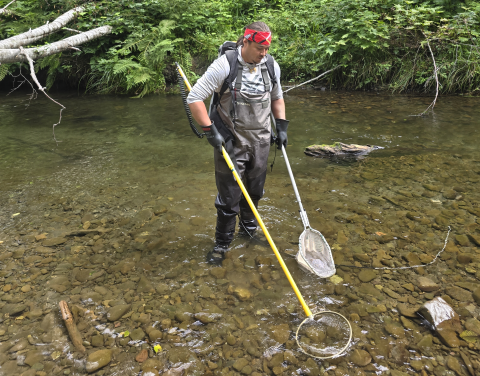
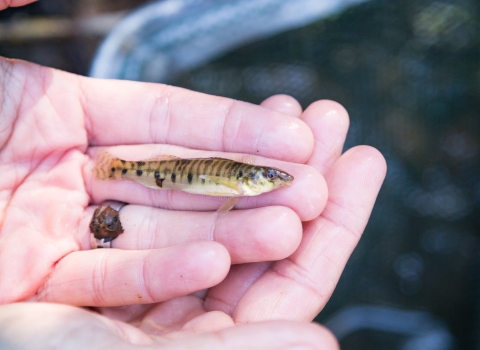
Closer to home, I participated in Pacific lamprey surveys on the Skokomish River. Using electrofishing techniques, we documented juvenile Pacific lamprey farther upstream than had previously been recorded within the watershed. Small discoveries like these demonstrate why continued field surveys remain important and remind us that there is still much to learn about the species that inhabit our rivers.
Another close-to-home and meaningful AmeriCorps experience has been assisting with fish culture at the Quilcene National Fish Hatchery, which spanned rearing of coho salmon fry (juveniles) and hatchery maintenance support this past spring to assisting with the return of adult salmon in the late summer. I have also had the opportunity to assist with hatchery evaluation work, including biological sampling of adult coho and processing lab samples.This has allowed me to better understand how fisheries are monitored and managed.
This experience has been especially meaningful to me because my Skokomish Tribe is one of the four tribal co-managers of the Quilcene National Fish Hatchery.Salmon have long been an important resource to my community and being able to contribute to the conservation and management of a resource that is important both ecologically and to my own community has made this experience invaluable to me.
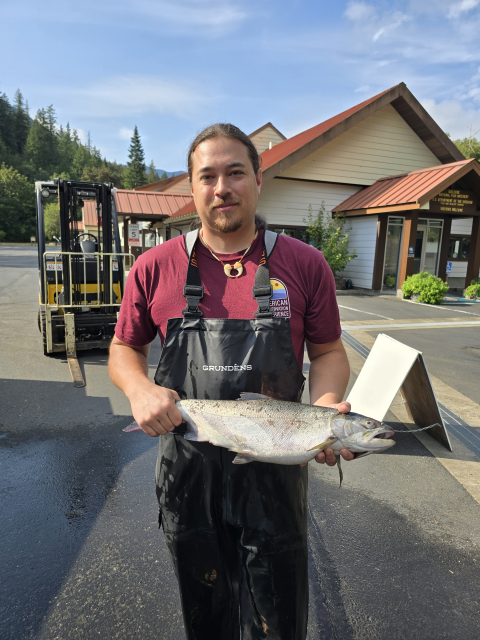
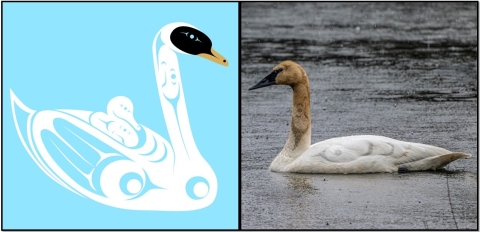
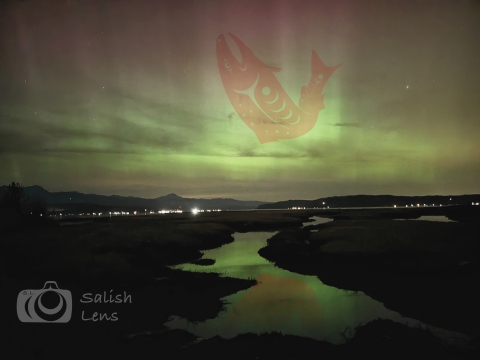
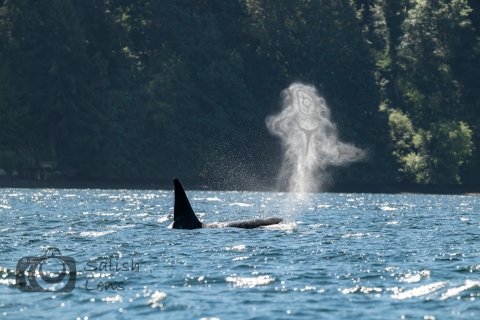
Outside of work, I have found another way to contribute to conservation through wildlife and landscape photography and tribal art. I have blended my traditional Coast Salish artwork into my photography to connect people with nature and culture. For me, conservation and art are closely connected. Both tell stories, preserve culture, and inspire people to care about the natural world.
Looking back, my path has been anything but traditional. It has shown me that not everyone needs to have life figured out from the beginning. Sometimes taking a break from school, pursuing different opportunities, and following what genuinely interests you can lead to work that you're truly passionate about. Military service taught me discipline and attention to detail. Commercial fishing showed me the reality of declining salmon populations. Researching tribal history deepened my understanding of why conservation matters. My AmeriCorps service with the U.S. Fish and Wildlife Service has brought those experiences together by allowing me to apply science in ways that support healthy ecosystems and strengthen partnerships among tribes, federal agencies, state agencies, military installations, and local communities.
As I continue my education and work toward a career in natural resources, my goal remains clear: continuing my service to our environment.