Staff from the Peninsular Florida Fish and Wildlife Conservation Office continued a multi-year project working alongside the Indian River County Conservation Lands Department, Friends of the Saint Sebastian River, and local environmental NGOs on a project bringing back fish habitat along the Saint Sebastian River.
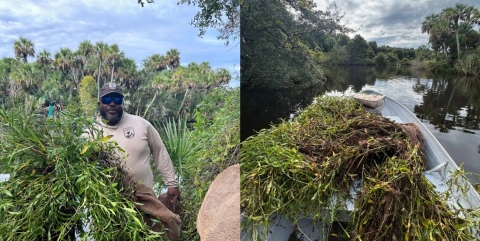
The project focuses on Cypress Bend Community Preserve, a former citrus grove purchased by the county that borders both the Saint Sebastian River and the Saint Sebastian River Buffer Preserve. As the county works to convert the old grove back into native scrub habitat, our office has partnered on the aquatic side of the restoration, targeting the river itself and the fish that depend on it.
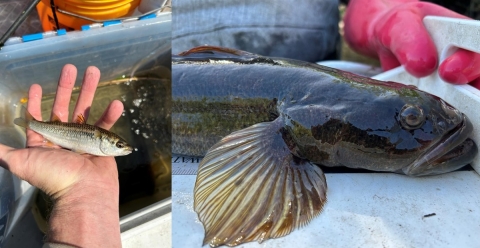
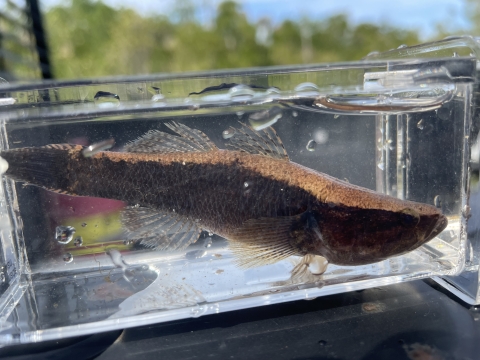
The Saint Sebastian River is one of the few North American rivers that several imperiled fish species call home, including the opossum pipefish (Microphis brachyurus), bigmouth sleeper (Gobiomorus dormitor), river goby (Awaous banana), mountain mullet (Dajaus monticola), and largescale spinycheek sleeper (Eleotris amblyopsis). Using historic survey data along with the FWCO’s more recent monitoring, staff identified hotspots where these species have historically been found, and unfortunately many of these areas were choked with invasive aquatic vegetation. Invasive plants crowd out the native vegetation these fish rely on for cover and food, and their spread has coincided with a rise in nonnative fish species moving in on the same habitat. Beyond the fish, healthy native vegetation along the riverbank helps stabilize the shoreline and filter runoff before it reaches the Indian River Lagoon downstream.
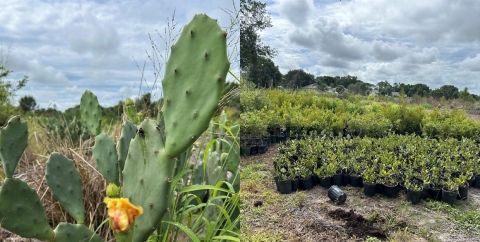
With survey work pointing to clear priority areas within the preserve’s boundary, the FWCO assisted with removal and coordinated treatment of the invasive aquatic vegetation, clearing the way for restoration plantings. On the first planting trip, the crew put 1,500 emergent and submerged plants directly into the river to rebuild habitat structure, along with additional riparian riparian
Definition of riparian habitat or riparian areas.
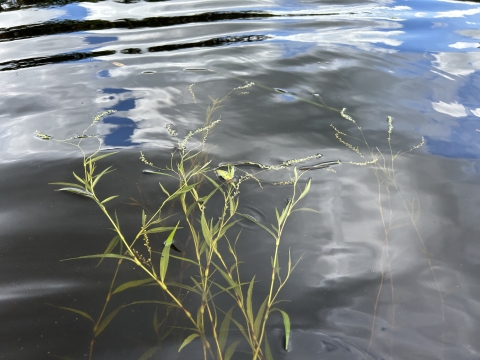
Learn more about riparian and upland plantings on the bank. This second planting built on that work, adding 2,000 bare-root smartweed plants along the riverbank and another 8,000-plus riparian and upland plants as part of the broader scrub restoration. Smartweed in particular is an important plant, it's the kind of structure opossum pipefish specifically seek out, making it one of the most direct ways we can support the species' recovery at this site.
The office will continue monitoring the site for both native and invasive fish and plant species and already looking ahead to additional sites where invasive removals and restoration plantings can benefit our native fish species the most.