As part of the Flags Across America initiative for America’s 250th anniversary, the U.S. Fish and Wildlife Service is sharing stories from the places where our commemorative flags have traveled. From historic hatcheries to vibrant refuges, each stop celebrates conservation as an enduring American value. Join us as we highlight the lands, waters and wildlife that connect our nation’s past, present and future.
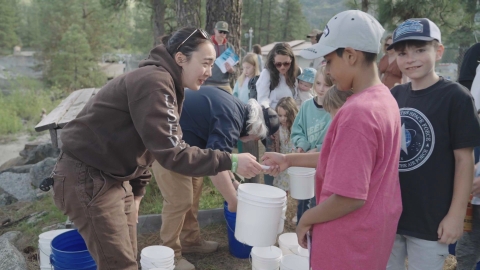
In April 2026, at Leavenworth National Fish Hatchery’s Salmon Release Party, we celebrated more than just another successful year raising 1.2 million spring Chinook salmon. We also honored the 250th anniversary of our country and the generations of conservation work and partnerships that led to this moment. The flags on proud display created a meaningful backdrop that highlighted both our heritage and our shared commitment to the future of conservation.
To honor our partnerships, we invited our tribal nation partners and the Bureau of Reclamation to co-display their flags with ours, symbolizing ongoing co-stewardship of salmon in the mid- and upper-Columbia River Basin. Together, the flags represent unity, shared values and the collective effort needed to protect natural resources now and into the future.
Since 1940, Leavenworth National Fish Hatchery has been rearing and releasing salmon to mitigate for the ongoing effects of Grand Coulee Dam. Grand Coulee, the largest hydroelectric dam in North America, blocked salmon access to over a thousand miles of spawning habitat in the upper Columbia River. The Leavenworth Fisheries Complex was established to help mitigate lost salmon production and help maintain fisheries for the region. The complex consists of Leavenworth, Winthrop and Entiat National Fish Hatcheries, as well as the Mid-Columbia Fish and Wildlife Conservation Office. Our ability to carry out crucial salmonid restoration work is only possible through our partnership with the Bureau of Reclamation, whose funding and infrastructure support allow the hatchery to operate and continue delivering conservation and fishery benefits across the basin.

While the Leavenworth Fisheries Complex has operated for over 80 years, the National Fish Hatchery System began much earlier, back in 1871 when the U.S. Commission of Fish and Fisheries was founded in response to declining fish stocks. Hatcheries remain vital for supporting healthy ecosystems, sustaining abundant fish populations and recreation opportunities, and connecting visitors to our nation’s amazing aquatic resources.
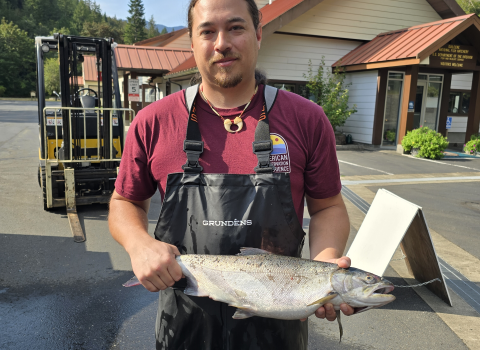
Our work at Leavenworth National Fish Hatchery is only possible through partnership and collaboration. Some of our most significant partnerships are with the tribal nations who have stewarded this land since time immemorial. The Confederated Tribes and Bands of the Yakama Nation and the Confederated Tribes of the Colville Reservation are direct partners in the salmon recovery and fishery efforts at Leavenworth National Fish Hatchery. Members from both tribes have used the area around the hatchery as a fishing location for many generations, and both tribes operate tribal fisheries at the hatchery annually, helping to maintain important cultural connections, provide food for their families, and support ceremonial needs.
Our tribal trust responsibilities strengthen and guide the work we do. Every year, surplus adult Chinook salmon are distributed to local area tribes, helping preserve cultural connections to salmon while also providing for ceremonial and subsistence needs. We also collaborate closely with Yakama Nation Fisheries on their Mid‑Columbia Coho Restoration Program, raising juvenile coho at our facility and providing staff support as needed to support the tribe’s long‑term vision of re‑establishing naturally spawning coho throughout the basin.
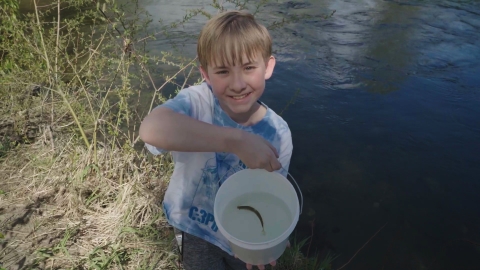
The release party is about more than sending fish into the river – it is a celebration of our salmon’s last moments at the hatchery and the start of their journey in the wild. As these fish start the first part of their nearly 500-mile migration to the ocean, our community gathers to cheer them on.
Local partners, including tribal representatives, from across the region set up booths and interactive stations to help visitors learn more about salmon, science, conservation and outdoor stewardship. As participants name and release a salmon into Icicle Creek, they often feel deeply moved, building connections with the fish and the river that sustains them and becoming part of a story much larger than themselves.
Salmon depend on diverse, interconnected ecosystems to migrate from river to ocean and back again. Likewise, we depend on each other to accomplish more, work efficiently, and steward these resources for future generations. We are grateful for the partnerships that make this work possible and recognize that we do better together.
Next up, we follow the flags to Detroit River International Wildlife Refuge, North America's only international wildlife refuge. Stay tuned for the next chapter on this historic tour!