We at the U.S. Fish and Wildlife Service are researching whether radio telemetry, technology more commonly used to track birds and mammals, can work on animals as small as a bumble bee.
By fitting individual black and gold bumble bees with tiny transmitters, we’re able to follow them as they forage for nectar and pollen, cross habitat boundaries and search out nesting sites and cover.
This innovative approach can reveal movements that are difficult to capture through traditional surveys. That, in turn, helps us fill information gaps faster and make more timely, targeted conservation decisions for pollinators, including the endangered rusty patched bumble bee.
Searching for bumble bees in restored habitat
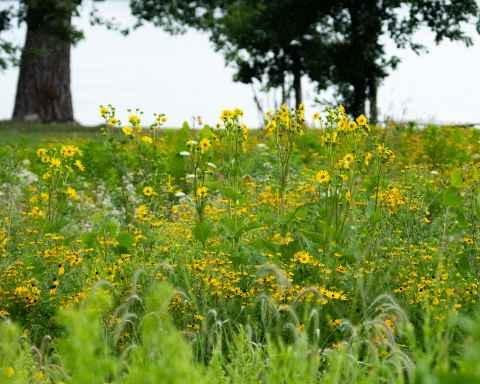
The restored native prairie at Illiniwek Forest Preserve in Hampton, Illinois, serves as a grocery store for bumble bees, offering nectar and pollen from different flowering plants throughout the growing season. As plants bloom and go dormant, bumble bees move across the landscape to find the resources they need.
Knowing that a bumble bee is present tells us only part of the story. Understanding where it goes next can reveal how bees use the restored prairie and surrounding landscape, including the Mississippi River corridor bordering this site.
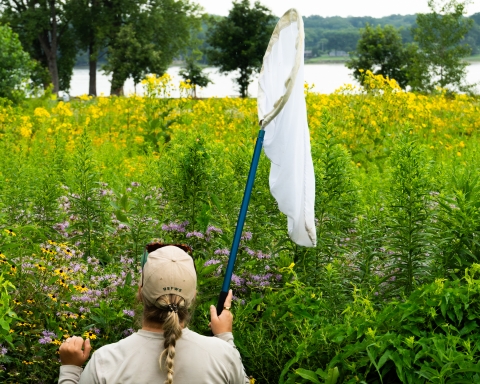
Moving through the prairie with insect nets, our biologists observe bumble bees foraging among flowering plants and carefully capture individuals for tagging. Worker bees and new queens, known as gynes, can provide different information about how colonies use the landscape. Tracking a new queen later in the growing season, for example, could help identify where she travels as she prepares to overwinter and offer clues about the habitats she relies on before emerging the following spring.
Small bee, even smaller transmitter
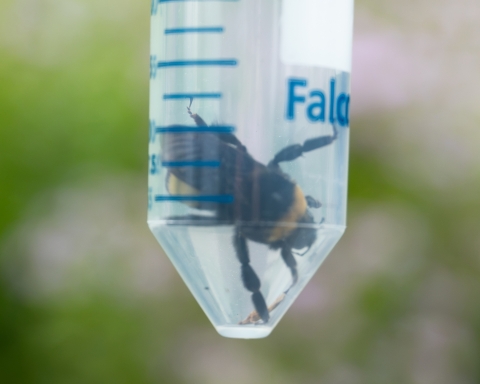
To track an individual bee, we first need to find one. Once captured, we temporarily place the bumble bee in a clear vial for examination. We then carefully chill it to reduce its activity so we can collect measurements and attach a transmitter.
Working with an insect this small requires a delicate process designed to gather the necessary information, attach the transmitter and safely return the bumble bee to the prairie.
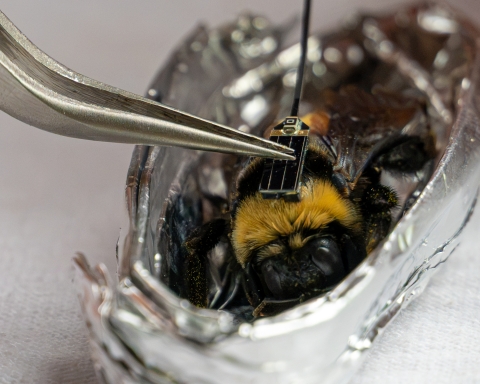
We carefully glue a miniature radio transmitter to the bumble bee's thorax, the middle section of its body. Placing the transmitter here helps minimize interference with the bumble bee’s normal activity. Once attached, it allows us to follow that individual after it disappears into a prairie filled with other bumble bees and pollinators.
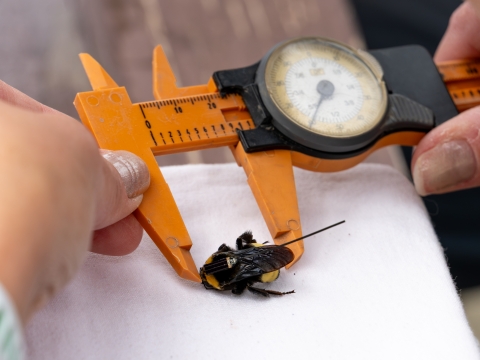
Before release, we collect measurements of each tagged bumble bee. Body size can help distinguish worker bees from queens, which are several millimeters larger.
Back to being a bumble bee
Once ready for release, the bumble bee returns to the prairie and resumes foraging among flowers for nectar and pollen. For us, its release begins the next stage of the work.
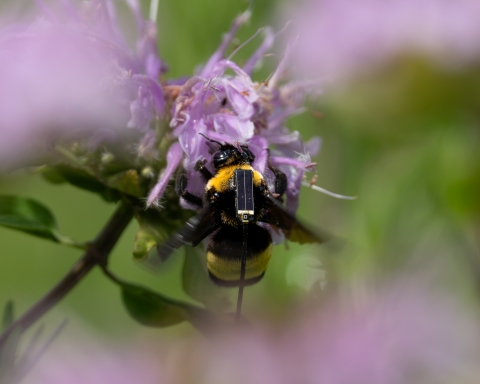
Following an individual opens the door to questions that are difficult to answer through traditional surveys alone. How far does it travel? Which parts of the prairie does it use? Does it cross a river or move into an urban area? And where does it go when a favored source of nectar and pollen stops producing? Answering those questions means following the bumble bee’s signal, wherever it leads.
Following the buzz
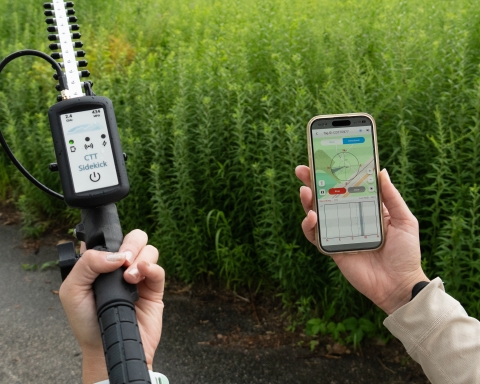
Using portable handheld receivers, we detect signals from tagged bumble bees and follow their movements after release. Technology allows us to locate an individual after it flies out of sight and reconstruct its route through the landscape.
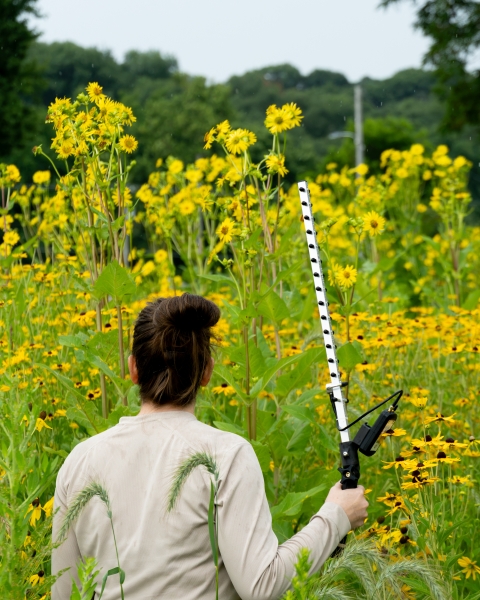
As different plants bloom and fade, bumble bees rely on a succession of nectar and pollen sources, while access to suitable nesting and overwintering habitat becomes important at different stages of their life cycle. Following individual bumble bees can show us where they go to meet those changing needs.
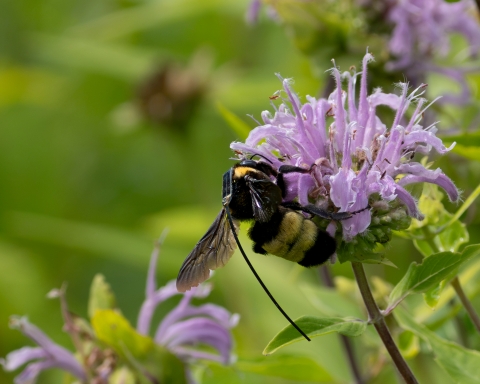
Early results are already revealing how far they may travel and how differently individual bumble bees use the same landscape.
One bumble bee traveled at least 3.5 miles north of the tagging site, measured in a straight line, before turning back. That afternoon, it made the same round trip again, covering at least 14 miles. Its actual flight path was almost certainly longer, since a foraging bumble bee doesn’t travel in a straight line.
A second bumble bee took a different approach, exploring a wide 10-mile loop in a single day rather than repeating a single route.
A third bumble bee crossed the Mississippi River 30 times over four days, each about 0.62 miles per trip, which suggests it forages at Illiniwek before going back to its nest on the other side of the river.
Our biologists determined these three bumble bees came from three separate nests, which means multiple colonies rely on this restored prairie.
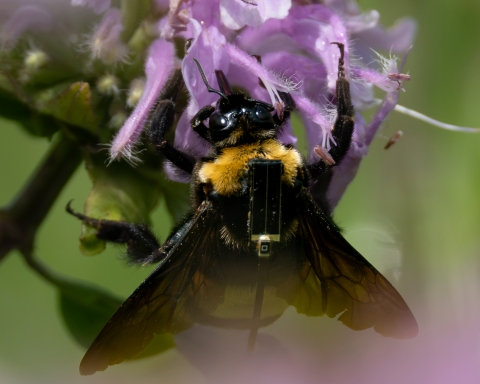
A transmitter small enough to ride on a bumble bee can help us study conservation at a much larger scale. Following individual bumble bees across the landscape can turn observations of where they are today into better-informed decisions about the habitat they may need tomorrow.