As part of the Flags Across America initiative for America’s 250th anniversary, the U.S. Fish and Wildlife Service is sharing stories from the places where our commemorative flags have traveled. From historic hatcheries to vibrant refuges, each stop celebrates conservation as an enduring American value. Join us as we highlight the lands, waters, and wildlife that connect our nation’s past, present, and future.
Pelican Island National Wildlife Refuge rests just offshore from Sebastian, Florida. As the first national wildlife refuge national wildlife refuge
A national wildlife refuge is typically a contiguous area of land and water managed by the U.S. Fish and Wildlife Service for the conservation and, where appropriate, restoration of fish, wildlife and plant resources and their habitats for the benefit of present and future generations of Americans.
Learn more about national wildlife refuge in the United States, Pelican Island’s surrounding 5,400 acres of protected lands and waters form a rich mosaic of mangroves, salt marsh salt marsh
Salt marshes are found in tidal areas near the coast, where freshwater mixes with saltwater.
Learn more about salt marsh , and open lagoon. Visitors arrive by way of the Historic Jungle Trail, finding themselves on a peaceful stretch of Florida’s Atlantic coast where the wilderness feels close and alive.
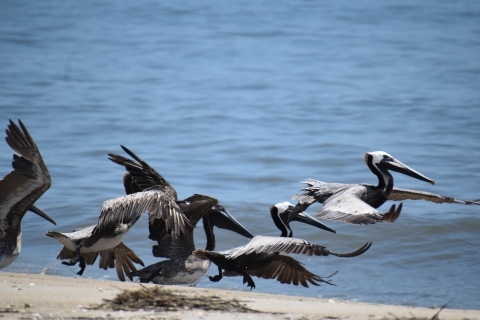
Established in 1903 to protect the last remaining brown pelican rookery on Florida’s east coast, Pelican Island National Wildlife Refuge now provides feeding, nesting, and roosting habitat for more than 130 species of birds and threatened species, including the southeastern beach mouse.
From migratory white pelicans gliding across winter skies to wading birds like tricolored herons and wood storks feeding along the marsh edges, the refuge teems with life. Winter is a brilliant white spectacle as American white pelicans and waterfowl such as red‑breasted mergansers, blue‑winged teal, and northern shovelers gather in the warm Florida sunshine. Spring bursts with activity as at least 16 species, including brown pelicans, great egrets, roseate spoonbills, and wood storks, nest on Pelican Island proper. Summer slows the pace, with reptiles such as black racers and coachwhips basking in the late afternoon sun, and gopher tortoises lingering near their burrows. Fall migration brings the arrival of belted kingfishers, grackles, and blue‑gray gnatcatchers, marking the turning of the seasons despite Florida’s lingering heat. Throughout the year, gopher tortoises, river otters, and even blue land crabs make their homes among the many habitats accessible by trail or visible from boats in the lagoon.
"Strong support from local communities and partnerships combined with dedication and foresight of past and present refuge managers, staff, and volunteers have created a 'must see' gem within the National Wildlife Refuge System, and we are deeply honored to continue that legacy forward,” said Eric M. Verderber, acting project leader, Everglades Headwaters National Wildlife Refuge Complex and Pelican Island National Wildlife Refuge.
The history of Pelican Island stretches far deeper than its founding as a refuge. Long before conservation laws existed, the Ais people lived in the region between 2000 BCE and the mid‑1600s, relying on the lagoon’s abundant resources. By the late 1800s, the island’s bird populations were in grave danger as plume hunters slaughtered countless waterbirds for the fashion trade. Alarmed by the rapid decline of pelicans and other species, early conservationists fought to protect what remained.
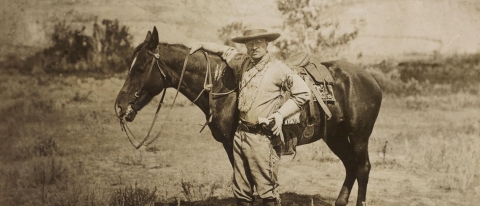
Their efforts succeeded when President Theodore Roosevelt signed an executive order in 1903 establishing Pelican Island as the first national wildlife refuge. It was a landmark decision that launched the entire National Wildlife Refuge System. Later, in 1970, Congress designated Pelican Island as wilderness, ensuring its long‑term protection. Today, informational signs along the trails tell these stories, allowing visitors to connect with the people and decisions that shaped one of America’s most important conservation achievements.
Since its founding, staff and partners have been carrying out the mission of protecting these critical landscapes. Today, the refuge supports several habitat restoration projects, wildlife surveys, invasive species invasive species
An invasive species is any plant or animal that has spread or been introduced into a new area where they are, or could, cause harm to the environment, economy, or human, animal, or plant health. Their unwelcome presence can destroy ecosystems and cost millions of dollars.
Learn more about invasive species removal, and mosquito control that helps maintain a healthy lagoon ecosystem. And, on these public lands, interpretive trails guide visitors through various habitats and create a learning opportunity for everyone to understand how refuge management supports species survival, ecological balance, and public enjoyment of natural spaces.

Pelican Island National Wildlife Refuge continues to welcome birders, hikers, photographers, kayakers, and anyone who seeks a deeper connection to Florida’s natural heritage. With its accessible Centennial Trail, panoramic observation tower, and miles of boardwalks and footpaths, the refuge acts as a living classroom, reminding visitors that natural beauty and biodiversity can thrive alongside human development when thoughtful stewardship is prioritized.
Consider this your invitation to explore its quiet beauty, learn its history, and witness the wildlife that inspired a national movement. Come visit and become part of the continuing story of the American Conservation Story.
Next up, we follow the flags to Welaka National Fish Hatchery, which maintains a 16-tank public aquarium, a nature trail, and an observation tower where wildlife and birds can be observed around the ponds. Stay tuned for the next chapter on this historic tour!