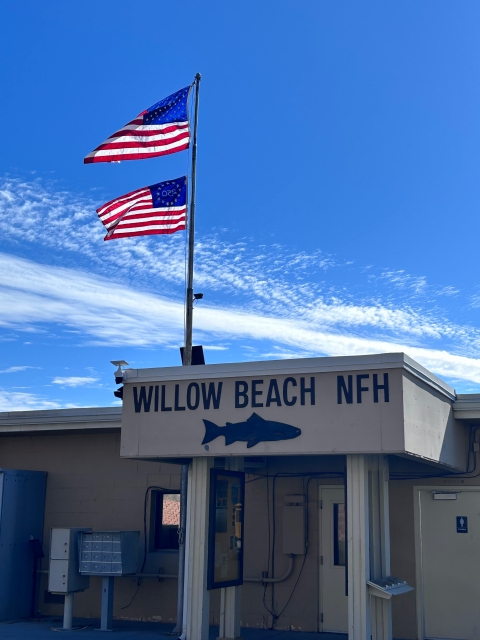
As part of the Flags Across America initiative for America’s 250th anniversary, the U.S. Fish and Wildlife Service is sharing stories from the places where our commemorative flags have traveled. From historic hatcheries to vibrant refuges, each stop celebrates conservation as an enduring American value. Join us as we highlight the lands, waters, and wildlife that connect our nation’s past, present, and future.
Rainbow trout rank among the top sport fish in North America, and stocking them is one of the missions of Willow Beach National Fish Hatchery, where the flags visited in February 2026.

The hatchery in Arizona serves tribal partners and the public by annually raising a minimum of 100,000 rainbow trout — each 10 to 12 inches long — and stocking waters of the Lower Colorado River Basin on tribal lands and spots below the Hoover and Davis dams. Anglers can then test their skill against the fish.
Rainbow trout and Hoover Dam had a hand in the hatchery’s establishment in 1959. After construction, the dam released water ideal for the cold-water rainbow trout, and the hatchery was built for rainbow trout production because of that colder water.
We’re always proud to support fishing opportunities. Across the United States, 71 national fish hatcheries raise millions of fish yearly, and one goal is to enhance state and tribally managed fisheries.
Along with hunters, anglers are often called the first conservationists. Conservation helps ensure the future of outdoor pursuits, including fishing. Plus, money from their license and fishing equipment purchases funds the management and research of 200 fish species and supports 321 state fish hatcheries that stock over 1 billion fish annually.
According to the 2022 National Survey of Fishing, Hunting, and Wildlife-Associated Recreation, the nearly 40 million U.S. residents 16 and older who fished that year spent almost $100 billion on fishing expenditures.
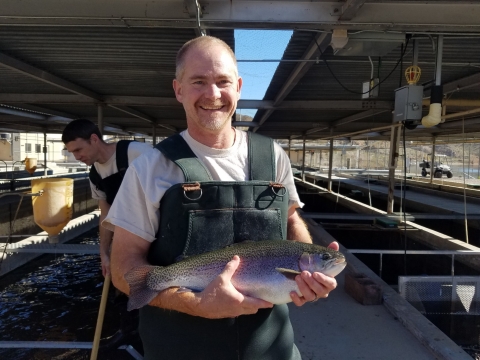
As the hatchery provides fish for angling, it takes care to ensure that its stocked rainbows do not hurt an area’s native fish populations. All the hatchery’s rainbow trout are sterile, which prevents the species from overwhelming native fish, like other kinds of trout, for instance.
While rainbow trout are popular and present in most parts of the country today, they are native to only a handful of states in the West and have just been introduced to much of the rest of the country. In fact, introductions have put rainbows on every continent except Antarctica.
From Cold to Warm
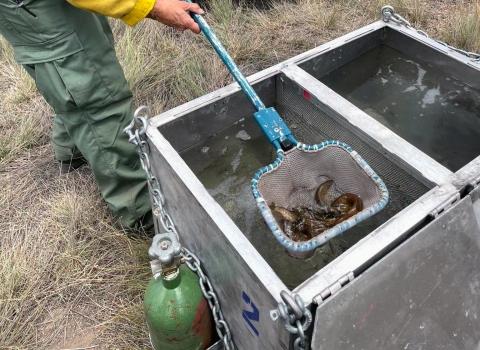
Rainbow trout production is just part of the work at the hatchery. Since 1995, it has also raised native endangered razorback sucker and bonytail chub to help the warm-water fish recover. The Bureau of Reclamation and Service have an agreement through the Lower Colorado River Multi-Species Conservation Program to stock up to 660,000 razorback suckers and 620,000 bonytail chubs in the Lower Colorado River through 2044. To date, Willow Beach has stocked 153,368 razorback suckers and 8,363 bonytail.
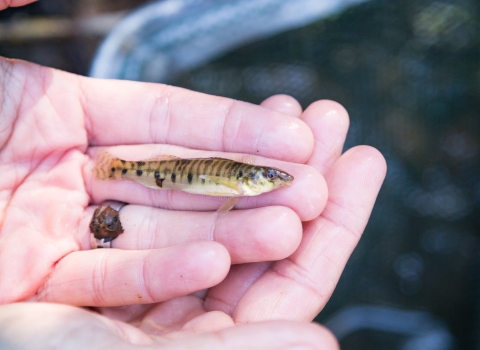
The razorback sucker is one of the largest sucker species in North America, growing up to 3 feet in length. We and many partners work together to restore self-sustaining populations through propagation and stocking.

The bonytail chub is the rarest of the endangered native fish of the Colorado River. It is thought to have evolved around 3 million to 5 million years ago.

By raising and stocking rainbow trout Willow Beach National Fish Hatchery benefits the community with everything fishing brings. By doing the same for endangered native fish, the hatchery ensures a future for the Colorado River’s native fish.
Next up, we follow the flags to Pelican Island National Wildlife Refuge in Florida, the first national wildlife refuge national wildlife refuge
A national wildlife refuge is typically a contiguous area of land and water managed by the U.S. Fish and Wildlife Service for the conservation and, where appropriate, restoration of fish, wildlife and plant resources and their habitats for the benefit of present and future generations of Americans.
Learn more about national wildlife refuge . Stay tuned for the next chapter on this historic tour!