To celebrate America's 250th birthday, we at the U.S. Fish and Wildlife Service are highlighting the incredible wildlife that calls this beautiful country home. From American icons to subtle specialists, join us as we highlight seven species each week: one species for each of the 250 days leading up to America's 250th birthday.
White-lined sphinx moth (Hyles lineata)
The white-lined sphinx moth is a fast-flying pollinator often mistaken for a hummingbird due to its size, hovering flight and feeding behavior. These moths are active day and night, visiting flowers and sipping nectar across the country.

Canada goose (Branta canadensis)
The Canada goose is a familiar and adaptable bird found across much of North America. This time of year, it's nesting season across much of their range. As goslings hatch, families can be found together on wetlands, ponds and grassy areas.

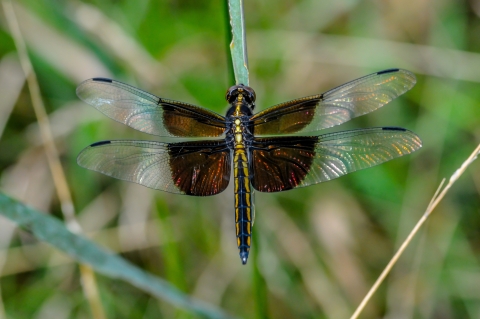
Widow skimmer (Libellula luctuosa)
The widow skimmer dragonfly has dark bands on the inside of its wings. They can be found near ponds, lakes and slow-moving streams across much of the United States. This time of year, adults are emerging from the aquatic nymph stage and taking their first flights.
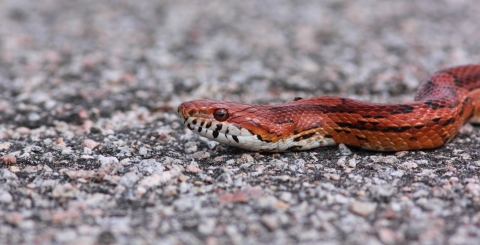
Corn snake (Pantherophis guttatus)
The corn snake is a nonvenomous constrictor found in the southeastern and central United States. It has striking orange and red coloring with black blotches, resembling the pattern of maize. These snakes are excellent rodent hunters, providing natural pest control.
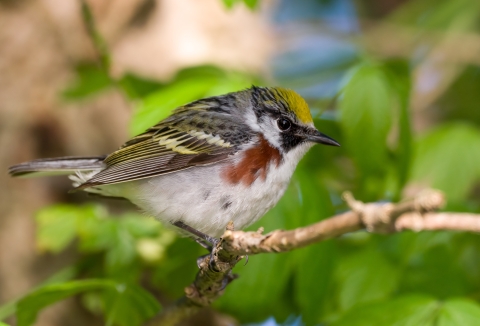
Chestnut-sided warbler (Setophaga pensylvanica)
The chestnut-sided warbler can be found through much of the east during migration as it moves from wintering grounds in Mexico, the Caribbean and South America to breeding grounds in young, shrubby forests in the upper midwest, northeast, Appalachian Mountains and southern Canada.
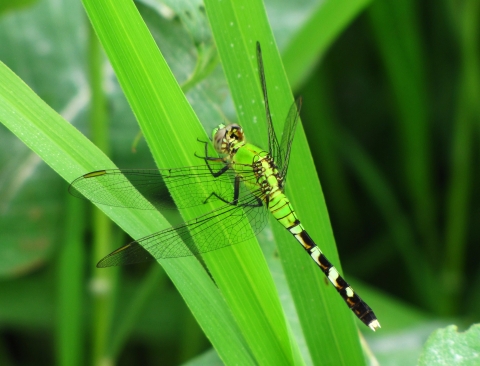
Eastern pondhawk (Erythemis simplicicollis)
The eastern pondhawk is a fast-flying dragonfly found across much of the U.S. east of the Rocky Mountains. This time of year, adults are emerging from the aquatic nymph stage, drying their wings and taking flight searching for food and mates. They hunt flies, mosquitoes and even other dragonflies!
Pileated woodpecker (Dryocopus pileatus)
The pileated woodpecker can be found in parts of the west, across southern Canada and across much of the eastern United States. These large woodpeckers have a bold crest, black-and-white plumage and loud calls. They prefer mature forests where they excavate cavities in dead trees and forage for carpenter ants and woodboring beetle larvae.