On March 7, 2021, something caught the attention of Customs and Border Protection officials at a mail processing center in Louisville, Kentucky.
An x-ray machine showed what appeared to be a skull inside a package labeled as decorative masks.
Upon inspecting the package, the officials did find painted ceramic masks inside — but the masks were concealing four animal skulls.

Customs and Border Protection alerted a U.S. Fish and Wildlife Service wildlife inspector, who examined the skulls and determined one belonged to an orangutan — an endangered species native to Indonesia and Malaysia — and the other three belonged to large wild cats, which turned out to be leopards and are also protected by national and international laws and treaties.
The package’s return address was in Indonesia; it was heading to an individual in Massachusetts named Adam Bied.
In addition to the misleading labeling, the package lacked the required documentation and permits for importing wildlife parts in compliance with the U.S. Endangered Species Act and the Convention on International Trade in Endangered Species of Wild Fauna and Flora.
A pattern of illegal activity
It wasn’t an oversight, or the result of misinformed online shopping. A subsequent investigation by the Service’s Office of Law Enforcement in partnership with the U.S. Marshals Service showed a pattern of intentional illegal activity over many years.
Since at least 2018, Bied had been knowingly buying, selling, and trading hundreds of wildlife parts in violation of U.S. and international laws and treaties.

He placed orders for specific parts, mainly skulls, with individuals in Cameroon and Indonesia who were in the businesses of killing or acquiring wildlife. When Bied received the parts, he resold or traded them to customers in the United States, at times lying about the wildlife parts true origin or age.
Undercover investigation
After documenting the contents of the package in Louisville, the wildlife inspector packed it back up and allowed it to continue to its destination. Three days later, Bied posted an ad online listing a leopard skull for sale. He was contacted by a potential buyer, who eventually purchased the skull for $1,750. As soon as that sale was final, Bied offered the buyer another leopard skull, describing it as “among the rarest of the rare.” The buyer agreed to purchase it for $1,850.
Unbeknownst to Bied, his customer was an undercover special agent with the Service’s Office of Law Enforcement, who was able to trace both skulls back to the March shipment.
A stockpile of parts
With the evidence from the transactions, Service special agents obtained and executed a search warrant on Bied’s residence, a storage unit and vehicle, assisted by Service Federal Wildlife Officers and the Massachusetts Environmental Police.
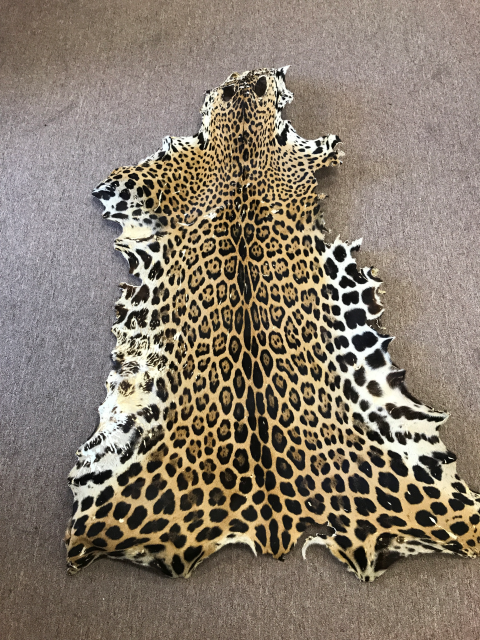
The operation resulted in the seizure of more than 100 wildlife parts from numerous protected species, including pangolin, narwal, mandrill, tiger, African lion, orangutan, jaguar, leopard, sea turtle, polar bear, brown bear, walrus, babirusa, sea lion, sperm whale, harp seal, elephant seal, gray seal, hornbills, pilot whale, monkeys, and mountain lion. The parts included skulls, skins, horns, tusks, claws, and teeth.
On January 5, 2026, Bied pled guilty to four felony charges, two counts of Conspiracy to violate the Lacey Act and Smuggling statute and two counts Lacey Act wildlife trafficking. On April 2, he was sentenced in U.S. District Court in Boston, Massachusetts, to eight months in prison, to be followed by two years of supervised release. Bied was also ordered to pay a $75,000 fine to fund wildlife enforcement efforts.
“The stockpile of illegal wildlife parts that Bied had amassed for personal gain illustrates that even one individual’s action can have serious impacts on vulnerable species,” said Assistant Director Doug Ault of the U.S Fish and Wildlife Service’s Office of Law Enforcement. “We are grateful for the close collaboration with our partners, including the U.S. Marshal Service, in helping us bring justice to those who exploit wildlife for profit.”
Preying on vulnerable people and wildlife
Bied gained access to rare species by befriending impoverished foreigners and pressuring them to kill and sell their local wildlife. One of his associates was a hunter in Africa with whom he placed orders for numerous species, including gorilla, crocodile, pangolin, chimpanzee, hyrax, monkey, monitor lizard, dwarf crocodile, baboon, lion, leopard, hyena, hippo, and elephant.
To protect the appearance and resale value of skulls, Bied repeatedly reminded hunters to avoid shooting the animals in the head. In one text-message exchange, Bied instructed the hunter in Africa, “Just send me a lot of big skulls. Also no skulls with bullet holes.” He requested “rare” skulls that he needed for his “customers.”
Bied targeted species that cannot afford additional losses. Organized exploitation of endangered wildlife undermines efforts to save animals that are already extremely vulnerable.
Take the orangutan, one of the species whose skulls were trafficked by Bied. He sourced his orangutan skulls from Indonesia, the only place in the world all three species of orangutan call home. These highly intelligent primates, which share 96.4% of human genes, spend their lives living in trees in the tropical forests of Borneo and Sumatra.

Due to habitat destruction and the illegal wildlife trade, orangutans have the unfortunate distinction of being the most endangered great ape in the world. Today, orangutans are found only in a small remnant of their historic range. Adult orangutans are killed for bush meat, medicinal products, and the skull trade, while baby orangutans are in high demand in the illegal pet trade. Due to their low reproductive rate — females give birth to only one infant every 3 to 5 years — orangutans take a long time to recover from population decline.
All three orangutan species are classified as endangered under the federal Endangered Species Act and listed under CITES Appendix I, which comprises species threatened with extinction and provides the greatest level of protection, including restrictions on commercial trade.
A new life for seized objects
As part of the plea agreement, Bied agreed to forfeit all seized wildlife items associated with his criminal charges and also those identified in a civil forfeiture complaint, which had been initiated alongside the criminal case.
The case agent is coordinating with Service special agent attaché stationed at the U.S. Embassy in Bangkok, Thailand, to return the wildlife parts that were smuggled out of Indonesia. Repatriating wildlife and wildlife items unlawfully exported out of foreign countries is a priority for the Service. The two agents are also assisting Indonesian law enforcement officials to identify criminal networks in their home country by sharing investigative findings.
The remaining forfeited items will be transferred to the National Wildlife Property Repository, which houses more than 1 million confiscated wildlife products.
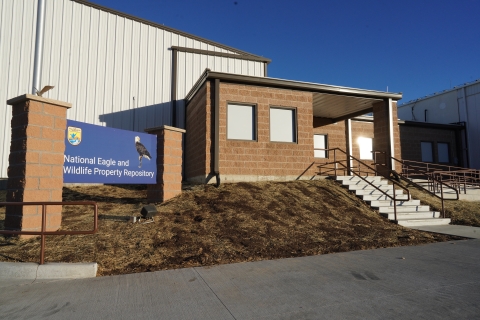
The federal facility in Colorado provides opportunities for these objects to make a positive impact in the field of conservation. Many are loaned to educational programs or institutions, used to support scientific research and inform conservation strategies, or used in other law enforcement investigations.
Be a cautious consumer and report wildlife crime
Anyone can help combat wildlife crime by being cautious consumers and reporting suspicious activity.
Buy informed. If you are considering purchasing a product made from wildlife, find out if it’s legal to possess. When in doubt, don’t buy.
Report wildlife crime. If you believe you have information related to a wildlife crime, including online, submit a law enforcement tip online or call our TIPs line at 1-844-FWS-TIPS (1-844-397-8477)
- Include information about where and when the potential crime occurred, what you witnessed, and any photos or videos you captured.
- If you suspect that someone is trafficking wildlife online, include the full website URL and take screen captures of the potentially illegal sale.