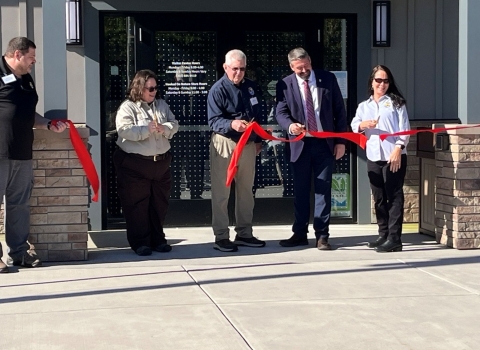
REDDING, Calif. — Phase 3C of the Lower Clear Creek Floodway Rehabilitation Project has been completed, attracting fish and wildlife to new habitats and people to new recreation opportunities.
This phase concludes the extensive and decades-long effort to restore more than 2 miles of stream channel on Bureau of Land Management property below Whiskeytown Dam. It was led by the Clear Creek Technical Team, which includes BLM, Bureau of Reclamation, U.S. Fish and Wildlife Service, Yurok Tribe and other federal, tribal, state, local agencies and stakeholders.
“Through river restoration actions, Clear Creek has become one of the most valuable, highly productive habitats for naturally produced salmon and steelhead in California’s Central Valley,” said Charlie Chamberlain, a fish biologist for the Service. “Salmon and steelhead deposit millions of eggs into Clear Creek's gravel beds each year upstream of the Phase 3C restoration area, and the habitats created here will improve the juveniles’ survival and their chances to return as adults.”
Construction of Phase 3C, which was completed by the Yurok Tribe, dramatically improved spawning and juvenile rearing habitat for many types of salmonids, including threatened Central Valley spring-run Chinook salmon and California Central Valley steelhead.
“Our talented Yurok Fisheries Department team completely reconstructed the creek segment, which now looks and functions just like a natural stream,” said Yurok Tribe Chairman Joseph L. James. “The new habitat components will support salmon, steelhead and Pacific lamprey in all of the in-river phases of their lifecycles and at every flow stage. We sincerely thank Reclamation, the Service and BLM for partnering with us on this monumental project. We are grateful for the opportunity to share with our Clear Creek partners the cutting-edge fish habitat restoration techniques that we developed in the Klamath Basin. As a salmon-fishing people, we always go the extra mile when it comes to constructing the best possible environment for fish.”
Phase 3C restored a section of Clear Creek to its original path, which had been diverted by miners decades ago, and created fish habitat features such as side channels, alcoves and wood jams. It also provides habitats for deer, beavers, migratory birds, amphibians and other wildlife.
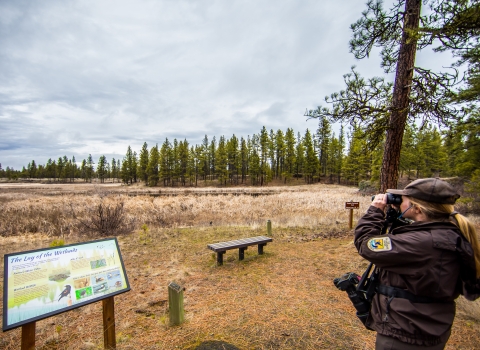
The Phase 3C site near Redding is an easy half-mile hike from BLM’s China Gardens Trailhead, which is equipped with nearby benches, tables and restrooms. Previous restoration phases can be accessed from the Gold Dredge Trailhead, which also leads to creek access points. For more about BLM’s Clear Creek Greenway, visit www.blm.gov/visit/clear-creek-greenway.
"Clear Creek now supports a variety of great recreational experiences like swimming, horseback riding and fishing, and the abundant wildlife make bird watching and nature walks exciting," said BLM ecologist Laura Brodhead.
Reclamation’s Technical Service Center worked with the Clear Creek Technical Team to develop and engineer a conceptual design for Phase 3C. The Yurok Tribe and the Technical Team then developed a final design for construction, which was initiated last summer. Irrigation work to support revegetation on the site will continue through this summer.
“The Clear Creek project is a great example of how different groups can leverage their expertise to benefit the public through productive partnerships,” said Rod Wittler, a civil engineer for Reclamation. “It took tremendous planning, passion and follow-through over many years to make this vision a reality.”
Phase 3C was funded through implementation of the Central Valley Project Improvement Act, which called for restoration of Clear Creek when it was passed in 1992. The overall Lower Clear Creek Floodway Rehabilitation Project, which was initiated in 1998 is funded jointly with the State of California and benefits from partners such as NOAA Fisheries, National Park Service, California Department of Water Resources, and California Department of Fish and Wildlife, as well as local agencies and stakeholders.
Additional project photos are available on the Service’s Pacific Southwest Region Flickr page: Lower Clear Creek Floodway Rehabilitation Project | Flickr.
# # #
The Bureau of Reclamation is a federal agency under the U.S. Department of the Interior and is the nation's largest wholesale water supplier and second largest producer of hydroelectric power. Our facilities also provide substantial flood control, recreation opportunities, and environmental benefits. Visit our website at www.usbr.gov and follow us on Twitter @USBR & @ReclamationCVP; Facebook @bureau.of.reclamation; LinkedIn @Bureau of Reclamation; Instagram @bureau_of_reclamation; and YouTube @reclamation.
The BLM manages more than 245 million acres of public land located primarily in 12 Western states, including Alaska. The BLM also administers 700 million acres of sub-surface mineral estate throughout the nation. The agency’s mission is to sustain the health, diversity, and productivity of America’s public lands for the use and enjoyment of present and future generations. Diverse activities authorized on these lands generated $111 billion in economic output across the country in fiscal year 2019—more than any other agency in the Department of the Interior. These activities supported more than 498,000 jobs.
The U.S. Fish and Wildlife Service works with others to conserve, protect, and enhance fish, wildlife, plants, and their habitats for the continuing benefit of the American people. For more information about our work and the people who make it happen, visit https://www.fws.gov/cno/ or connect with us via Facebook, Twitter, YouTube and Flickr.
The Yurok Tribe is currently the largest Tribe in California, with more than 6,300 enrolled members. The Tribe provides numerous services to its citizens and the local community. The Tribe’s major initiatives include holistic forest management, fisheries protection, restoration and management, Klamath dam removal, condor reintroduction, natural resources conservation, cultural preservation, sustainable economic development and land acquisition. Follow us at Twitter @TheYurokTribe; Facebook @TheYurokTribe; and Instagram @TheYurokTribe.
Latest Press Releases