Wetlands losses in the United States 1780's to 1980's

This is a record of the estimated wetlands losses in the United States between the 1780's and the 1980's. It includes graphs, charts and descriptions of the findings.
Author(s)
Thomas E. Dahl
Publication date
Facility
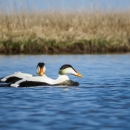
Male common eiders in the water at Yukon Delta National Wildlife Refuge in Alaska
Alaska's Yukon Delta National Wildlife Refuge is vast and productive. The refuge nestles between Alaska’s largest rivers, the Yukon and the Kuskokwim Rivers, where the tundra meets the Bering Sea. Its diversity of habitats support one of the largest aggregations of waterbirds in the world. The...
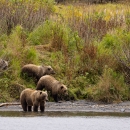
a kodiak brown bear sow with three large cubs stand on the banks of a lake
Homeland of the Alutiiq Sugpiaq peoples, Kodiak Archipelago is located in the Gulf of Alaska, 30 miles from the nearest mainland coast, across the notoriously temperamental Shelikof Strait. Kodiak National Wildlife Refuge spans almost two million acres and covers more than 2/3rds of Kodiak Island,...
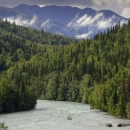
A boat heads down a river lined by forests and mountains.
The Dena’ina people call this special place “Yaghanen” - the good land. It's also known as the Kenai National Wildlife Refuge.  From ice fields and glaciers to tundra, forests, and coastal wetlands, the Kenai Refuge is often called “Alaska in miniature." Biodiversity is unusually high for this...
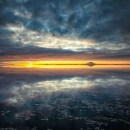
A sunset over Izembek Lagoon with a cloudy sky reflecting over the water
Alaska's Izembek National Wildlife Refuge lies between the highly productive waters of the Bering Sea and the Gulf of Alaska. The heart of the refuge is Izembek Lagoon, a coastal ecosystem that's home to one of the world's largest eelgrass (Zostera marina) beds. Hundreds of thousands of waterfowl,...
Media Usage Rights/License
Public Domain
Subject tags
Wildlife refuges
Wildlife management
Waterfowl
Military
Law enforcement
History
Fishes
Employees (USFWS)
Biologists (USFWS)
Aviation